
An evening of prayer

I just “overheard” a Facebook conversation expressing dismay and amazement at those who schedule (church) events on the evening of the Super Bowl. Well, guilty as charged in this corner, but none of us in the small group that formed to plan a service of prayer and lament for the Mennonite women of Bolivia thought of it, frankly, and no offense was intended. None of us, obviously, are followers of football.

In spite of American football’s crowning event and the rather poor driving conditions in southern Manitoba, however, some 80 or so people gathered for the service last night at the Morrow Gospel Church.
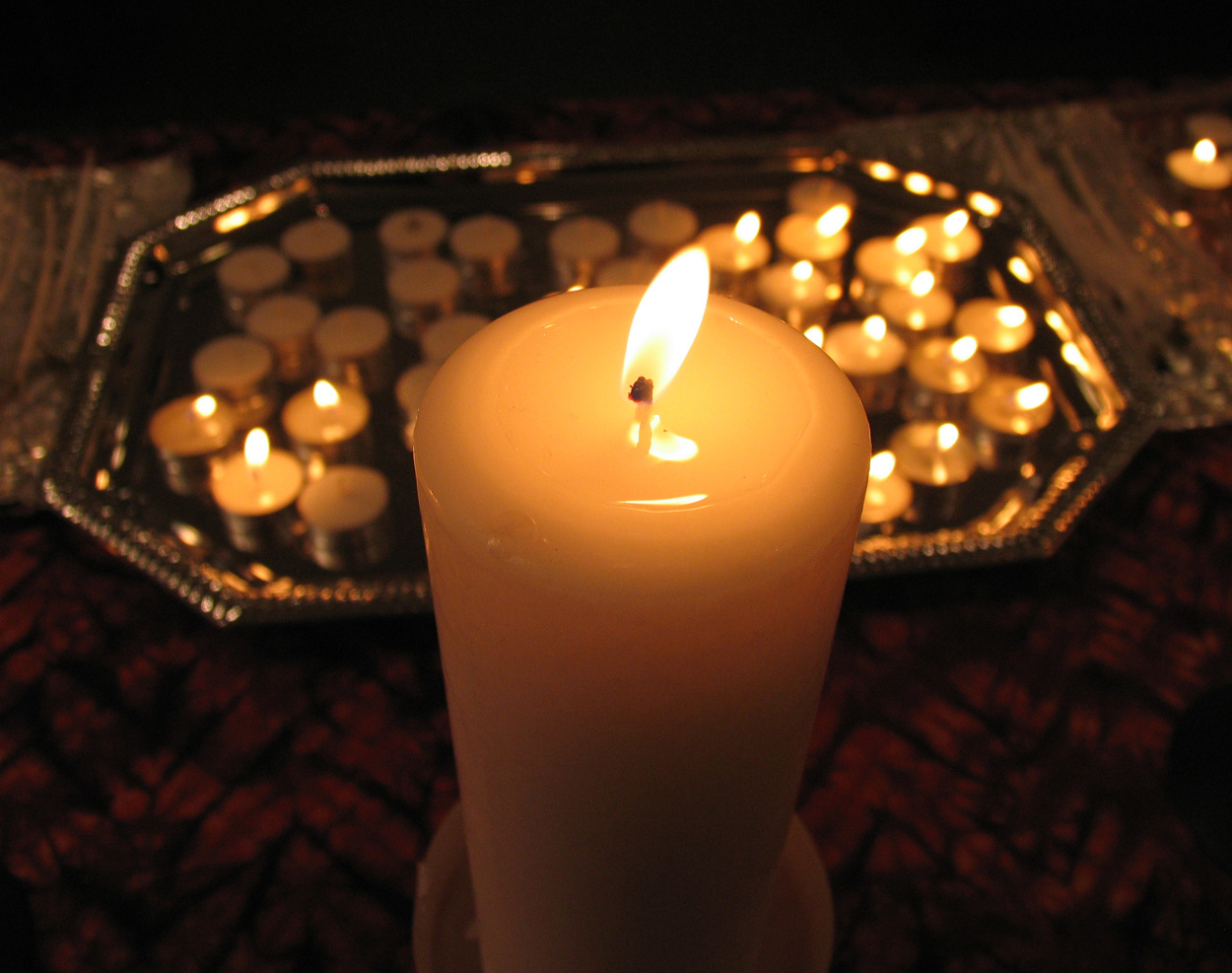
Photo by Ray Dirks

It’s always hard to evaluate something you’re involved in yourself, and that’s not the purpose with this post anyway, except that I’d announced it here and want to say now that it happened, and say thank you too to local readers of this blog who attended. We prayed using stories, Scripture, and song, and lit candles to mark our petitions. The music was wonderful, both the congregational singing led by Christine Longhurst with pianist Sherry Toews, and instrumental music by Lilian Guenther (harp) and by Barb Hamilton (viola). In the middle of our litany of lament, Lilian sang, unaccompanied, “Sometimes I feel like a motherless child” — this just before a Lamentations text that includes “Pour out your heart like water before the Lord.” Music can do that for us; it pours like water.

A few lines from Leona Dueck Penner ‘s benediction sum up, I think, the “movement” that those who participate in prayer can experience.

One by one, in trembling hope,
we gathered here this evening to pray and to weep
for our sisters and also our brothers in Bolivia,
feeling helpless yet wanting to express our love and
compassion for them across the miles.

Through God’s grace, we leave now strengthened and renewed
through sorrow expressed and shared within the community of faith
in the name of Jesus who invited the sorrowful to find rest in him…. 

As for “movement” within the people for whom we prayed, that is likely beyond our means to determine. 

(Although it wasn’t the main aim of the evening, the offering raised for a women’s shelter that’s nearly completed in Pailon, Bolivia, under the auspices of the Evangelical Free Church of Canada Mission, came to more than $ 2900.) 
——-

Re. the specific situation around the sexual assaults, the most recent news I’ve seen — though it was more editorial commentary than hard facts —  was several weeks ago now, from the Kurze Nachrichten, a German newspaper in Mexico, saying that there was to be a hearing shortly of half a dozen men held in Cotoca, with the possibility they would be released for lack of concrete evidence. (No DNA testing has been done.) A number of men are being held in a different prison. The commentary includes [my translation] that “one is struck by the fact that those imprisoned in Cotoca are not well off… and one [wonders] whether money is playing a larger role than justice and truth… Bribe money is the boss; the law its obedient slave.” But, the article goes on to say, “Three uncontested truths remain: many women were used as objects, some are still being used, and only a few people are letting it trouble them much.”
Further to “Original Sin”

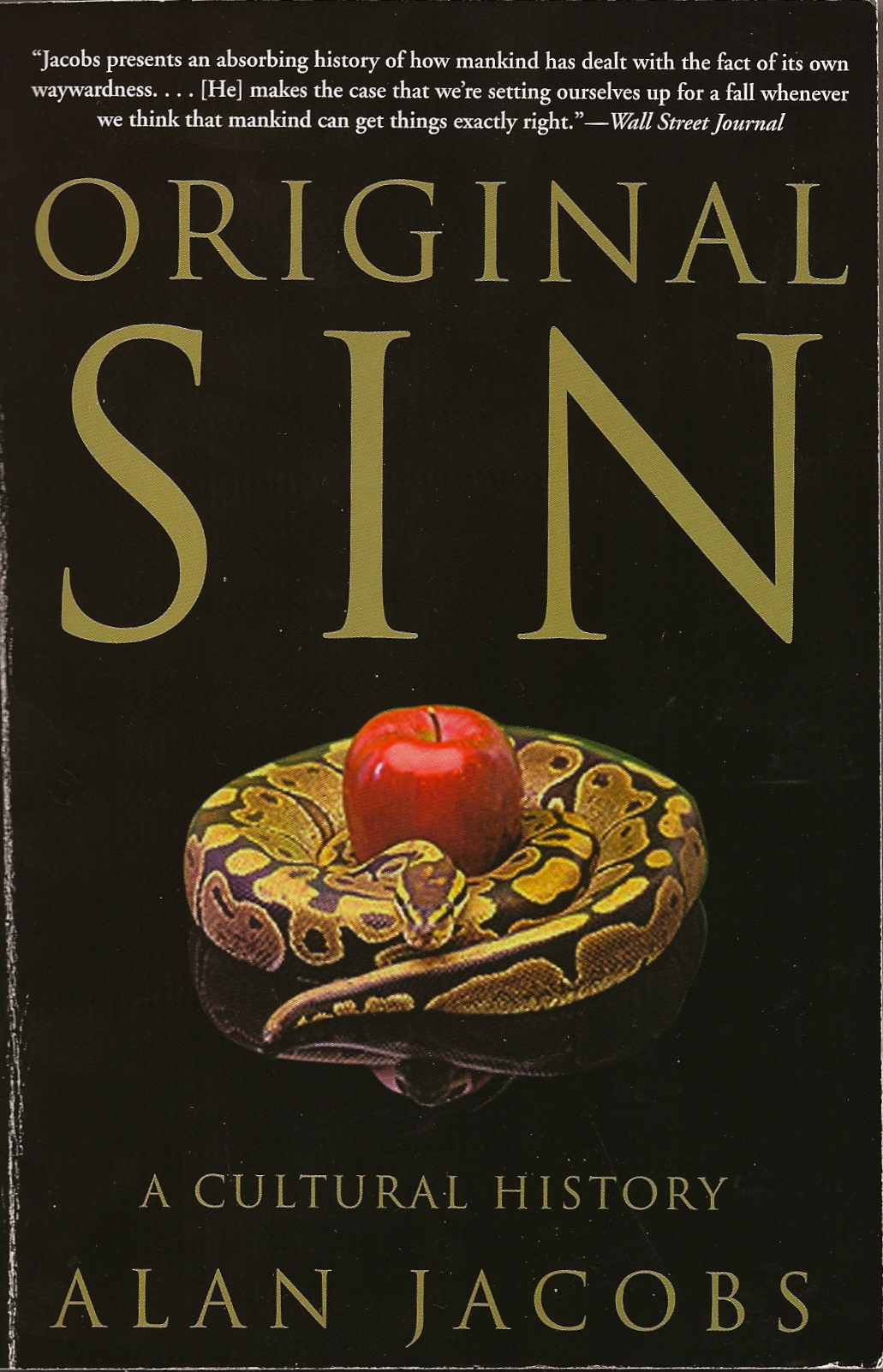
I promised, in my previous post, to say something about our “Take and Read” evening around the book Original Sin: A Cultural History by Alan Jacobs. I can report that the weather was cold, the roads icy, attendance about 17, and the desserts delicious. (No apples, but a hint of fruitiness in the lemon chiffon cake. The chocolate torte and Toblerone cheesecake, however, were temptation enough on their own.) 

More to the point, though. In summarizing Jacobs’ work, Paul Doerksen stated his discomfort with Augustine as he hardened his views about “sin, sex, and unbaptized babies.” With these disclaimers, Doerksen also urged us to consider “a more robust view” of original sin. As Jacobs points out, the doctrine does have its positives: it’s liberating (versus anxiety — if I can get it right, am I getting it right?), it’s democritizing (proceeding from an egalitarian spirit), and it has explanatory power (the only way we can understand ourselves). 

If we did take on a more robust view, what would that mean? One of the discussion questions posed to us was, How would an embrace of the doctrine of original sin shape the vocation in which we find ourselves? Doerksen reflected on his job as a teacher, for example. Was he more Wesley or Rousseau in his approach to his students? Thinking more of the image of God in them or of their shared sinfulness? The former has its difficulties and the latter offers some surprising potential, implications like Yes, they need guidance, but I do too, so mine shouldn’t be punitive but gracious, etc. 

The discussion ranged across many facets of the book, as such discussions do, but many participants felt that Jacobs had not done as well as he might have in placing original sin within its larger theological context of grace. Sin has to be seen by the light of the cross.

I took home with me a number of matters to reflect on further.

The matter of Mennonites, for example. They have not embraced Augustine much, being accused rather of semi-Pelagianism, said Doerksen, and thus prone to legalism, to a kind of uptightness, wanting the church to be pure, trying to getting it right. How many divisions there have been because of that!

There’s much about the origins of my own group, the Mennonite Brethren, that I love — that stirring up, under the preaching of Eduard Wuest, a Lutheran, of the sinner to see “the bottomless pit that opens itself at his feet” but then grasping “Christ’s own blood and righteousness / My beauty are, my glorious dress,” and the willingness to open mouths long closed by traditional practices of silent prayer, to pray aloud, to speak of these things, to find new and passionate language for what was experienced within, and that receptivity to the ideas and spiritual practices of others, like a new lens in a telescope revealing more stars.

But I also hear the hard words of the Document of Secession erecting new boundaries  — “Therefore, we herewith completely dissociate ourselves from these decadent churches, though we pray for our brethren, that they shall be saved…” If they’d been more Augustinian, could they have stayed and continued renewal within? Some of that separatist, uptight spirit lingers with us still.

Then there’s the matter of my vocation — as writer and editor. What would a greater awareness of my sinfulness look like there?


Do we have to believe that we’re bad to the bone?

The third in the latest “Take and Read” series — a book analysis, discussion, and dessert group led by Paul Doerksen of MBCI — happens this evening and the book we’ll be talking about is Original Sin: A Cultural History by Alan Jacobs, professor of English at Wheaton College in Illinois.

Jacobs’ book is not a theological study of original sin (by which is meant “sin that’s already inside us, already dwelling in us at our origin, at our very conception”), but rather, as the subtitle suggests, the story of how this doctrine has worked itself out through (Western) history. Nor is the fact that humans do wrong under debate. That seems obvious enough. Anyone with self-awareness or knowledge of others, or with even a rudimentary sense of the 20th century knows how unloving and selfish, how truly cruel, we human beings can be. 

“Where does this wrongdoing come from?” asks Jacob. “What is its wellspring, the source of its ongoing prevalence and power?” In contemporary culture, scholars like Steven Pinker emphasize the biological determinants of human behaviour, but even they can’t explain “why selfish and violent are pejorative terms for us.” It’s time to re-consider peccatum originalis,  Jacobs says, “the belief that we arrive in this world predisposed to wrongdoing.” Continue reading