Tidying Up

Recently, and almost back-to-back, I read two non-fiction books that are quite different, yet about the same thing: tidying up.

51GcOr7cfuL._SX331_BO1,204,203,200_Plum Johnson’s They Left us Everything: a memoir, which won the RBC Taylor Prize for non-fiction earlier this year, is a compelling account of Johnson’s attempt to clean up the large family home, which was crammed to the rafters, after the death of her mother. What she expects will be a task of weeks stretches into years; there is so much to sort through and get evaluated and dispose of or divide among the siblings. A book about stuff may sound boring, but it’s not, because in handling the possessions of her parents, who seemed unable to dispose of anything themselves, this eldest daughter also remembers and confronts their past, and hers. Most of all, she attempts to sort through her fraught relationship with her mother. If ambivalence about that relationship remains at book’s end, the journey proves necessary and beneficial for the daughter and is a pleasure to share as a reader. Continue reading
R is for Recommend

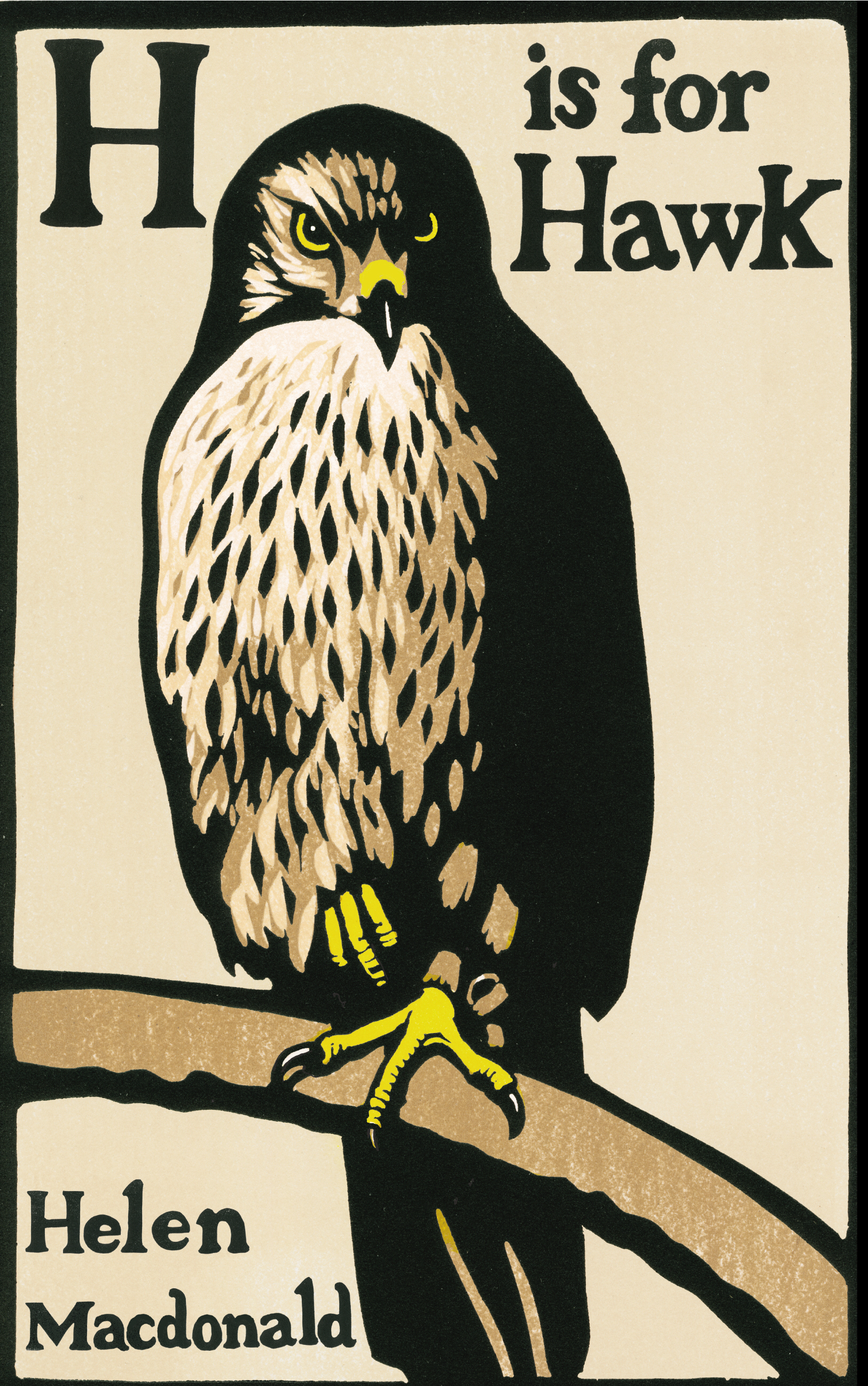
I had read several ecstatic reviews of Helen Macdonald’s H is for Hawk, a memoir of grief via the taming of a goshawk named Mabel, so eagerly reserved the book at the library. It arrived for me then, some months later, at an inconvenient time. We were going away, plus there was a pile of other books I’d committed to already.

Fortunately, I thought, as I retrieved the book from the Reserve Shelf and signed it out, I had in the meanwhile read a dissenting opinion by a blogger whose views I appreciate. I too sometimes find myself disappointed with the latest hot thing to read. Relieved at the possibility of this being the case again, I decided I might just take a quick peek for peeking’s sake and return the book to the library unread.
H is for HawkNo such luck. I was immediately hooked. Not by the theme, for though interesting and important, grief is ubiquitous in memoir, and not by its topics of falconry or hawks or the life of T.H. White, author of Arthurian books, The Once and Future King, which winds through Macdonald’s narrative. It was the writing. Her descriptions are remarkable — “a brumous, pewter light outside, as if someone had stuck tracing paper against the glass”– and the language rushes along with both suspense and insight — “my heart is salt”– even though there is much that remains unrevealed and most everything concerns not human encounters but fear and wildness in nature and the psyche. And just when I was beginning to wonder if she would ever address the killing business, which is what hawks do–“Kill things. Make death.”–she does. I watched Macdonald train her Mabel and tramp about the fields with her like one watches something repellent yet impossibly compelling. Like one stares at an accident. It’s the kind of book that makes one ache to write like that. Continue reading

Havel: A Life, and more

Just in from a bike ride, unaccustomed thighs aching. A lovely morning, the green unfurling at last. I hadn’t intended to wait until (visible) spring to show up at my blog again, but that’s how it turned out, and I was thinking about that too while I pedalled, and about some reading experiences I’d like to share.

Since my daughter and I are planning a trip to the Czech Republic, I enjoyed Havel: A Life by Michael Zantovsky, a new biography of Vaclav Havel. I was alerted to it by Michael Ignatieff’s fine summary of the man and book in The Atlantic. A biography has to succeed on two levels for me: the subject must be compelling and the life well written. This one ranks high on both counts. Zantovsky was a friend and colleague; his work is affectionate and insightful but never hagiographical. The poet/playwright/philosopher turned president was as flawed as he was noble; he helmed the Velvet Revolution, but could not prevent the breakup of Czechoslovakia. He was a man of great vision who fussed about details like office curtains. Most astonishing–and inspiring–to me was Havel’s ongoing introspection, which power couldn’t shake out of him. “Being in power,” he said, in fact, “makes me permanently suspicious of myself.” Continue reading