Let’s add Rwanda

I believe that we must continuously educate our own compassion and moral understanding. One of the ways we can do this is by informing ourselves of injustice and suffering in history, and then remembering what we have learned.

This is a pedagogical imperative as well. Our children need to be exposed, in both school and home, to books and film and photographs that will teach them – in age appropriate ways – that terrible things have been done to people, that they have been done to these people unfairly, and that it is utterly wrong that they should have been done at all.

The historical events whose stories have been especially relevant for my own practice of this so far, and those I tried to ensure my children were exposed to, include slavery in America, Stalin’s regime, and the Holocaust. I’m sure these are very much a part of the moral awareness of most of us in North America. They belong to Western culture. (The tribulations under Stalinism additionally play a role in my Mennonite heritage.)

These periods, further, offer a compelling array of literature to help us. A few books I recall reading for myself, or aloud to the children, are The Diary of Anne Frank, Night by Elie Wiesel, I Am David by Anne Holm, One Day in the Life of Ivan Denisovich by Alexander Solzhenitsyn, and Underground to Canada by Barbara Smucker. There are also numerous good movies around these horrors, which work to stir our minds to a posture of “never again.”

I would like to suggest that we add Rwanda to the above – specifically the Rwandan genocide of 1994 — as a site of learning, compassion, and remembrance.

There are several reasons why I think it’s important we do this, besides the broad education of mind and heart already mentioned above. There’s a general knowledge of the genocide already, especially if we’re old enough to remember the media reports of some 15 years ago, reinforced by the public agony of Canadian general Romeo Dallaire, his book Shake Hands with the Devil: The Failure of Humanity in Rwanda, the film of the same name, and other films such as Hotel Rwanda.

Second, there’s a significant and growing literature on the genocide to help us listen and learn.

 Third, the international community is complicit in the genocide, for its withdrawal, for its non-response. Perhaps caring now can continue to turn us around, even if it does nothing to reverse the murder of some 800,000 Tutsis and moderate Hutus.

Fourth, Rwanda is statistically a “Christian” country (65 percent Catholic, 15 percent Protestant) and, if we are Christian, we might ask how those who worshipped with someone one week could be hacking them to death with a machete the next. 

Last, various groups, such as Mennonite Central Committee, are currently involved in reconciliation efforts in Rwanda. Is reconciliation even possible? And what can we learn from Rwandan attempts to live well, side by side?     

Entering into the burden of the Rwandan genocide may be a more difficult task than entering the “Western” historical pieces cited above. At least, that’s how I’ve found it. I wasn’t schooled in African history, other than its broadest strokes, mostly linked to colonial conquest. Far away from it all, geographically and culturally, I sometimes struggled to remember how the narrative went, and even which group it was that killed the other. At one point, I have to admit, I wrote “Hutus killed Tutsis” on a piece of paper to fix it in my mind. (I refer to the genocide itself; there were also reprisals later in the other direction.)
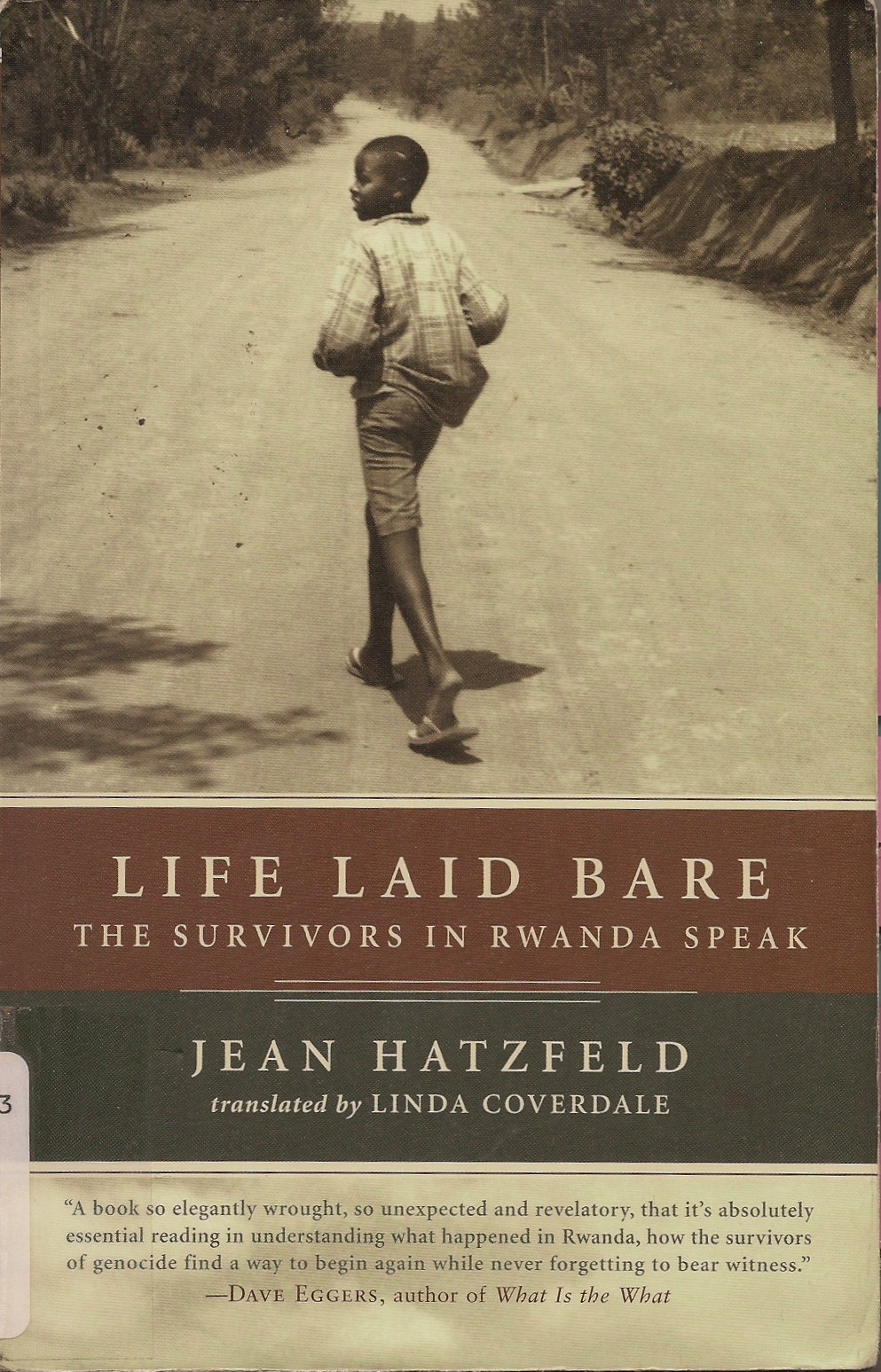
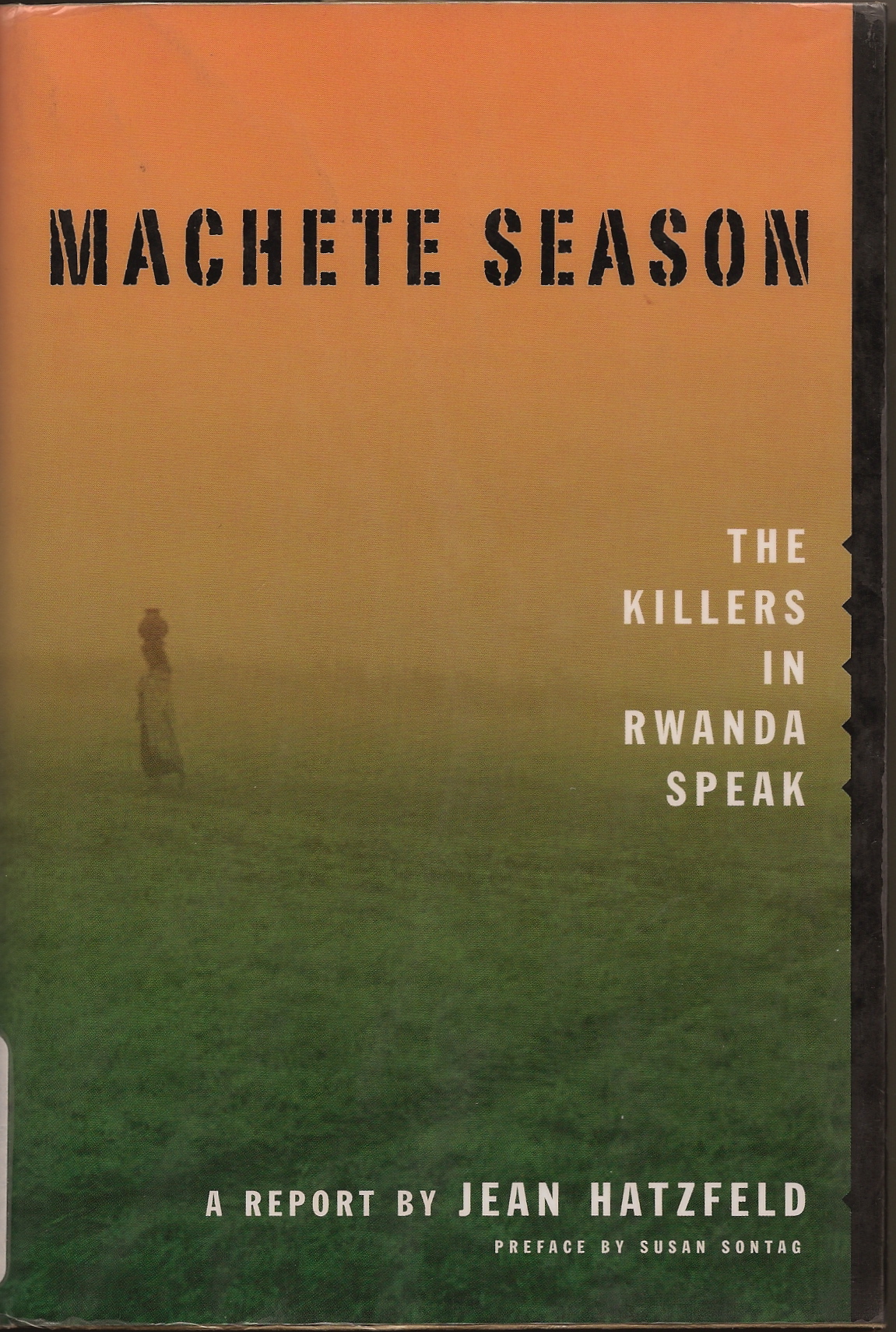
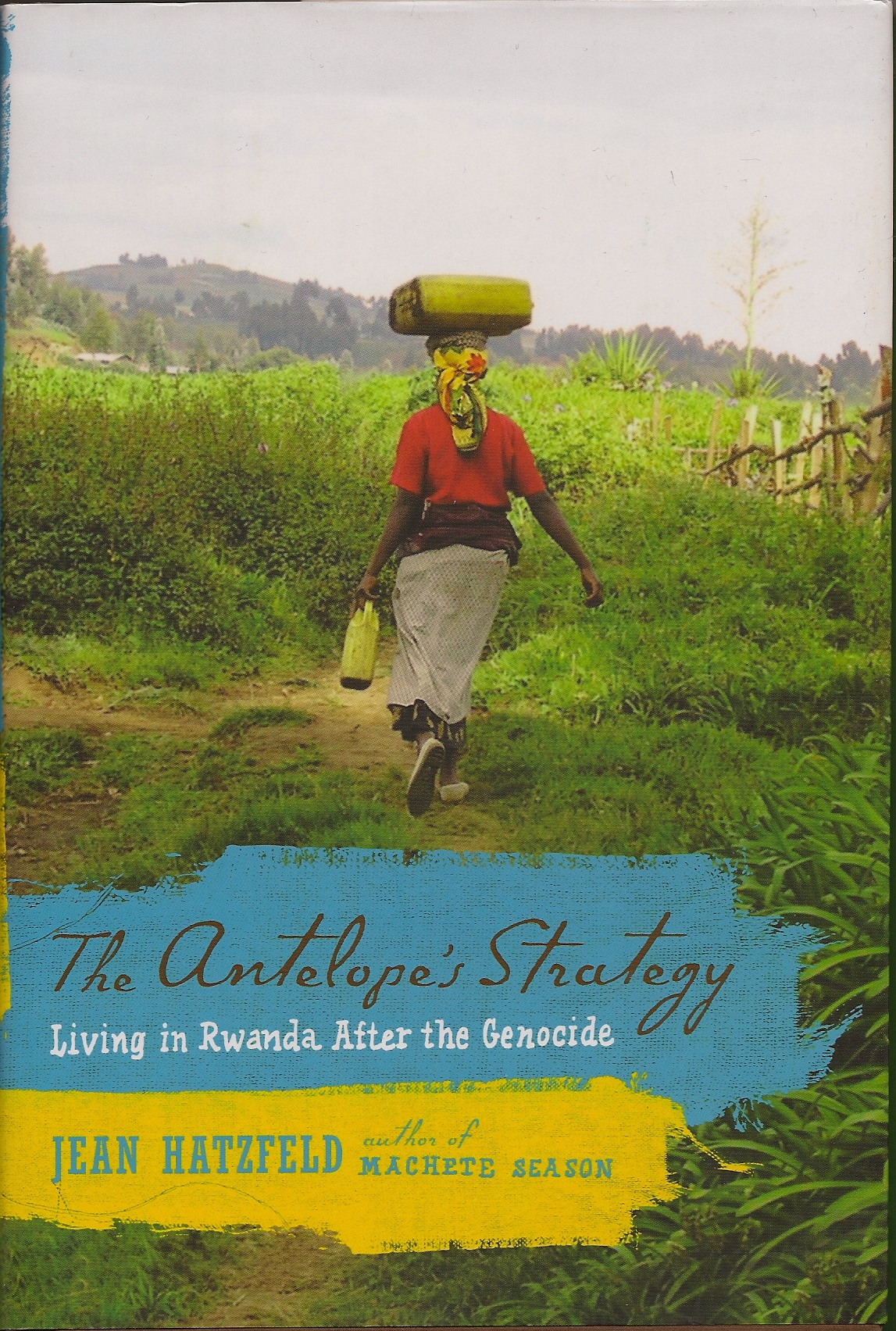
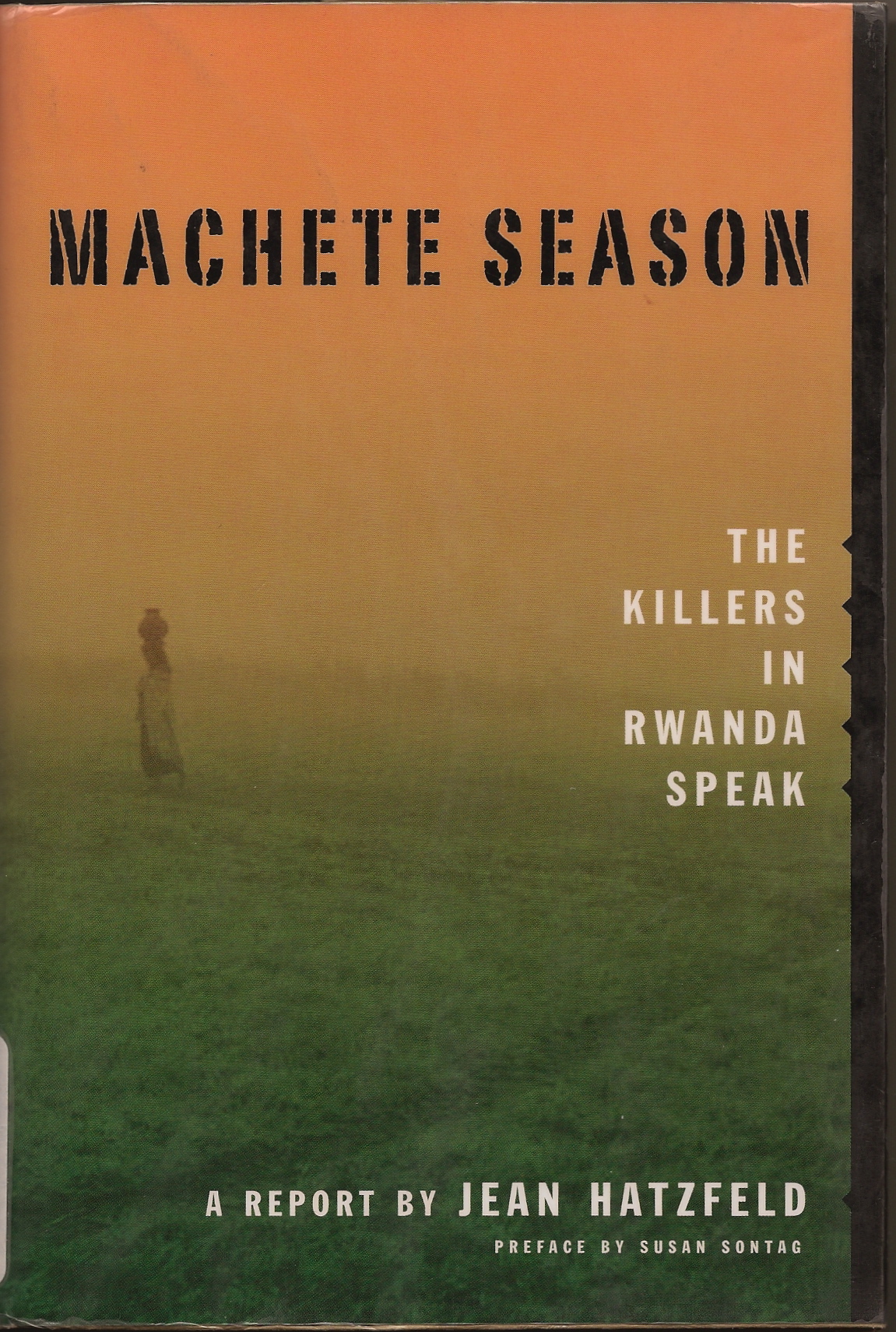
However, little by little, I’m getting there. I recently discovered the work of French journalist Jean Hatzfeld, who presents the memories of a group of Rwandans in one small area of the country. I find that the stories of individuals are often my best path into a larger history and its larger demands.
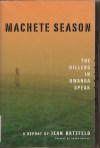
In subsequent posts, I want to briefly introduce these books, as a way of remembering and reflecting on the Rwandan genocide. You may have books, movies, or other resources to suggest as well.
Immigrants in Prairie Cities

Canadians know themselves as ethnically diverse, as belonging to a country where multiculturalism is “official.” Although we probably think first of major cities like Toronto, Montreal, and Vancouver when we consider where this concept is displayed, the cities of the prairies – Winnipeg, Regina, Saskatoon, Calgary, Edmonton – have also shaped “a distinct variation on the Canadian model of cultural diversity,” say the authors of Immigrants in Prairie Cities: Ethnic Diversity in Twentieth-Century Canada (U of T Press, 2009).

They were relatively smaller, inland cities, and received wave after wave of immigrants, thus requiring “sustained inter-group contact.” They were “a forcing ground” for Canada’s long and ongoing discussions of multiculturalism.

Royden Loewen and Gerald Friesen were professors of mine when I returned to university, about a decade ago now, to do a master’s degree in history. I also sat in on a few meetings of a group of post-doctoral and graduate students whose research would contribute to this volume.

Their book examines the ethnic networks or “webs” that immigrant communities developed in their new environments, and the activity in the “boundary zones” where established residents encountered immigrants. It also pulls into the mix the largest single group of “foreign” newcomers to the city – those second and third generation Canadian immigrants who were part of a great mid-century migration from the prairie countryside into the city.

If there’s one overarching impression Loewen and Friesen leave, it’s how rich and complex the whole process of immigration has been in prairie society. Immigrants faced huge challenges within, and sometimes against, established groups and structures. But they seemed endlessly inventive in negotiating identity and well-being in their new country. Religion and family were very important, though there was also conflict in these spheres as generational and gender expectations shifted.

The “old” Canadians changed too, of course, sometimes intentionally, sometimes reluctantly. (Loewen and Friesen take on the Canadian myth that we’re not a racist country. It’s exactly that: a myth.)

I’ll leave the scholarly assessments to other historians and just say that I enjoyed this book. I’ve lived in three prairie cities and am the granddaughter of immigrants to the prairies, so it felt more than theoretical to me at many points. I think it would be of interest, and useful too, to anyone who finds themselves in situations of ethnic diversity – in boundary zones, as it were – wherever it might be in Canada, but especially in one of the prairie cities. Knowledge of the past goes a long way to explaining the present and, in demonstrating how “old” and “new” have interacted, also suggests correctives and hope for the future.

My only critique would be of the cover. The painting, “Saturday Night,” is lovely but there’s an elevator in the background and to me the scene has the feel of a small town rather than a city.

The experience of reading “Gilead”

I may very well be the last on the block to have read Marilynne Robinson’s hugely popular Gilead (HarperCollins, 2004). But I’ve done so now — and I enjoyed it too.

Gilead is a novel told in the voice of John Ames, an old man, a minister, who sets down in diary form what he wants his young son to know about him. It’s a story about fathers and sons — several sets of them. Since so much fine commentary has already been expended on this book, I’m going to simply recommend James Wood’s review in the New York Times, which calls it “a beautiful work — demanding, grave and lucid.”

Although I found myself sometimes impatient with the narrator’s style, which mirrors what we perceive as the faults of the elderly — a slow and meandering speech, and something of a preoccupation with the past and one’s own wisdom — Woods says, “Gradually Robinson’s novel teaches us how to read it, suggests how we might slow down to walk at its own processional pace, and how we might learn to coddle its many fine details.” He’s right.  

I will also recommend Debra Dean Murphy’s reflections on re-reading Gilead, which reminds of its theme of blessing, and will pass along a friend’s assessment: “This is a great book for pastors.” (She’s pastoral care coordinator in a local church.)

Gilead being what it is, however, so attentive to life itself, I thought I might also share two “extras” that the experience of reading it gave to me.

1. I read a library copy, so others had been there first. I began to notice that occasionally a word was circled. I went back to find them all. Insouciant, effulgence, susurrus, bodacious, probity, caviling. And then lines in the margin beside this sentence: “…age has a tendency to make one’s sense of oneself harder to maintain, less robust in some ways.” Since these markings were in pencil, I didn’t mind finding them. (Erasure is possible — it’s the folded-over corners that always hurt a little on behalf of the page, because their scars cannot be healed!)

Who was this other reader? Someone sad at their own loss of the self? But still keen of mind, determined to look up the hard words in the dictionary? It was good to contemplate another person with this text, to know that reading is not just about a book but about people at the practice of it.     

2. At one point, the Rev. John Ames talks about Hagar and Ishamel. There was something about what he said that sent me off to that story — in Genesis 21. I simply plunged myself and my concerns into it, and was startled, and — to use Gilead vocabulary — blessed. The Genesis storyteller refuses to favour one character more than another. The clash between Sarah and Hagar is dramatic and difficult, Abraham’s dilemma heartbreaking, and the wilderness for Hagar too, but everyone in the story gets their loving due before God. What a good lesson for a fiction writer, or anyone for that matter. It reminded me of something Mary Anne Isaak said in a recent piece about the woman who wept at Jesus’ feet, that “meaning is created by the way others narrate the story…”

Then, back at Gilead later — second last page, in fact — the old man remarks, “Augustine says the Lord loves each of us as an only child.” I think that’s what Genesis 21 is saying too. (I also notice I seem to be bumping into Augustine everywhere lately, which is probably my just desserts for becoming tired of his Confessions when I read them!)

No, reading is not just about a book, but about the places we go because of it.