 For more than 25 years, H. and I have been observing an almost daily ritual. We get up at six and drink maté, a Paraguayan tea.* During the half hour we’re imbibing our caffeine, I wake up (as a morning person, H. is already wide awake), we usually read Rejoice!, and we cross-check our schedules for the day. Then we get on with it.
Weekends, it may all take a little longer, and may include reading the paper and listening to music.
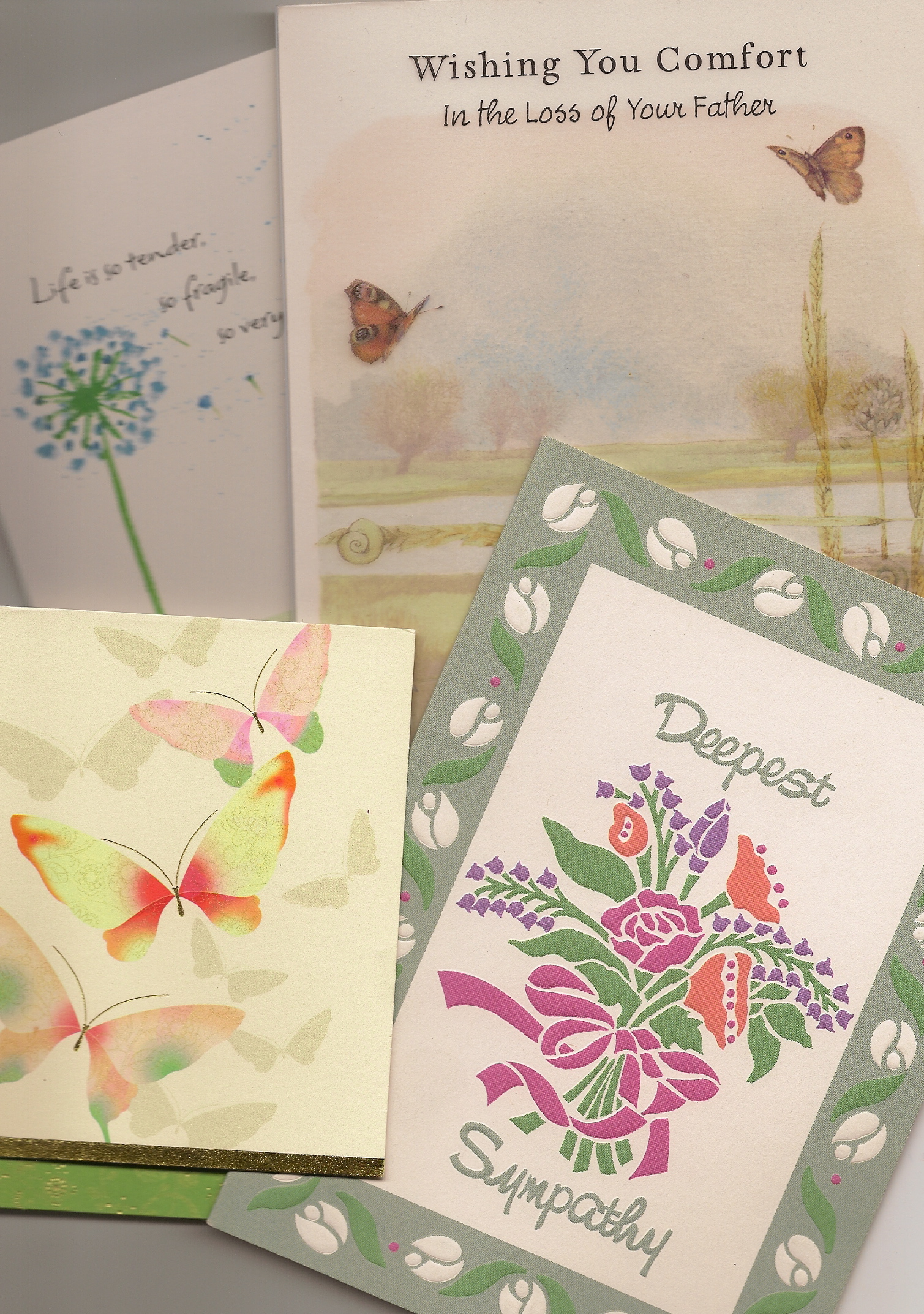
The past weeks we’ve added something else to our maté routine. We’ve been re-reading — three or four of them a day — the sympathy cards we received after my father’s death in December. We think about the senders and what they and the cards have said, and we include them with gratitude in our morning prayers.
I hope it won’t hurt anyone’s feelings to say that most of these cards then land in the recycling bin. The point I want to make is how much the cards have meant to us. Sometimes a person forgets the power of the small gesture — and how large small can be — until one is on the receiving end of one after another after another.
Some cards came from people we would not have expected to send one, and the surprise of that touched us. Some people who knew Dad took the time to share their memories – memories that enlarged our own memories of him. Some added a poem or reflected on similar experiences. Each card was unique, each one was appreciated.
We were the recipients of many other gestures-for-times-of-loss as well, such as emails and phone calls of condolence. Last week, we got the list of people who had donated money in honour of our father to the charity we’d chosen. Again, it was a humbling and touching experience, to see the names and think of what these gifts meant about Dad and us and these givers, and for the recipient mission agency.
Some gestures took the givers significant time. One friend spent the day baking cookies for us because she knew we were having a lot of out-of-town company. Several friends and a neighbour brought meals, including some of the most spectacular soups I’ve tasted in a long time. The church deacons came to visit, bearing a fruit basket.
These are traditional ways of caring; they’re gestures and rituals we bring out for certain times. But like any ritual, whether it’s a daily one like our morning tea, or something practiced for specific circumstances, they build and maintain community. And what a wonderful thing it is to be part of community.
———-
 *Drunk alternately as an infusion of hot water over yerba tea leaves in a container called a guampa and sipped through a metal sieve-straw called a bombilla. (Yerba leaves and paraphernalia pictured left.) Let’s just say it grows on you.
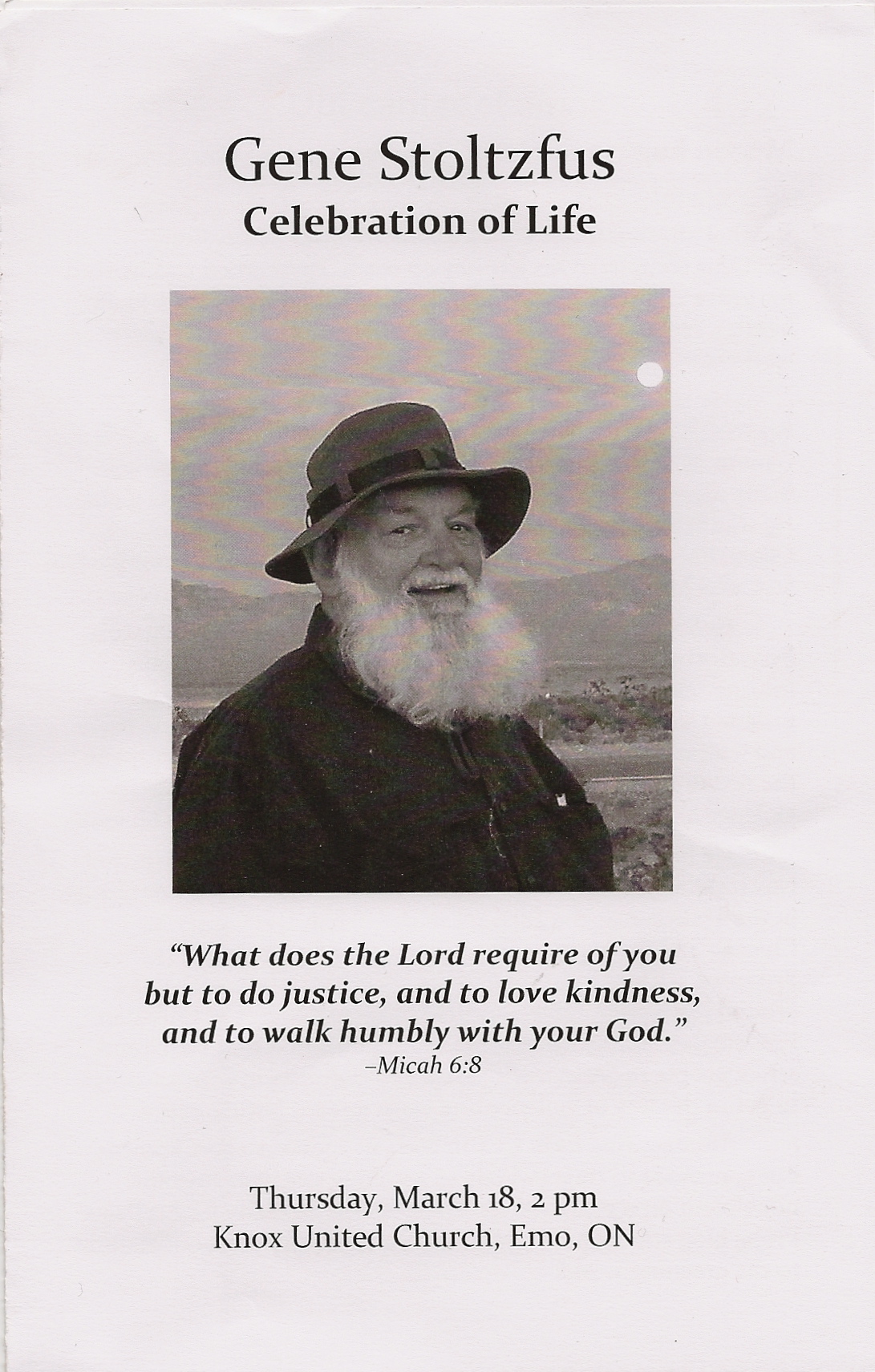 Last Thursday, I attended the celebration of life service for long-time peace activist and founding director of Christian Peacemaking Teams for 16 years, Gene Stoltzfus (1940-2010), which was held in Emo, Ontario.

 Borrowing Bones