What am I reading these days?
Well, thanks for wondering (if you did, that is). I’ve been reading the lives of two feminists: Gloria Steinem and Katie Funk Wiebe. (I’m not sure KFW called herself a feminist, but she dared call herself a theologian, so close enough; plus I know one of her daughters gives her that label.)
These two women were born about a decade apart. Funk Wiebe is 85 now, and Steinem is 76. In many respects they were quite different, but both are writers, and both are known for their leadership in the women’s movement, Steinem as an internationally recognized icon of the “revolution,” and Funk Wiebe on the smaller but still significant stage of the Mennonite world.
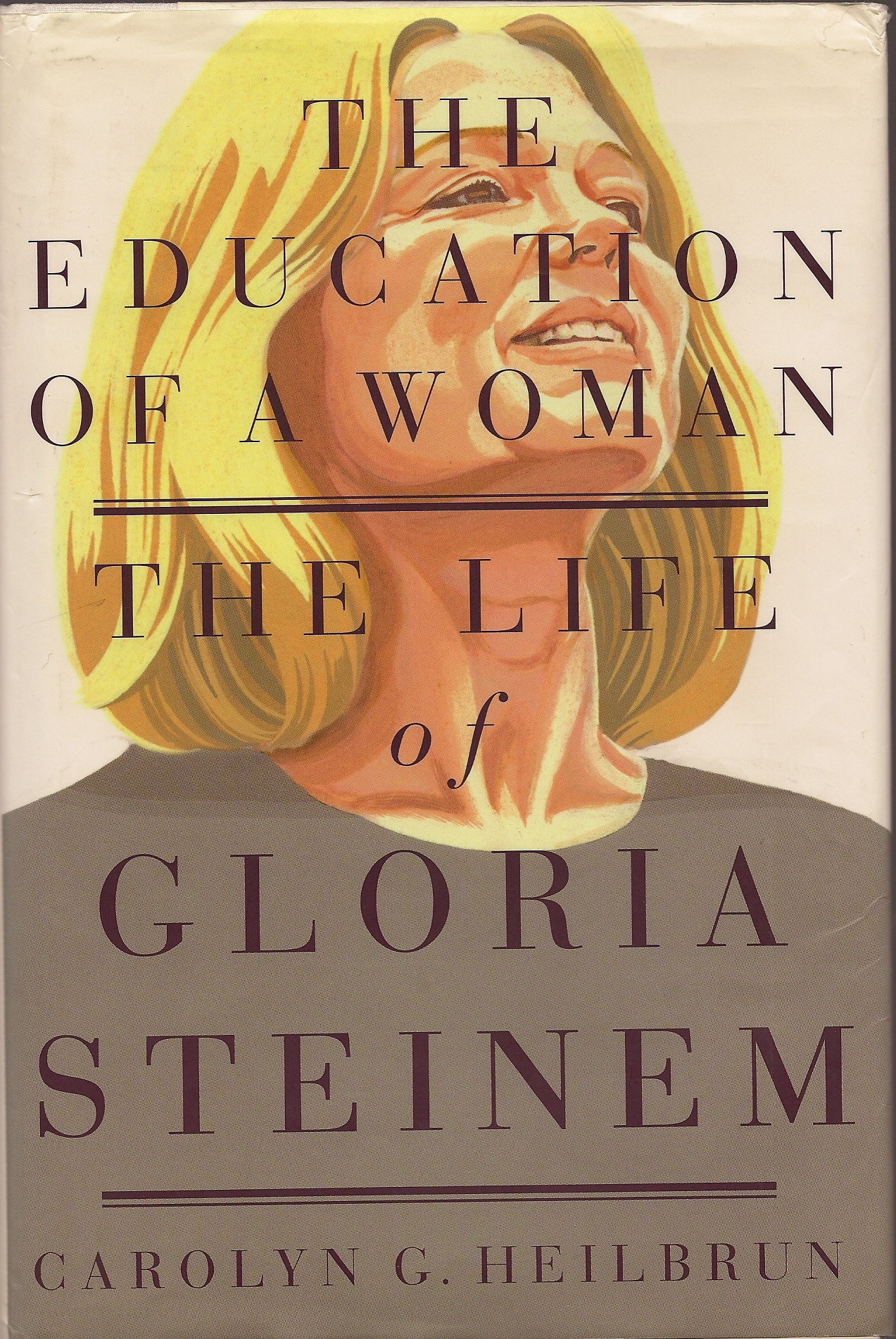
 I picked up The Education of a Woman: The Life of Gloria Steinem (1995) at the local used bookstore. I was drawn to it for two reasons. It seemed a good way to recall an era that I, though younger, also lived through. And who wasn’t aware of Steinem, so often in the papers, on the covers of major magazines, founder of Ms. magazine, author of books like Outrageous Acts and Everyday Rebellions (1983) and Revolution from Within (1992)?
Steinem was a journalist and political activist, for causes like migrant farm workers and then on behalf of women’s rights, including abortion, and, as already stated, leader and spokesperson for the Women’s Liberation Movement (as it was called then), in the 1960s and 70s.
Yes, it takes me back all right, to the controversies, the milieu of the world I was entering as a teen and young woman. Consciousness-raising. It’s been a long time since I heard that expression! Consciousness-raising groups were “intimate assemblies, in which women discovered that their problems were not singular but ubiquitous and widely shared…” The phrase eventually referred, I think, simply to making people aware of sexist language and attitudes, and inequalities between men and women.
I was also interested in this book because I wanted to see how author Carolyn G. Heilbrun, who studied how women’s lives are written (Writing a Woman’s Life, 1988), would approach this biography. I felt she was too analytical of Steinem at times, and thus stood between Steinem and the reader, but her work also seemed thorough and it was well written.
I found myself very much liking and admiring Gloria Steinem. Though I disagree with some of her views, I’m thankful to her, and of course many other women as well, for their courage and convictions about the rights of women. Steinem was quite relentlessly attacked, both within the movement and without – too radical for some, not radical enough for others. She was articulate, confident, and willing to defend herself when necessary, but refused to respond to much of the hostility directed at her. “She is … an extraordinary combination of change-maker and peacemaker…,” someone said of her, “genuinely humble and kind.”
(In reference to the “trashing” within the women’s movement, Pat Schroeder wrote, “Women have not yet learned the game of ‘rumps together, horns out’.”)
She was an especially beautiful woman, which was considered an advantage in reassuring those who imagined feminists as some kind of hideous harridans, but her looks also garnered no end of unwelcome comment and celebrity.
The Woman’s Liberation Movement may already seem ancient history to many. In “Remembering the 70s,” an article I wrote for the MB Herald back in 2001, I noted, “When the earth is altered in some way, say by cutting trees or planting them, bulldozing in a road or excavating for a new housing development, we soon forget the contours of the earlier terrain; we soon imagine that this is the way this particular space has always looked.” Yes, one easily forgets. Reading Gloria Steinem’s life, I remember earlier spaces, and I remember changes, and I’m grateful.
And in a subsequent post, I’ll say something about reading the life of Katie Funk Wiebe.


 Borrowing Bones