What I like about being a tour-ist

H. and I are back from two-and-a-half weeks in Europe, on a Mennonite Heritage Tour in the Netherlands, northern Germany, and Poland. We were a small group: five of us from Saskatoon, Winnipeg, and Toronto, plus tour leader and driver Ayold Fanoy, a Dutch Mennonite. It was full, varied, and interesting. We visited sites relevant to the Mennonites/Anabaptists, who originated in Europe in the early sixteenth century, and also places of more general interest, such as Berlin, Krakow, and Auschwitz. We drove some 3600 kilometers through cities, towns, and countryside on our way from one place to another.

Can you tell I'm a tourist?

I’d taken along Carolyn G. Heilbrun’s The Last Gift of Time: Life Beyond Sixty, to read on the plane and in rest periods, and discovered she disliked travel, had “never been a sightseer, never understood the attraction of having been somewhere, taken pictures, had the sights pointed out, and then returning to inflict the details of your journey upon acquaintances.”

“Touring” is an odd kind of endeavor, to be sure, for we touch down upon places briefly, and what we snatch up by our “tourist gaze” is usually what we’re told is worthwhile or necessary to see. It’s a visual encounter above all; we arrange our memories with the eye of a camera and our views are numerous and fleeting.

I’m convinced, however, that even first and brief impressions have merit. We may be creating context by what we do and it may be superficial, yes, but in the process we can gain or deepen the context of what we already know. There’s surprise in nearly every day, it seems, and to me it’s the surprises that make travel a pleasure. Best of all, curiosity is aroused for further exploration.

At least that’s what I like to think our weeks of travelling, the six of us looking together, accomplished. We saw many things new to us. Admittedly a great deal of it has already massed — for me, at least — as an indistinguishable clutter of the baroque or monumental or beautiful. But all of us saw some things in some new ways.

I’m still sorting and sifting it all. In subsequent posts over the next few days, I’d like to share a few things that captured my imagination and interest. Mostly, I think, I’ll pick out a few encounters with women, dead or alive.

(I invite you to subscribe to this blog if you haven’t already — for these posts, and, of course, the ongoing blog. It’s easy to subscribe, at the right.)
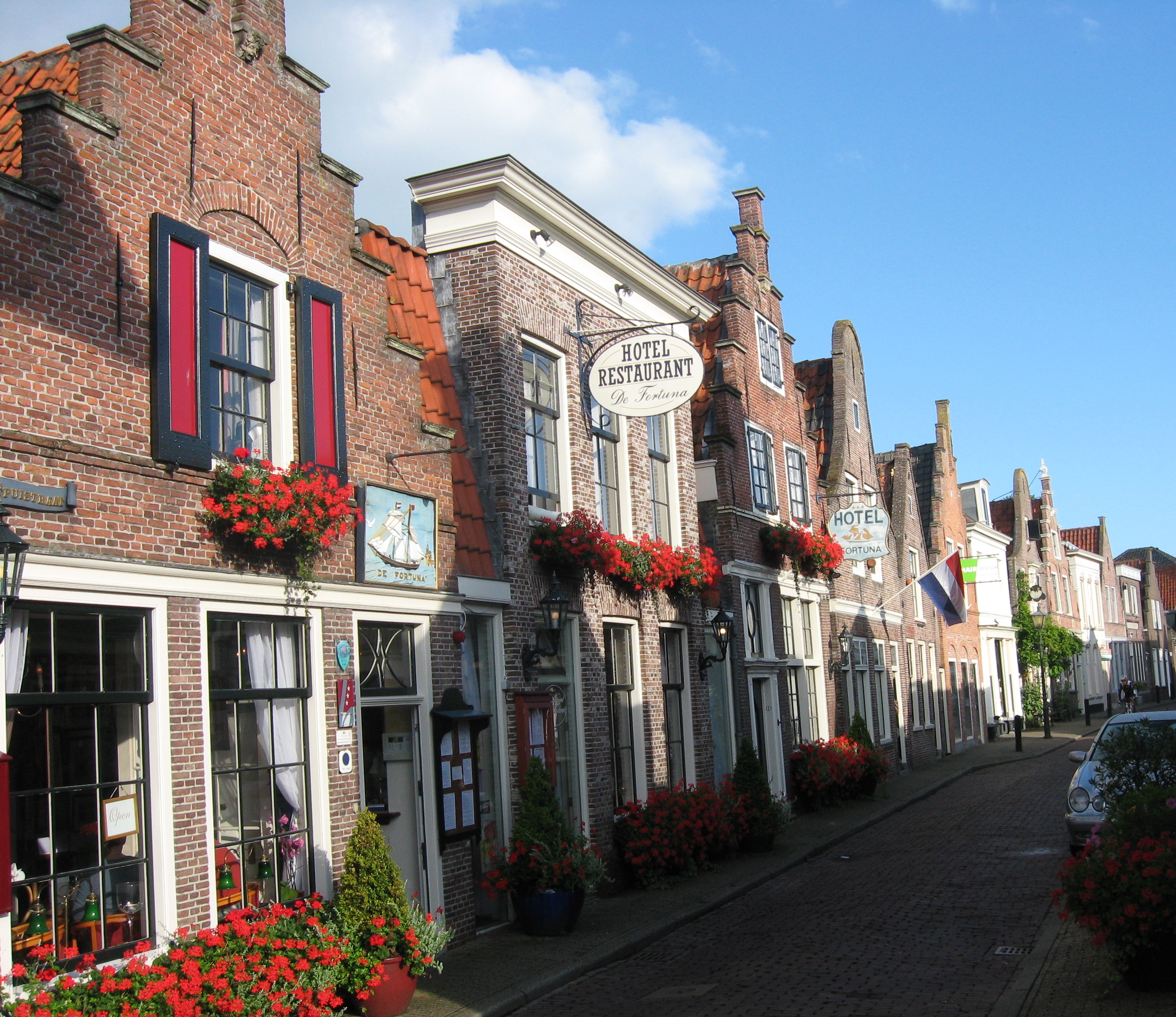
And everywhere we turned, it was charming! We stayed two nights in this hotel in Edam, NL.

Our tour group, l-r, P. and A. Wiens, M. Sawatzky, D. and H. Dueck.

Bolivian Mennonite women were not believed

Jean Friedman-Rudovsky’s piece on the Bolivian Mennonite rape trial was the most read and most emailed article on the site for two days after it was published, and the most emailed article again yesterday. Because of its popularity, it will appear in hardcopy in the upcoming TIME Magazine international edition. Clearly, it’s touched a nerve.

Another article by Friedman-Rudovsky on the same events recently appeared in The Christian Science Monitor: In Bolivia, rape trial pries open closed society of Mennonite ‘Old Colonies’. It’s troubling to read that it took so long for the women to be believed, and that their need to talk about what happened and receive counsel is still not being recognized the way it should be! It’s also troubling to hear, from other sources, that incidents similar to those alleged in the case are apparently still happening.

The story is by its very nature somewhat sensational, but I suspect that much of the interest in it, especially for the Mennonite community, is the ongoing and complex tragedy of what has happened to these women and girls. So I think we should view this extensive publicity as a good thing. Some Mennonites who comment on the articles worry that others will think all Mennonites are like that, etc. An understandable concern, I suppose, but really, we’ll simply have to live with that and ought to be turning our hearts and minds instead to how we might respond.

So what can we do? I’d suggest that we exert as much pressure as possible on our two broad Mennonite agencies — Mennonite Central Committee and Mennonite World Conference — to make this need a priority. MCC already has a number of programs that connect to Bolivian Mennonites (Old Colony Mennonites in other countries as well), which we might support with increased giving and prayer.

But I think more could be done. After all, this story didn’t just break open in the last weeks because of Jean Friedman-Rudovsky’s fine work, but came to the attention of both the world and Mennonites some years ago. Sometimes it feels as if those who are speaking out on its behalf are also still not being believed!

It makes sense to me that MCC might be the umbrella under which to gather a wide array of resource people with interest and knowledge and ongoing connection — their own staff, for example, those from ministries like the Low German work of Family Life Network, Mennonites in neighboring Paraguay, anyone with an ability to relate to conservative and closed communities — and to sit down and do some solid further strategizing for this situation. Perhaps I’m being naive, but I think the wider Mennonite community — and the watching world — needs to be assured that this cry of women and girls in Bolivia, and their entire community, is being treated with the utmost urgency and seriousness. It needs to know that new programs and money will be initiated if there is any possibility at all of them being received. I’m wishing to hear someone say, “We’ll be the point people on this issue, talking to them and talking to you, our Mennonites constituency. And this is what we’re doing…”

Bolivian Mennonite rape trial

Breaking into my blog vacation with a sad, important story I want to give wider circulation. (Regular readers here will recall that I’ve posted about this before.) Journalist Jean Friedman-Rudovsky has been following the trial of the Mennonite men in Manitoba Colony in Bolivia allegedly responsible for the rapes of as many as 130 women and girls; she filed the following report for TIME: “The Mennonite Rapes: In Bolivia, a Trial Tears Apart a Religious Community.”