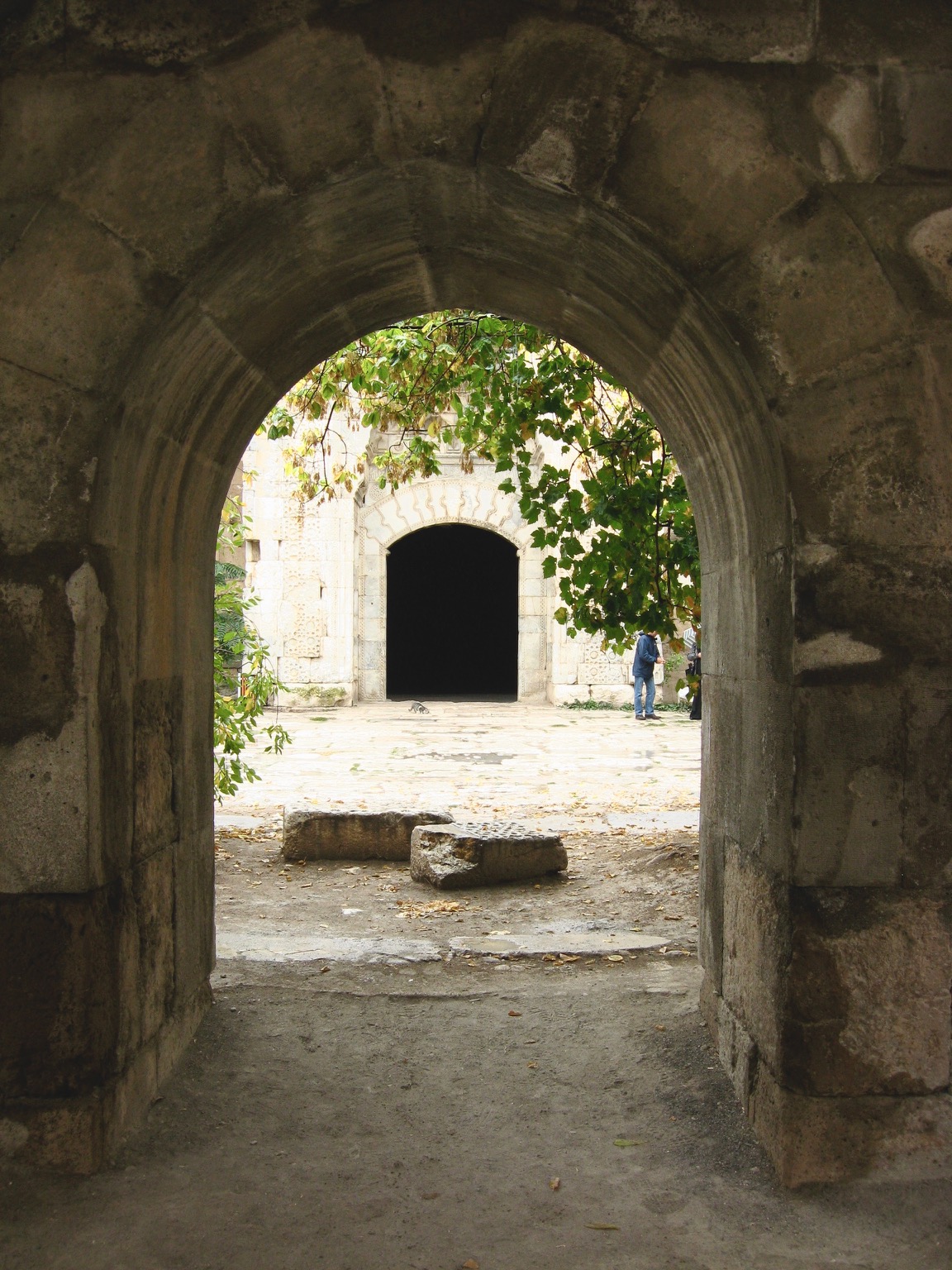
A ritual procession down 56th

A good funeral, poet/undertaker Thomas Lynch says, gets the dead where they need to go and the living where they need to be. When my husband Helmut died four years ago in the middle of the Covid pandemic, the usual mourning rituals had to be significantly modified. Not all of this was disappointing. It was a privilege for me, for example, to wash his body myself and, with the help of a son, dress him after death. The funeral service had us as a family separated into three “bubbles” but was meaningful nevertheless, as music, readings, eulogy, and homily flowed smoothly via the technological help of one of our pastors. We very much missed the physical presence and hugs of other people but, as a livestream production, it was possible for local friends and family as well as those in faraway places like Winnipeg and Paraguay to participate.

Once Helmut knew his diagnosis was probably terminal, he built his ashes box himself, of two favourite woods–maple and walnut. The plan was for cremation and then interment in a columbarium niche. The first part happened, and then four years passed with the box and ashes in the apartment with me. I didn’t mind at all, to be honest. But the time had come, and the opportunity, for the second part. This month, the whole family was together in B.C. for the wedding celebration of our daughter and her wife who were married five years ago, also during Covid, but sans the party. The couple graciously yielded a day of their celebration week for the interment of Helmut’s ashes.

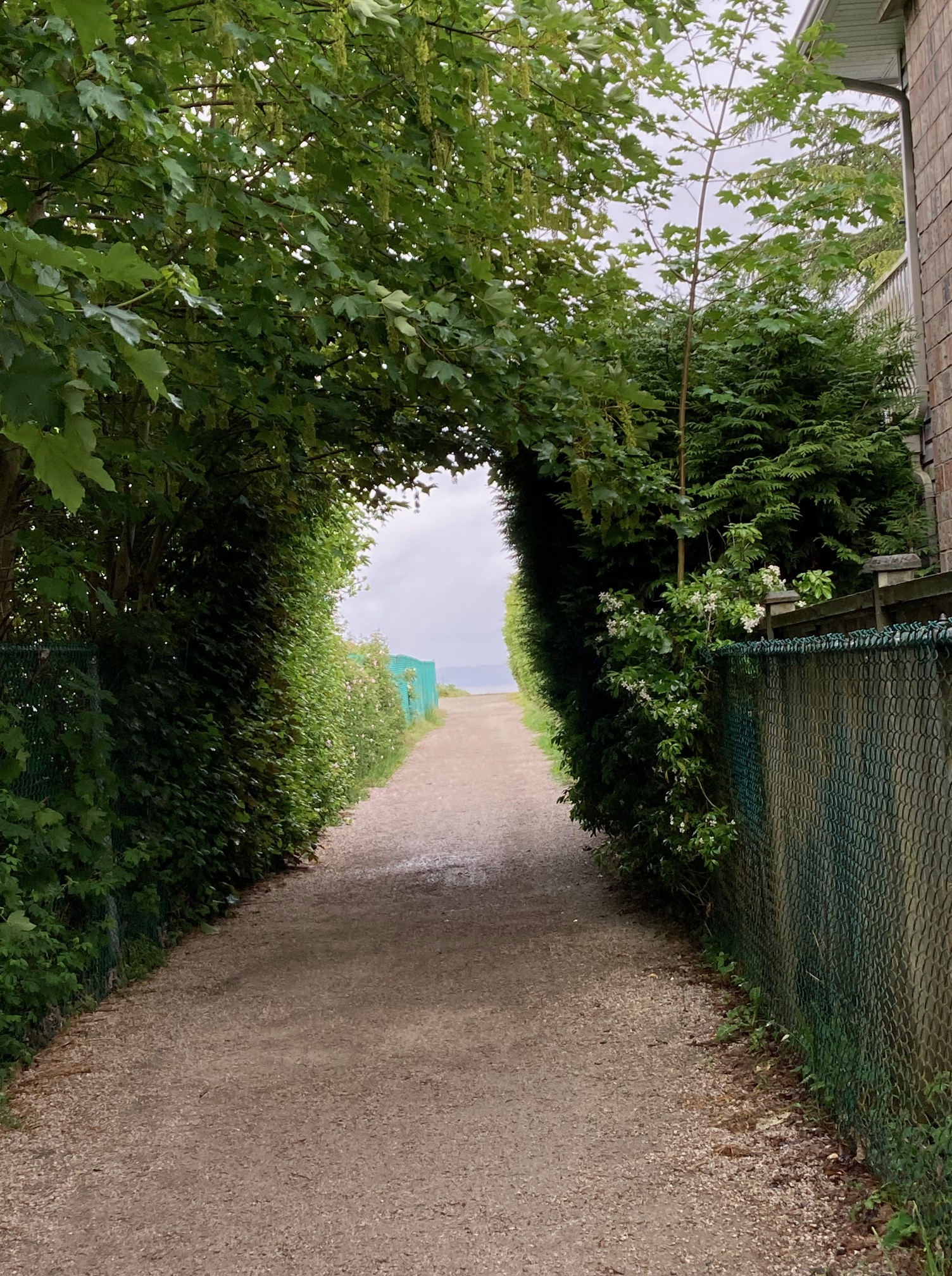
I decided I wanted to walk to the cemetery and all the children and available grandchildren (some were in university classes and couldn’t come) gladly joined me. It’s about two kilometres from my apartment to the cemetery, but everyone’s fit to walk. The nearly-nine-year-old granddaughter wanted to know why we were doing this and I told her about the practice of pallbearers, about the symbolism of carrying our dead where they need to go. It took us about half an hour, down 56th Street, the main street of Tsawwassen, and whoever wished to, had their “turn with the urn.” (It was heavy!). I enjoyed this walk and the various conversations enroute, this carrying of our husband, father, father-in-law, grandfather at the pace of our feet.

A granddaughter takes her turn.

At the cemetery, we gathered under a canopy. I shared a few thoughts and memories, as did others, the granddaughters read some selected scripture texts, we spoke a litany of commital together, and the three children placed the box in the niche. Then the cemeterian came and closed the niche and placed the plaque over it. It felt emotional for many of us, but good.

I’ve startled a few people already with the photo of the niche plaque, because my name is also there. Please don’t be, it’s what my parents did with their cemetery stone, and it feels perfectly comfortable for ours. A niche has room for two “urns” and it’s where my cremains will go as well. Whenever; year only to be added.

After the ceremony, we gathered at the home of the oldest son and family, not far from the cemetery. Since I’d baked cinnamon buns for our lunch together and since I needed to be alone for a bit after the interment, I walked back down 56th Street, just me this time, and that felt necessary and symbolic too, and I picked up the pans of buns and brought them to the house in the car. We had a lovely day together, all of us gradually turning our thoughts to the upcoming marriage celebration. (Which turned out to be a wonderful day too.)
March notes

Besides resolving to appear here monthly in 2025, I had a second New Year’s resolution: to read Moby-Dick. Which I have just accomplished, thus plugging one of many holes in my education. It wasn’t exactly a page-turner (not to mention there are a lot of pages to turn) so I read it alongside other books, aiming for two chapters a day. But I enjoyed it. I learned a great deal about whales and whaling, and was carried along by Captain Ahab’s mad quest for the White Whale and by Ishmael’s erudite and often humourous voice. About the latter, Alfred Kazin says:

But the most remarkable feat of language in the book is Melville’s ability to make us see that man [sic] is not a blank slate passively open to events, but a mind that constantly seeks meaning in everything it encounters.

Speaking of meaning, I commend to you a link that young friend Chris Friesen included in a comment to last month’s post, in which I talked about the present “moment.” It’s a sermon he preached at the church we attended in Winnipeg.  He weaves together his love of bugs, coming to the edge of meaning, and the strange scriptural book of Ecclesiastes. His conclusion has stuck with me: “the moment becomes the site of meaning.” It’s worth a read.

I think I mentioned some time ago that I have a new book of short fiction coming up, for publication next spring, with Freehand Books. I’m in the edits stage now, and have just gone through the manuscript again and sent it back to my editor. With that task done, I was able to welcome, with an unfettered schedule, my daughter and her wife and two children, who returned to B.C. from their new digs in Nova Scotia this week to celebrate their wedding, which actually took place five years ago but during Covid and thus minus the intended public celebration. All my children and grandchildren will be together for that, and we’re looking forward to it.

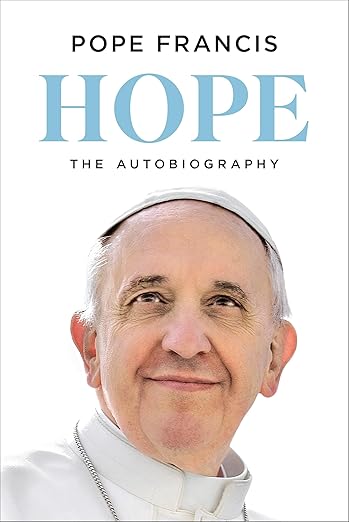
And, this month, two additional books to mention. I’m not Catholic, but I admire Pope Francis and I’m enjoying Hope, his recent autobiography. There’s a warm lively aspect to his recollections, also honesty about “errors and sins,” as well as an embrace of sentiment as “a cherished value: not to be afraid of feeling.” I remember following the election of a new pope in 2013, after Benedict’s resignation, scanning the various possibilities and so on. I checked back in my journal to see what I’d recorded (and see that I wrote in the second person, as I do now and then):

…you feel you should see where matters stand with the Vatican conclave. Well. The white smoke has billowed forth, not 10 minutes ago. So you join Peter Mansbridge (CBC) to watch live, and who is it? The one you hoped for from that list of 20 [in the newspaper], the man from Argentina, and on what basis did you hope? Well none are anything but traditional but there was a note, wasn’t there, of openness to women? On that basis. He is a Jesuit, of pastoral personality and warmth, simple habits, etc. What you’re reading seems affirming. It’s a surprise, of course; he was not in the upper group of likelies. He’s 76. Latin Americans are thrilled.

Actually, women’s position in Catholicism has not changed much, as far as I know, but I’m only about a third in so perhaps he will comment on it further in. (Here’s the Guardian review.) Another book I’m reading is the graphic edition of Timothy Snyder’s On Tyranny: Twenty Lessons From the Twentieth Century. The illustrations by Nora Krug add power to Snyder’s 20 points; the whole thing is just incredibly relevant.

Living in this moment

This year, I’ve resolved to show up here at least once a month, say that I’m still alive, what’s on my mind and all that. I am alive, reasonably so thanks, and what’s much on my mind is this moment. “This moment” is often used to particularly position ourselves — right now I’m sitting at my round table in the living room, the sky is grey, moving branches tell me there’s wind, I’m talking via a blog post, getting a little hungry since it’s near noon, for example — but more recently it has come to mean the situation we collectively find ourselves in because of what’s happening in Washington D.C., in Ukraine/Europe, in Gaza/Israel, in tariffs/Canada. Say “in this moment” and most everyone knows exactly what is meant without further elaboration.

I confess that I engage a lot, perhaps more than I should, eyes on what’s there, sometimes reacting, looking for hope. Honestly, I’m afraid. For the future. For the world on multiple fronts. It takes some wilful energy these days to keep strategizing my inner position and, especially, talking back to my fear, or better said, letting scripture and wise people, past or present, talk back to it. I ask myself, is there something I can do about it? I can shop Canadian and possibly add my name or body to a protest or write a letter to an official, speak up or affirm someone else with a “like”. Generally, however, for those bigger problems there’s next to nothing I can do except pray (yes, as a way of pleading on behalf of others, as a way of turning to Power greater than myself). No, generally there isn’t much except keep alert to the macro but live in the present, in the micro level, where my feet happen to be.

A kind of grief as well

I’ve been noticing in conversations with people in my generational cohort (so-called Baby Boomers) that, for us, there’s a kind of grief in this moment as well. Unbeknownst to us, we entered the world after the end of the Second World War. With the war over, it was a buoyant time, one in which we benefitted economically and educationally. We eventually learned what preceded us, of course, we read Anne Frank and Elie Wiesel and Victor Frankl. We read fiction and non-fiction about what had happened, we saw TV and movies, we visited places like Auschwitz and Mauthausen when we travelled, and, speaking for myself, the horrors of the Nazi regime and the Holocaust lodged deeply within and I truly believed “never again.” Actually, again speaking for myself, I could not grasp how it happened even though I knew, for a fact, that it had.

And, although Boomers have been accused of trying to be young forever and making everything about themselves, many participated in and pushed for progress in the women’s liberation movement and the civil rights movement and the anti-war movement and the LGBTQ movement and anti-acid-rain. There was progress. Much, much more to be done, yes, for sure, but what is so grievous and troubling now is that far from moving forward on human rights issues and the propagation of democracy, even those past hard-won advances seem to be in jeopardy. Naively, I suppose, we figured the momentum of our decades on earth would continue to be forward. We’re realizing instead that a great big pendulum seems to be swinging back, that people in the western world are bitterly divided, that horrors can happen again, are still happening again, not to mention the onward march of climate change. So there’s disappointment layered into our reactions to this moment.

The necessary “but”

So this, I guess, is where I should take a turn and say “but.” There are buts, even if I refuse to speak them in caps; there are good things too, and there’s hope, and I’m grateful. Pulling this moment into the personal particular present I see, at this very moment, a gleaming part in the clouds and I stopped to have lunch and it was delicious and since I made enough Spanish rice to last for one meal of it every day this week (that’s how I cook nowadays) I’m set for more deliciousness and there are friends and family, books, music, jigsaw puzzles. Prayers to pray, enough things to do where my feet happen to be.