What’s true about fiction

Among my earliest memories are the storybooks my mother read me. Both parents, in fact, modelled that books were important and worth spending time on. My mother, who with eight children never kept up with her housework, would leave tasks unfinished in the evenings, and sit and read.

While we children might be reading stories, however, she read “Christian” books, that is, of a devotional or theological nature, or if story-based, tales of missionaries or other spiritual stalwarts. Somewhere, perhaps from her example, and from admonitions I must have heard in the wider church community, I gathered that one advanced from “made up” stories to the “real” and more solid meat of books such as those as one progressed into maturity. It had to do with the adult requirement of being useful, I suppose.
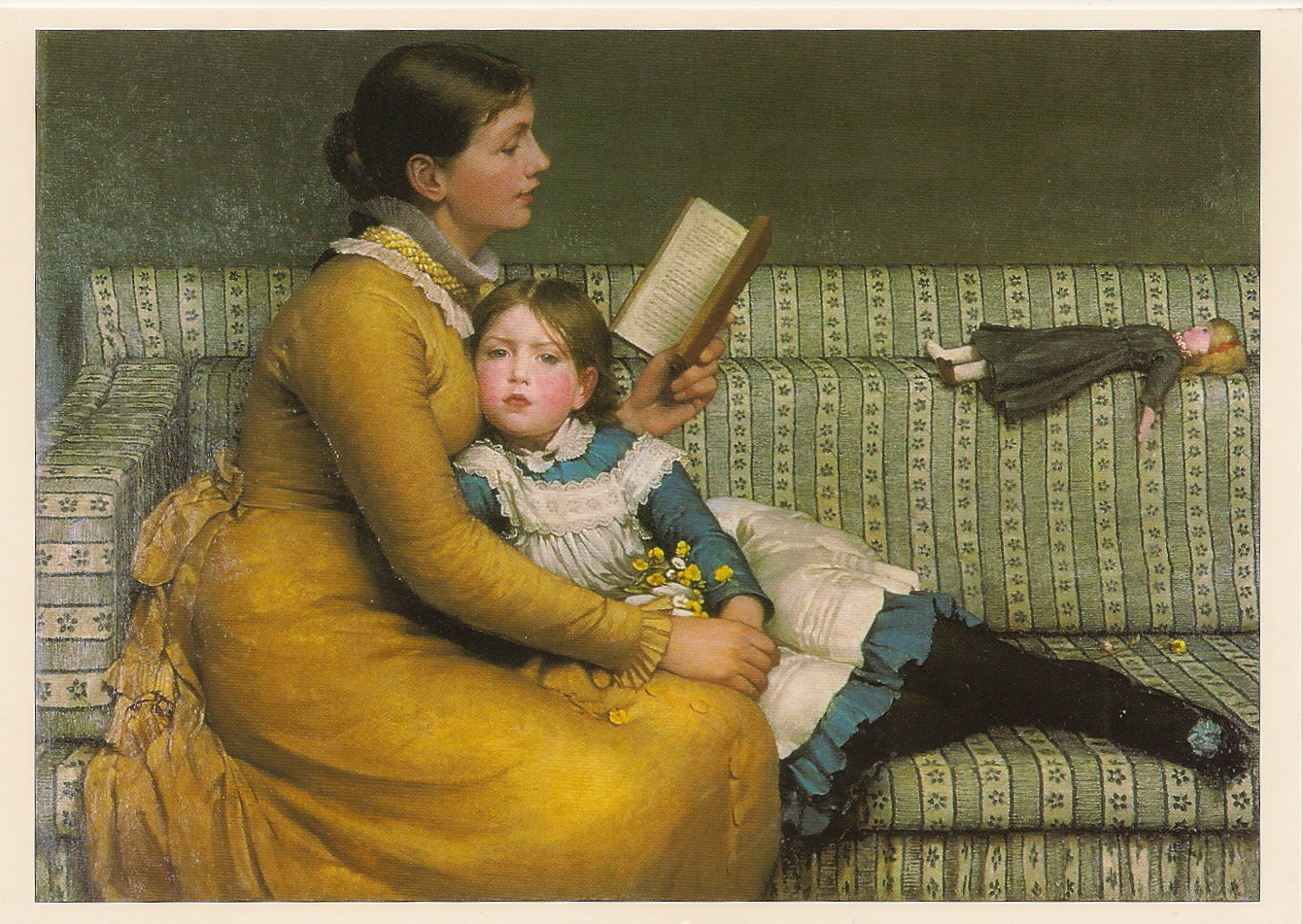
Art card: "Alice in Wonderland" by George Dunlop Leslie


Not that long ago, in reference to the reading habits of some of her peers in the seniors’ home, whose fare was mostly fiction,  my mother muttered impatiently, “I like to read what’s true!”

Another time she sighed, “I can’t help it that I like to read what’s real.”

She forgets, in those moments, that I, her daughter, have not only persisted in reading fiction, I’m involved in writing it. I don’t take it personally, however, for she is among the most affirming of mothers when it comes to the endeavours of her children. Her resistance to fiction, and the subtext her remarks contain about ranking kinds of reading, and even her definitions of “real” or “true,” are what she absorbed in her upbringing and church environment. It fits the earnestness that life in this environment seems to require. Continue reading

Changing the look

If you’re a regular visitor to this site, you’ll see that I’ve changed the header image. After half a year at this blogging business, it seemed to me that the site needed something visually fresh. WordPress regularly introduces new “themes” or blog templates but none so far quite duplicate what I like about my current Cutline theme.

So I’m sticking with Cutline, but the header can be changed, and perhaps for now, that’s fresh enough. Continue reading

A designation true and warm

Further to John Terpstra and his Skin Boat (see previous post)…

The book is about faith and church, about Christian things, so it might be assumed that the word Jesus would appear. But it doesn’t. Not so far, at least.

What Terpstra uses instead, where the name is required, is “the one who won us over.” Each time I read this, it’s a tiny surprise, to know who is meant and to recognize how this is true. And warm.

It fits the author’s story. The church of his growing-up was a solemn affair, hearing the Ten Commandments every Sunday, knowing guilt and the sentence of death, and yet, every Sunday too, “the congregation is… granted clemency.”

In reality, however, their sentence is only commuted until next week, when the same drama is repeated.

He had to attend, but he could not imagine, as a child, that he would ever “want to be here.”

But he heard the one who won him over replying to the religious leaders of his time about which law was most important.

He answered, Love G—d with all your heart, all your mind and all your strength, and your neighbour as yourself.

I thought: simple, straightforward; I can live with that.

It was the beginning of being won over.

It fits my story too, of a particular day, yesterday, May 6, in the year of our Lord etc. etc.  I’ve been busy this week, and the things I’ve been busy with, including writing and deadlines and a denominational committee assignment about which I can’t say any more except that it involves assessing a complicated conflict, have intensity about them, and the progress through that intensity has for various reasons needed some extra journalling and prayer. Which is good — the religious drama unfolding as it does between need and mercy. But the sense of my day reamined busy and intense. And then, in the evening, as if all of that slipped away or was clarified all at once – simplified really – came the reminder (though I mean this more as assurance than thought) of the Person at the heart of things. The name by which I knew him was a little different than the one Terpstra uses above, but just as true and warm: the one who drew me. 

And I was drawn close.

——-

P.S. Further reading: a review of Skin Boat at ChristianWeek and an interview with John Terpstra at Image.