
The sounds of burial

November is well into summer season in the Paraguayan Chaco and it may be hot today, though perhaps the morning will be pleasant enough. The funeral service for our sister/sister-in-law will be at 9.

We’re not there, of course, as we live in Canada. But our thoughts will be. Already are. — One thing I like about the way the Mennonites in Paraguay bury their dead (which I saw for the first time when our family lived there in the early 1980s) is the custom of the mourners themselves filling up the hole. Here the coffin may be left to “float” over the cavity, or, if it’s lowered,  any dirt thrown over will be symbolic. A machine will come later and take care of it quickly.

But in the Chaco, the men of the family (I only observed men doing this) take the shovels that are waiting and start filling in the hole, and as they tire, others come and relieve them, and while everyone watches, the hole is filled — not just filled, but mounded (for the earth will sink) — and the wreaths that stood in the church are piled on the mound. Only then is the burial complete. “You deal with death, the big notion, by dealing with the dead thing,” says Thomas Lynch, poet and undertaker. This custom makes unavoidable the awareness of how death is truly a return to decay, and the earth.

But I learned something else. In H.’s memories of childhood, those sounds — of the clods of earth hitting the wooden box that held the body — were terrifying and gruesome. Others said the same thing. At the last funeral we attended there, he immediately noticed that the earth had been dampened, and that the young men who began the shovelling had been careful to throw it against the side of the cavity, not on the coffin directly.  

So yes, dealing with the dead thing. But for the children standing round the grave this morning, this hope — so nothing will frighten them:

             oh, may the earth be loose and light,

             may it fall as quietly as leaves,

             may it wrap her with a whisper…

            oh, may the earth be loose and light.
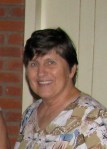
           

In Memoriam: Irene Janz (1947-2009)

Saturday evening, we decided rather last minute to go to a movie. I’d heard good things about My Sister’s Keeper and it was in the “cheap theatre” to boot, so off we went and watched it, and then, not many minutes after we were home again, we got the phone call: H.’s sister, Irene, had died, from her cancer. Just about an hour ago, they said.

While we were both crying during the movie, then, over the cancer death of fictional Anna.

I don’t mean to make a big deal of that coincidence. Whenever there’s bad news, things otherwise ordinary are thrown beside things that aren’t ordinary, and everything feels strange. Or maybe significant. I felt briefly guilty, maybe a little silly, that we’d been doing that, over a story, while this — a real death — was happening elsewhere.

The movie is a tear-jerker, no doubt about it, but on second thought, I know that in fact we were crying for Irene. We emerged from the theatre a little rueful over our mutual emotion. “Whoa, that was quite the movie to pick,” we said to each other, “under the circumstances.” We knew Irene’s cancer had returned with a vengeance, we knew the meaning of palliative care, we knew what was coming.

And we hadn’t realized the movie was all about that.

There’s been no end of other pictures running through our minds. Always her in the middle of it, someone who had energy for two, someone to whom the word housewife, or homemaker if you prefer, was a calling as wide as the Chaco of Paraguay, where she lived. Cooking, sewing, gardening, doing crafts, teaching Sunday school, hosting people, babysitting, running a milk farm for a while. Whatever was needed, she seemed able to do it. And a little extra. In 1984, when we were leaving the Chaco after our two-year sojourn there, we celebrated son S.’s eighth birthday at their place. Irene made him a chocolate cake and decorated it with a map of Paraguay.

We were crying for you, Irene, and for ourselves. The truth of the story and the truth of your dying were very much the same. Too young, too soon, but you, like Anna, yielded and ready, telling us not to mind, telling us you would be all right.

But we do mind, Irene Janz. And we’ll miss you.IMG_1256