
Happy in the age of memoir

We live, it’s often said, in the age of memoir. 

On one level, a statement like that is simply an assessment of what’s obvious in so many aspects of our culture. Certainly in the media — books, television, radio, internet — the weight of communication now often rests on the shoulders of personal narrative, on “reality” by way of experience. It’s a democratization of ideas and values supported by technology, especially in social media like Facebook or Twitter, where anyone can record the progress of their existence publicly, with as much inanity or imagination as they possess, or in places like the blogosphere, with its vast potential to reference and record one’s life. (And yes, here I am, too.) 

And just this past Sunday, an example of living in the age of memoir in our church: whereas baptismal candidates at one time marked their desire for baptism by memorizing and assenting to a catechism, however formally or informally that might be presented, the five young adults who will be baptized in our congregation this Easter Sunday shared their life stories thus far, at least in relation to faith. And as they did so, they revealed the differences that individuals have, and the inspiration and insight we have come to expect when we listen to people’s stories. 

At another level, it’s clear that there’s plenty of room for critique, and for criticism too, in the notion of “age of memoir.” Even in describing it, there’s the implication of narcissism, the contagion of the me-generation, the focus on the individual at the expense of community (which in Anabaptist circles, at least, is not quite how it’s supposed to be) lying not that far under the surface.

The now battered copy of Little Pilgrim's Progress my mother read to me, which I later also read to our children


I’m in no mood for complaint or criticism, however. Beginning with the children’s version of Pilgrim’s Progress which fixed itself indelibly on my mind in my earliest childhood — and was, as far as I’m concerned, a first taste of “life-writing” (a term I prefer to memoir, as it encompasses biography, confession, memoir, journals, letters, autobiography) because of its journey motif, even if not strictly life-writing itself — I’ve been steadily shaped by the expressed experiences of other people. And I still haven’t had enough, frankly.

Some of my interest is plain curiosity about others, but some is the quest for resonance with and wisdom from others which I need to live my own life. And I’m not sure that women in the particular categories I fit have been expressed nearly enough; I’m hungry for more of that too.

So if it’s the age of memoir, I’m saying that I don’t mind at all. I just want to find the right pieces of it, and think about it properly. Which brings me to a blog site I often visit, a kind of one-stop beginning for lessons, guides, discussions, and reviews in the area of memoir: 100 Memoirs. (I love the witty subtitle: “because 99 just isn’t enough.”) Shirley Hershey Showalter hosts/writes the site. She’s a former president (1996-2004) of Goshen (Ind.) College and wants to read 100 memoirs on the way to writing her own memoir of growing up Mennonite in America, 1948-1966. She picked the name for her blog from Heather Seller’s advice to new writers, as she puts it in her opening post, “to read 100 excellent examples of their genre before attempting to enter the ring with the best.” If you’re interested in memoir, whether as a reader or writer, it’s a great place to learn and stay connected.
Bolivian Mennonite rape victims: update

A recent comment from “Margaret” to an earlier post about reports of sexual assaults of Bolivian Mennonite women reminded me that I promised to provide updates to this story if I received them. What one hears is often anecdotal, and perhaps it will continue to be largely told, or puzzled over, that way — by putting what “Margaret” was told, for example, beside what a source involved with the Casa del Mariposa, a woman’s shelter being built for Bolivian Mennonite women, was told.

The latter account, forwarded me via a letter, said they hear many conflicting stories and “were not sure anymore what is true and what is not.” But, they continued, they do often hear that it [assaults] is still happening. They then recounted that the daughter of one of the imprisoned men, allegedly the ringleader of the group, sought them out to speak with them about their sister who had been gang raped and drugged. The “boys” confessed, but she is now “not herself” and in need of professional help, which the Casa del Mariposa workers are seeking to arrange for her at a mental health facility in Paraguay.

But, I was also forwarded a report written by Jack Heppner of Steinbach, who recently spent 8 weeks in Bolivia. He worked in Bolivia with the EMMC (Evangelical Mennonite Missions Conference) for three years in the mid-1970s and one year in 1991-92. Heppner was a public school teacher, also taught at Steinbach Bible College for some 15 years, then was conference pastor for the EMMC and editor of their monthly magazine, The Recorder. Upon his return from the visit to Bolivia, he wrote the following report of his observations and conversations relevant to this subject. It includes an analysis within the historical context of Mennonite life, answers to questions many of us at a distance have, and some helpful suggestions for steps forward.

Heppner said he considers it “an open document which I have offered back to the Mennonite church and its various agencies as one voice among many related to the tragedies unfolding in South America.” He has given me permission to post it here. Your comments are welcome. If you wish to dialogue with him individually, you can contact me (see info at About) and I will forward the request.

It’s a fairly lengthy document, but credible and helpful, and I highly recommend it to anyone who is interested in knowing more about this issue.
Continue reading

An evening of prayer

I just “overheard” a Facebook conversation expressing dismay and amazement at those who schedule (church) events on the evening of the Super Bowl. Well, guilty as charged in this corner, but none of us in the small group that formed to plan a service of prayer and lament for the Mennonite women of Bolivia thought of it, frankly, and no offense was intended. None of us, obviously, are followers of football.

In spite of American football’s crowning event and the rather poor driving conditions in southern Manitoba, however, some 80 or so people gathered for the service last night at the Morrow Gospel Church.

Photo by Ray Dirks

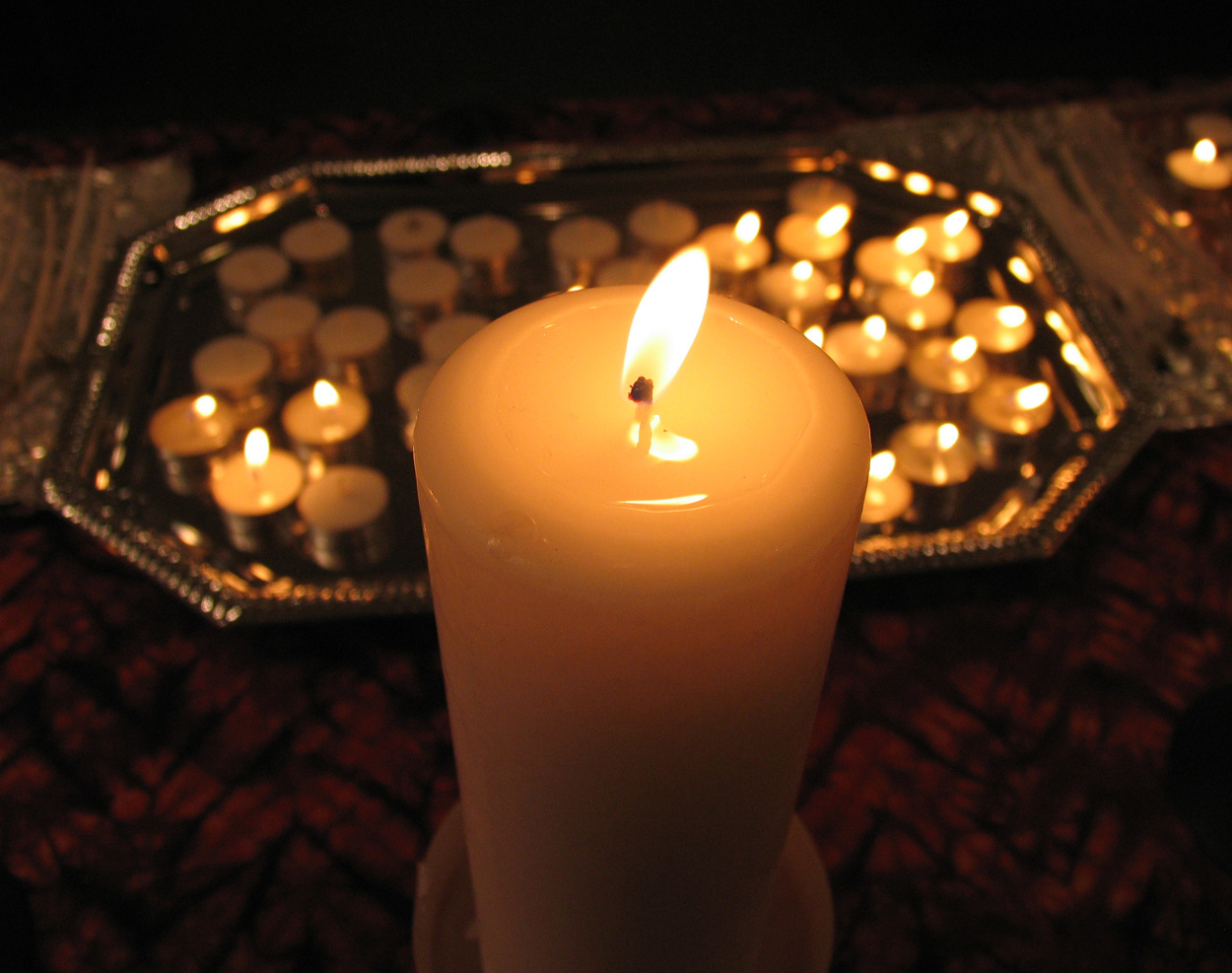
It’s always hard to evaluate something you’re involved in yourself, and that’s not the purpose with this post anyway, except that I’d announced it here and want to say now that it happened, and say thank you too to local readers of this blog who attended. We prayed using stories, Scripture, and song, and lit candles to mark our petitions. The music was wonderful, both the congregational singing led by Christine Longhurst with pianist Sherry Toews, and instrumental music by Lilian Guenther (harp) and by Barb Hamilton (viola). In the middle of our litany of lament, Lilian sang, unaccompanied, “Sometimes I feel like a motherless child” — this just before a Lamentations text that includes “Pour out your heart like water before the Lord.” Music can do that for us; it pours like water.

A few lines from Leona Dueck Penner ‘s benediction sum up, I think, the “movement” that those who participate in prayer can experience.

One by one, in trembling hope,
we gathered here this evening to pray and to weep
for our sisters and also our brothers in Bolivia,
feeling helpless yet wanting to express our love and
compassion for them across the miles.

Through God’s grace, we leave now strengthened and renewed
through sorrow expressed and shared within the community of faith
in the name of Jesus who invited the sorrowful to find rest in him…. 

As for “movement” within the people for whom we prayed, that is likely beyond our means to determine. 

(Although it wasn’t the main aim of the evening, the offering raised for a women’s shelter that’s nearly completed in Pailon, Bolivia, under the auspices of the Evangelical Free Church of Canada Mission, came to more than $ 2900.) 
——-

Re. the specific situation around the sexual assaults, the most recent news I’ve seen — though it was more editorial commentary than hard facts —  was several weeks ago now, from the Kurze Nachrichten, a German newspaper in Mexico, saying that there was to be a hearing shortly of half a dozen men held in Cotoca, with the possibility they would be released for lack of concrete evidence. (No DNA testing has been done.) A number of men are being held in a different prison. The commentary includes [my translation] that “one is struck by the fact that those imprisoned in Cotoca are not well off… and one [wonders] whether money is playing a larger role than justice and truth… Bribe money is the boss; the law its obedient slave.” But, the article goes on to say, “Three uncontested truths remain: many women were used as objects, some are still being used, and only a few people are letting it trouble them much.”