Thoughts on Anne Rice’s “un-conversion”

As news of Anne Rice’s un-conversion (to Christianity, not Christ) ricochets around the media, I find myself also reflecting on what she has done.  And on the larger questions her action raises to my mind about speaking up, staying in, or getting out of the places we belong but find ourselves in disagreement with.

First thoughts, first reaction to reading  Rice’s words: admiration.  She said:

In the name of Christ, I refuse to be anti-gay. I refuse to be anti-feminist. I refuse to be anti-artificial birth control. I refuse to be anti-Democrat. I refuse to be anti-secular humanism. I refuse to be anti-science. I refuse to be anti-life. In the name of Christ, I quit Christianity and being Christian. Amen.

The next day she added,

I remain committed to Christ as always but not to being ‘Christian’ or to being part of Christianity. It’s simply impossible for me to ‘belong’ to this quarrelsome, hostile, disputatious, and deservedly infamous group. For 10 years, I’ve tried. I’ve failed. I’m an outsider. My conscience will allow nothing else.

And then she explained further,

My conversion from a pessimistic atheist lost in a world I didn’t understand to an optimistic believer in a universe created and sustained by a loving God is crucial to me. But following Christ does not mean following His followers. Christ is infinitely more important than Christianity and always will be, no matter what Christianity is, has been, or might become.

(Source for Rice quotes, The Guardian).

I know little about Anne Rice beyond the facts that she is the author of hugely successful vampire novels, turned Christian, turned author of novels about Jesus and a conversion memoir. I have no idea if I need to be cynical about her words or not. What I hear in her statements is a list of refusals I resonate with completely “in the name of Christ” (except for the Democrat one, as I’m Canadian and have no need of either Republican or Democrat), and I hear the word “conscience” and then, in an NPR radio interview, I hear Rice saying this was no quick or easy decision, no flash in the pan, and that it’s “painful.” So I take her at her word, and find myself thinking, “Thankyou! That took courage!”

Second thoughts: more admiration. Continue reading
Summer days

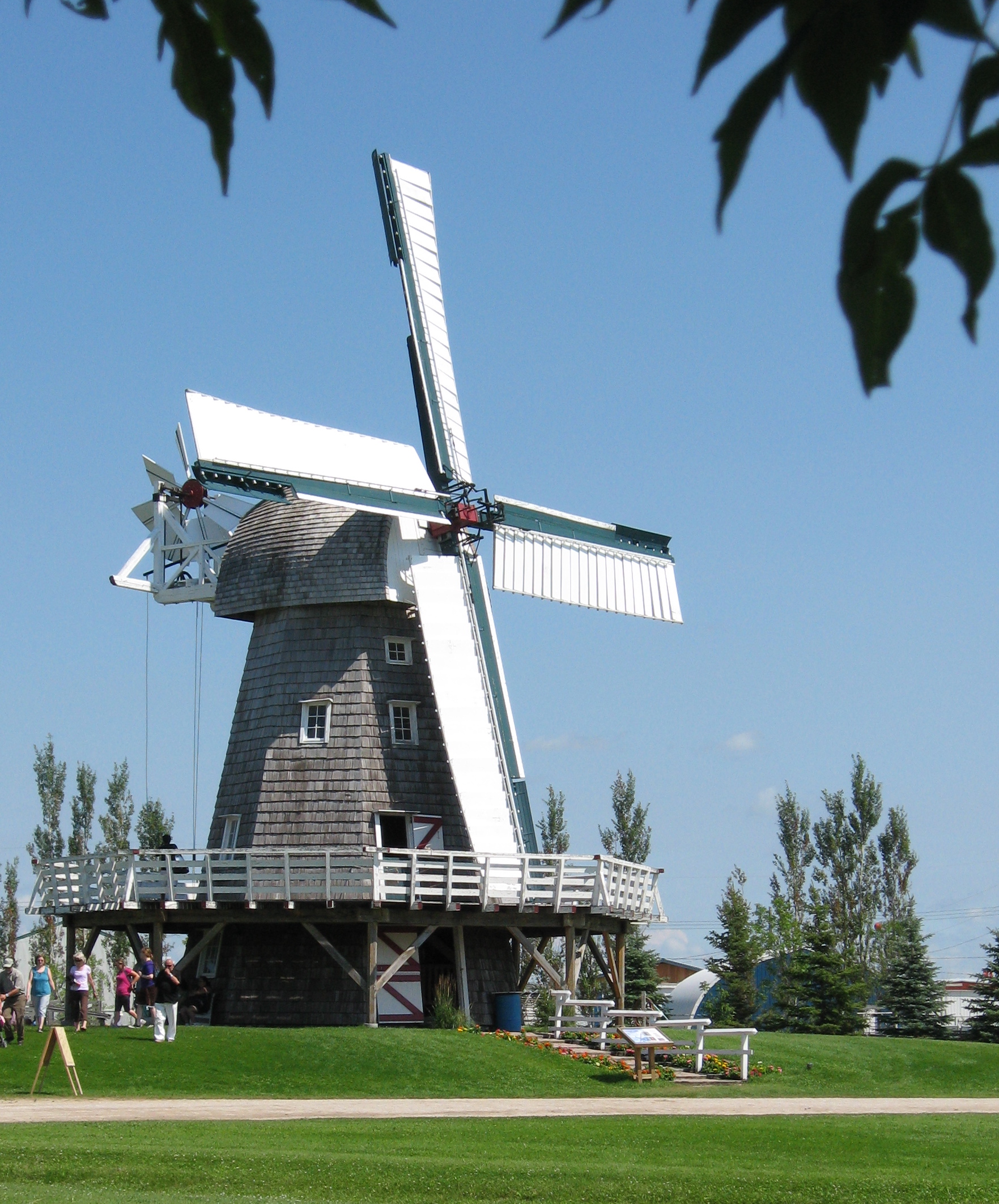
MHV windmill

H. and I went  to Pioneer Days at the Mennonite Heritage Village in Steinbach today. We’ve been at the Village various times over the years, and it’s always a great way to spend a day. This time, among the “attractions” on offer at Pioneer Days such as demonstrations of spinning, bread baking, blacksmithing and more, yours truly was reading from This Hidden Thing in the site’s Lichtenau Church. (It’s one of two churches at MHW; as curator Roland Sawatzky said, “Any good Mennonite village has to have at least two churches!”) It was good to visit with some folks we know, but also to meet new readers and to know that besides locally, copies of the book are heading to Toronto and to Pennsylvania!

Lichtenau church, where readings and book launches are held. It's the first church built by Mennonites of the 1920s emigration from Russia.

After the reading, it was time to indulge in a waffle with sauce — cooked outside in an old cast iron mould, one-and-a-half minutes per waffle we were told. A waffle fills an entire plate. Then we listened to “3 Mol Plaut,” a group that sings in Low German. I probably understood less than a quarter of what they sang, and got even fewer of the jokes, but H., who grew up with the language, could be heard chuckling throughout. Low German lends itself to any number of plays on words. (Actually, it often sounds amusing to me even when I don’t catch on.) We didn’t stick around for the supper-hour tribute to Elvis, however; not sure how that works in this context!

Last year at this time we were down in Paraguay for the Mennonite World Conference and an extended visit to family in the Chaco, but this summer, except for a quick trip to a nephew’s wedding in Saskatoon last weekend and my few days at a conference in B.C., we’ve been at home. H. had a pleasantly light July, work-wise (he’s a drywall contractor) and it’s been lovely, sitting on the front porch or back deck (depending on the sun), watching the tomatoes ripen, reading, and catching up on home projects. August will be busier for both of us, but what a treat these summer days have been so far. — (Thank You, thank You, thank You!)

Lit: almost larger than life

Lit: A Memoir, by Mary Karr, moved on to my “must read” list mainly through the high esteem in which blogging colleague Shirley Showalter over at 100 Memoirs holds both the book and its author. (Here, her review, and warm letter to Karr after they’d met.)

I reserved the book at the library, but when I arrived to pick it up, I realized I’d made a mistake in my order. It was the large print edition. I still manage just fine with regular print, so reading it this way wasn’t that comfortable, physically. I had to hold the book somewhere near my knees to get a decent distance from the big type, and sometimes after an extended period of reading, my eyes felt curiously maladjusted. I found myself rubbing them to get the familiar proportions of my environment back.

None of which is important, except that this seemed a kind of metaphor for the experience of the story as well. Lit is powerfully absorbing. Mesmerizing. The life it describes is about as large — in its intensity and visceral impact — as it gets without beginning to feel unreal. But it’s real enough; Karr is known to be scrupulous about writing fairly and accurately.

This book picks up where two earlier memoirs — The Liars’ Club (about her childhood) and Cherry (about her teen years) — leave off, with Karr’s education, marriage, becoming a drunk, getting sober, writing a bestseller, finding God. Karr has a lot to work through because of the damage her dysfunctional parents inflicted, and the damage she’s inflicting on her husband and beloved son Dev.

The plot may sound maudlin, like one of those too common grovel-to-glory accounts, but there’s something different about how Karr handles her material (and I don’t mean just her rather earthy language). I think it’s that she took the advice her friend Tobias Wolff (of This Boy’s Life) gave her:

Don’t approach your history as something to be shaken for its cautionary fruit…Tell your stories, and your story will be revealed…Don’t be afraid of appearing angry, small-minded, obtuse, mean, immoral, amoral, calculating, or anything else. Take no care for your dignity.

Such writing follows much the same path an alcoholic has to take to sobriety — facing, listing, confessing “my sinfulness in all its ugliness.” It’s a stance Karr maintains throughout. Interestingly, by taking no regard for cautionary fruit, she ends up being instructive — an example — anyway. She’s very good at describing growth, conversion, transformation, call it what you will, those small moments (that eventually add up) in which the soul opens a little, or shifts perhaps. Such as when she kneels in front of a toilet in the hospital, after checking herself in following a near suicide attempt:

If you’re God, I say, you know I feel small and needy and inadequate. And tonight I want a drink.

The silence fails to say anything back. I glare at it. It feels like judgment, the silence. And at that silence I give off rage; I start a ranting prayer in my head that goes something like this: Fuck you for making me an alcoholic. For making my baby sick all the time when he was so tiny…. And my daddy withering into that form. What pleasure do you get from… from smiting people?

I feel something stir in me, a small wisp of something in my chest, frail as smoke. It is–strangely–the sweetness of my love for my daddy and my son. It blesses me an instant like incense.

My eyes sting, and I blurt out, Thanks for them.

I feel the stillness around me widen a notch.

Karr’s writing reminds me of Anne Lamott’s, another writer who seems larger than life, raw and revealing, yet not diminished for all her carelessness of personal dignity. It’s an art perhaps, such honesty, and certainly the poetic language is, but it seems a gift as well. At any rate, I recommend the book. Unless you really need large print, read it in regular, however; Lit is quite strong enough without the additional shout of those great big words.