A few observations about the near end of the world, yesterday

1. It was an effective campaign. People everywhere noticed the billboards, the ads, and seemed to be talking about the rapture/end of the world happening at 6 p.m. yesterday. And I don’t mean just the talkers on Facebook and Twitter, the ordinaries on the street, like you and me. This got itself an article on the editorial page of our city newspaper, for example, and a news report in… well, last time I checked, there were more than 4800 articles that appeared in various media. I wonder why this grabbed so much attention?

2. I have no sense of humor. Of course it was bizarre. Of course I knew it wouldn’t happen. (Didn’t we all, except those poor deluded people who did?) But I just couldn’t get into a ha-ha or mockery mode over this. I wasn’t surprised by the jokes from the secular folks, but I was surprised, I have to say, by all the jokes from Christians. I don’t know why I’m feeling just a little cranky about that, but I am. Maybe I just wish we’d laugh as hard over the false prophets behind the ads for cereal, cars, Tim Hortons, you name it, that promise transcendence, the good life, justice through consumption.

3. On May 22, the end is still near. At least for me. Memento mori. (Remember that you must die. Remember your mortality.) Lord, have mercy.

4. A poem by Czeslaw Milosz posted by Debra Dean Murphy at her Facebook page touched me the most in the days leading up to May 21. I don’t pretend to understand what the poet intends here — I find it provocative, really — but it has me reflecting on everything so new and green this Sunday after two days of rain, and the meaning of “End,” and how we might expect yet still overlook it. With thanks to DDM for the link, here’s “A Song on the End of the World” by Czeslaw Milosz, translated by Anthony Milosz. It was written in 1944, that is, in the context of the Second World War.

On the day the world ends
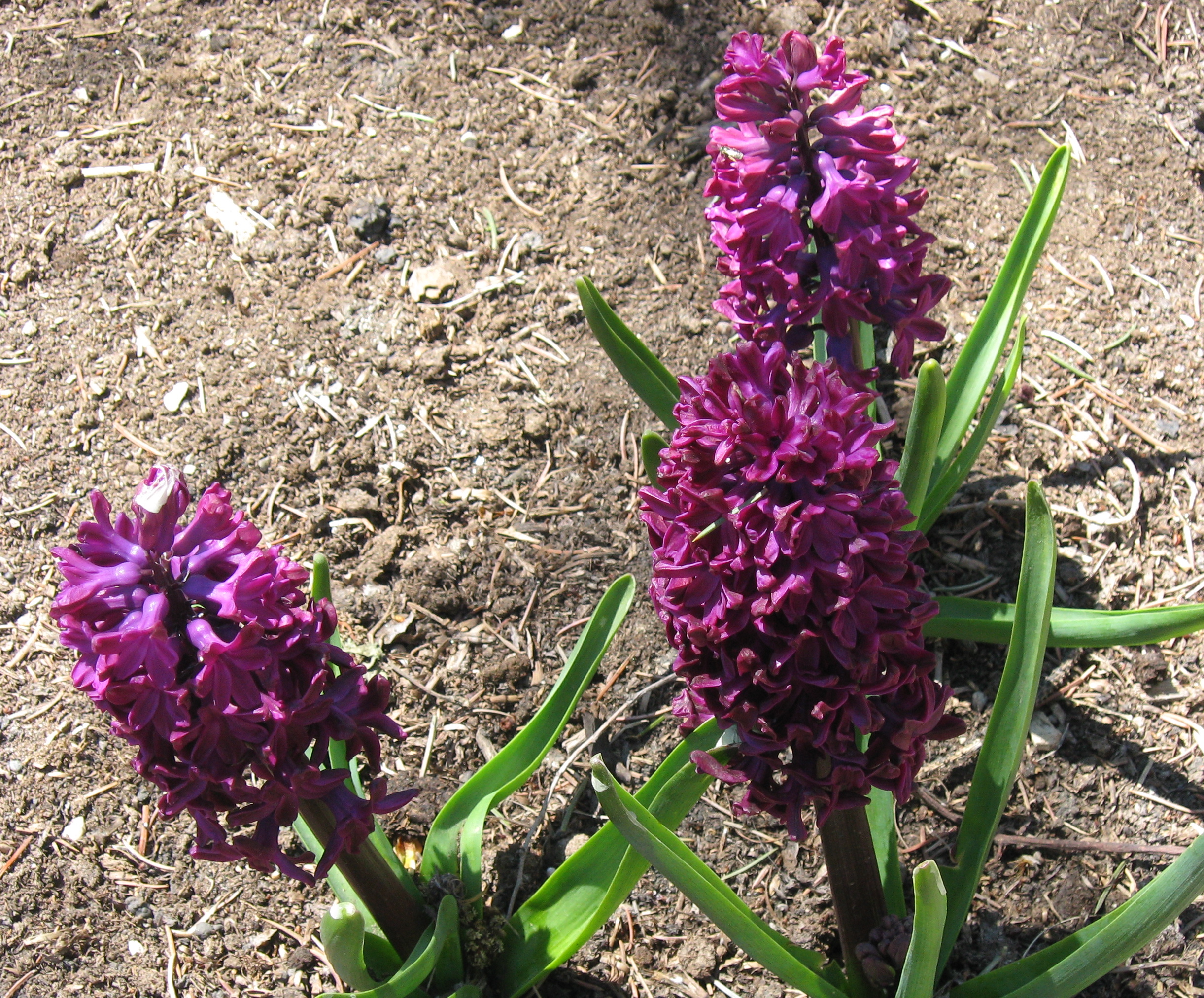
A bee circles a clover,
A fisherman mends a glimmering net.
Happy porpoises jump in the sea,
By the rainspout young sparrows are playing
And the snake is gold-skinned as it should always be.

On the day the world ends
Women walk through the fields under their umbrellas,
A drunkard grows sleepy at the edge of a lawn,
Vegetable peddlers shout in the street
And a yellow-sailed boat comes nearer the island,
The voice of a violin lasts in the air
And leads into a starry night.

And those who expected lightning and thunder
Are disappointed.
And those who expected signs and archangels’ trumps
Do not believe it is happening now.
As long as the sun and the moon are above,
As long as the bumblebee visits a rose,
As long as rosy infants are born
No one believes it is happening now.

Only a white-haired old man, who would be a prophet
Yet is not a prophet, for he’s much too busy,
Repeats while he binds his tomatoes:
No other end of the world will there be,
No other end of the world will there be. 

A day alone, and listening

H. was away all this Sunday, so it seemed a good opportunity to take an “alone” day, and to have it in the area of the city where parts of my current novel project are set. It’s a kind of research, hanging about places where things might happen to your characters, at specific times under specific conditions, and maybe making some notes about how trees look there at this time of the year, or mulling over how traffic sounds, for example. (We talk about “the sound of traffic” and we know what that means, but how would you describe it? From close or far away, or heavy or light, when it’s trucks or cars or motorcycles. I mean, besides vroom, vroom! Sounds are harder for me to write than sights.)

Manitoba's "Golden Boy" as if caught in a tree

I couldn’t have asked for a better day for the necessities of aloneness and research. It was such a fine day — clear, sunny, calm. And I think it was “useful” too, in terms of my work, though one doesn’t always know what details will be useful as the novel proceeds. But it was also a lovely day quite apart from any usefulness. And if you’re interested, here’s a bit of it. Continue reading

A nest that remembers

There’s lots of discussion these days on the future of the book. Everyone seems aware that digital reading and publishing is changing the way we write and read and publish, that it’s changing what we’ve assumed for a long time, namely that books adhere to paper and pages and bound volumes of various kinds, so lovely to hold and open and read through and close again and set on shelves.

I’m not here today to offer my opinions on these changes (though if you’re interested in the future of books topic, there’s a series of writers, booksellers, publishers talking about it at the online Winnipeg Review), but rather to mull on an art exhibition we attended last evening. “Bound by Nature,” at the Mennonite Heritage Centre Gallery in Winnipeg, May 6 to June 18, reflects on books in a very different way. Officially it’s described as an exhibition “inspired by nature, landscape and books” and it’s all that (and a really fascinating juxtaposition when you are made to stop and think about it) but it was “book” at the heart of the pieces that especially drew my attention.

So, for example, book spine covers used to create a series of “horizon” landscapes by Deborah Danelley reminded me of the world we see but also what one sees in books. They made me think of those large books I’ve known, yes with their cloth/paper spines fraying and loosening, maybe books of art or photos, a treasure of things and also a kind of borrowing from one medium to the other.

There’s a whimsical display called “Wildflowers,” by Deborah Danelley and Carol Leach, featuring what I can only call a “bed” of flowers fashioned from the pages of recycled garden/landscape/nature books. Erwin Huebner has a number of interesting pieces that reflect on the “books” of small places like eggs (think of all the information an egg contains) and the stunning color and shapes of substances seen via the microscope. Other artists had made accordion books and match box books; there was richly textured paper.

"Nest as destiny" by Agatha Doerksen

I knew that my sister-in-law, Agatha Doerksen (Denver, Colorado), had a number of pieces in the exhibition, so of course I was curious to see where the theme had taken her. I was not disappointed; her pieces were a highlight for me. A number of them were intricately altered books opening into nests, and her author’s statement asked some intriguing questions:

If a seed becomes a tree, does the tree remember the seed?
If a tree becomes a book, does the book remember the tree?
If a book becomes a nest, does the nest remember the book? 
Where can I find a nest that remembers the seed?

I left the exhibition with a sense of the seamlessness of story/book and nature, of book as memory, of book as something something primeval, even primitive, vulnerable though resilient. I left feeling, strangely perhaps, optimistic about the future of the book.

—-

"I want to tell a tree my secret" by Agatha Doerksen (seed pods with book pages rolled tightly into its cavities)

Note:  Canvass has a statement about the exhibition, and on the third page, images of some of the other work. Eleven artists participated, and the exhibition was curated by Deborah Danelley.