
Links to wisdom

As news of the death of Osama Bin Laden broke last evening, with that peculiar voyeuristic excitement such events take on as we sit nearly mesmerized in front of the television and listen to commentators say the same thing over and over again — Osama Bin Laden is dead, Osama Bin Laden is dead, Osama Bin Laden is dead — the reaction seemed all jubilation. I felt uneasy, I confess, but wasn’t sure if I should. I’m Canadian, after all, not a New Yorker, not an American. But this morning I began to hear others expressing similar dis-ease, in comments on Facebook, in blog posts, places like that. Here’s one piece of wisdom (“Vengeance does not equal peace”) that touched me especially, from Heather Plett, because she spoke to this situation from a place of deep learning of her own.

And then I was running some errands and caught Jian Ghomeshi’s interview with Maya Angelou on Q at CBC. And that was another gift of wisdom on this Monday, nothing to do with Osama Bin Laden, but one sentence after the other in that thoughtful, melodious voice of hers, about being human, getting the job she wanted when no one would give her the time of day because she was “Negro,” saying sorry, how we carry home with us, being a role model, and more. If you have 23 minutes or so, why not have a listen, here. Hers is such a beautiful spirit.
Mainline memoir

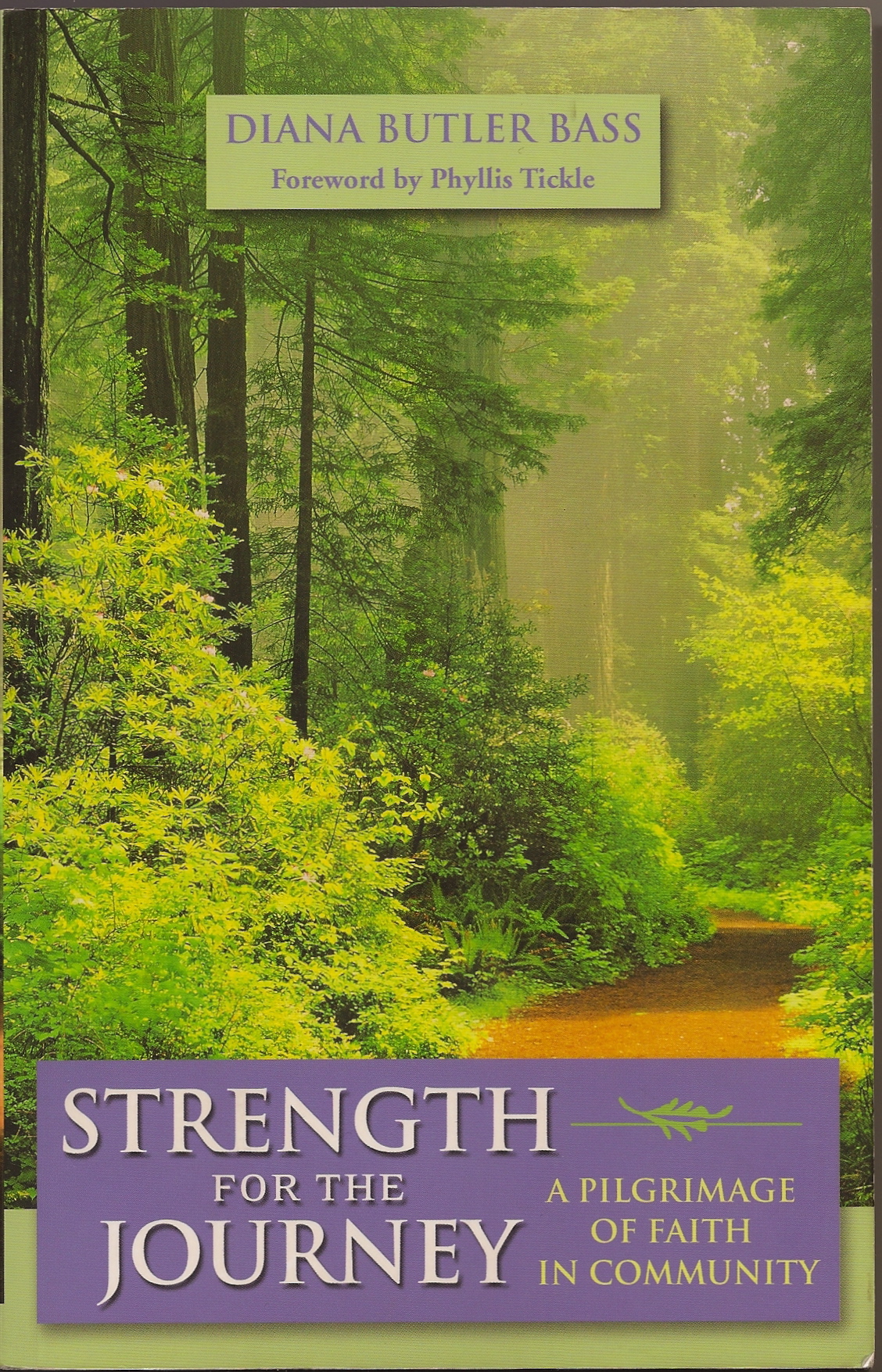
A friend of mine stuck this book into my church mailbox recently, because she thought I’d enjoy it. I told her I had a stack of books waiting and it might take a while. But you know how it is… Suddenly you have a quiet Sunday afternoon at your disposal and you pick up the book, just for a look, and before you know it, you’re in, and before you know it again, you’re finished.

Strength for the Journey: A Pilgrimage of Faith in Community (Jossey-Bass, 2002) is an unusual memoir in some ways, for it’s the story of Diana Butler Bass’ personal spiritual journey  but told via the stories of nine Episcopalian (Anglican) churches she’s been part of over the years, in various parts of the U.S.A. Alongside this, Butler Bass provides journalistic analysis of the “old mainline” church story in America, from severe losses since the 1960s or so, through new identity as “culturally marginalized” (whereas formerly the locale of people with prestige in their communities), and about the renewal that’s happening — and possible — at that place of powerlessness.

Butler Bass’ journey takes her from an adolescent faith within evangelicalism that was “filled with fear” into a greater comprehension of, and living into, “the reality of a God who is completely Love.” She changes slowly and sometimes resistantly, often defaulting to a “knee-jerk fundamentalism” that likes to divide the world into camps, orthodox and liberal, for God and against. What is it that leads her to “a new theological place”? Liturgical worship.

I enjoyed this book. The author’s story differs in almost every detail from mine, not to mention that Butler Bass is nearly ten years younger, and yet as I read I felt our paths curiously similar. I think it’s interesting how in the last years I’ve been bumping into “mainline” in all kinds of ways, through people I’ve come to know, through services we’ve attended, through Christian Century, through this book, and in all of these, the assumptions and stereotypes I held or encountered decades earlier simply don’t stand. Well, of course it was inevitable, went the general line of those assumptions, all those losses, because___ (fill in the blank, but probably include the scary word “liberal”!). I don’t mind at all being tugged away from too little knowledge into a more nuanced historical analysis, and most importantly, into a wider awareness of and love for the church.

Last words

I’ve been caught up this Good Friday by the last words of a dying man. The words the dying Jesus spoke on the cross tell us a great deal about Jesus, of course, about his humanity, his divinity. But it seems to me that we are meant to speak these words as well. Some will come out of us easily enough: the great need, both physical and psychological, of “I thirst,” and the devastation of “My God, my God, why have you forsaken me?” (The latter resonates for me in the personal care homes I’ve been in and out of lately on account of my mother; here are so many people whose diminished lives seem a cry of forsakenness.)

Other last words we have to keep on learning, words of care such as Jesus spoke to his mother and a disciple (“Behold your mother…your son”), words of trust (“Into your hands I commit my spirit”), and words of forgiveness (“Father, forgive them…”). Even the word to the thief (“This day you will be with me”) must be seized for its startling mercy. (Richard John Neuhaus develops this particular saying, in his book Death on a Friday Afternoon,  under the heading “Judge Not,” on the hope/assurance to hear this said to me — and to all.) And then the word of satisfaction (“It is finished”) that grows out of knowing one’s purpose, of who one is; shouldn’t that be imitated too, even at the end of each day?