I began 2018 with a book about jigsaw puzzles (because I did 37 of them last year, which just sounds crazy in retrospect, though it was a crazy year with Trump et. al., plus a transitional year for us): The Pattern in the Carpet: A Personal History with Jigsaws by Margaret Drabble. The book ranges about Drabble’s childhood, childhoods in general, games, mosaics, city spaces, working outward from jigsaw puzzles, and reminiscences of her Auntie Phyl. Jigsaws began in the 18th century as dissected maps used as teaching tools; there was a boom in puzzle purchases after the 1929 stock market crash. I liked the author’s personal stories and reflections on puzzling but grew bored with the rest. “Sitting over a jigsaw as an adult, one may well feel foolish.” Yes. “One of the pleasures of the jigsaw-puzzle world lies in that safety, of knowing that all the pieces will fit together in the end.” That too. 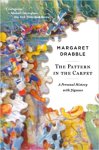
I forget where I heard about The Night Guest by Fiona McFarlane, but it was the “old person” angle that compelled me into it, on account of my new blog on aging. This debut novel is astonishingly good—beautifully written, an eerie and growing suspense, but also the feeling (for me) of a very rich life, whether “really true” for 75-year-old protagonist Ruth or not. In other words, if dementia is this internally rich, well… maybe it’s not so bad. However, there’s much more to the story, which I must not give away. Reviewer Rachel Hore, in The Independent, called it “a wonderfully evoked portrait of old age that disturbs and elevates in equal measure.” The book was hard to put down.
Can a long-married retired couple’s getaway to Amsterdam, including its small details concerning taxis and suitcases and baths and tooth brushing and meals, be interesting? In the hands of Irish writer Bernard MacLaverty, it can. Midwinter Break tells of Gerry, who has a drinking problem, and Stella, who wishes to leave him and fulfill a vow she made to God long ago while pregnant. One is left pondering marriage itself, both its stresses and strengths.


Roddy Doyle’s latest book is rather ironically titled. I read Smile on the flight to and from Saskatoon to visit my mother, a fact that has nothing to do with the book itself except that the cramped unremitting imprisonment of a narrow seat in a short-haul airplane flight is small suffering compared to the awfulness of sexual abuse of minors by the Irish Christian Brothers. Doyle is an accomplished writer but the subject, handled here with a twist, is grim.
One of the book blogs I frequently visit is Kerry Clare’s “Pickle Me This”. She had a giveaway lately, and guess what? I won Things To Do When It’s Raining by Marissa Stapley. I read this book on a flight as well, this time to Toronto to see our children. The trip being longer, the seat a smidgeon bigger, this attractive, curl-up kind of story about a young woman’s return to the place she was raised, with secrets, plot twists galore, and the reminder to “choose love” was a great fit for those hours in the air. Like Kerry, I was charmed by the items from the “list” of the title that open each chapter. (Her review here.)
Discussing the recent Mennonites and the Holocaust Conference at Bethel College with a writer friend, we reminded each other of the importance–the necessity really–of fiction and poetry to flesh out the complexities, human stories, and nuances of difficult pasts. I can’t think of a better example of this than Rachel Seiffert’s A Boy in Winter. While seeming at first a “typical” Holocaust story — sad, tense, cruel — the characters and their response to the historical situation in which they find themselves is both what we might expect but also either more or less. Particular, that is, and thus recognizable. And, even the best or worst intentions can have their unexpected consequence. And bravery, Seiffert commented in an interview with Eleanor Wachtel, often looks like fear.
What have you been reading lately?
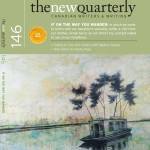 I’m pleased to say that my short story, “A Weekend at the Lake,” appeared in Prairie Fire, Vol 38, No. 4, Winter 2017-18, and my creative non-fiction piece, “Mother and Child,” in The New Quarterly, Spring 2018. These fine literary magazines can be purchased or (sometimes) found in libraries. Thanks for your support!


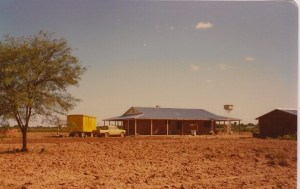
 It’s the fine dry sand like puddles between ridges of hard earth and the heavy heat that sets me back into those years when I was thirty-two and three and four, when I had children in my arms. We wander on, murmurs of memory between us. The mulberry bushes seem to be gone, the chapel too. The soccer field at the school is overgrown. It’s a day school now, no longer residential. Something large is being built across the street. Everything feels the same but completely different too. There’s construction sound, and motorcycles now and then, but I’m struck by an overwhelming sense of quiet, of peace like sleep. But it teemed, didn’t it — then?
 Borrowing Bones