On reading to write: a short interview with Shirley Hershey Showalter

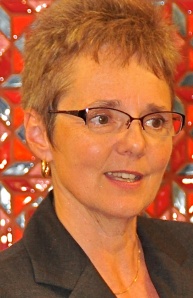
A talented and determined young writer I know (Angeline Schellenberg) commented on my previous post and in the process raised with some good questions on the relationship between reading and writing. While thinking about this, it occurred to me that I must ask Shirley Hershey Showalter, whose blog 100 Memoirs  I read regularly, for her thoughts on the subject. Shirley — “a farmer’s daughter turned college proessor, then college president, later foundation executive” — is writing a memoir about growing up Mennonite in America (1948 to 1966) and she’s going about the learning/reading side of it very deliberately.

Today, between a visit with a friend and picking her green beans, Shirley graciously sent me her answers to three questions.

1. You set out to read 100 memoirs, with the intention to write one yourself. What are you looking for?

I am following the advice of Heather Sellers in her book Chapter by Chapter. She says that before trying one’s hand in any genre, first read 100 good examples. Most of us have read 100 novels if we are readers, but not too many people have read 100 memoirs. Hence the goal.

What am I looking for? Structure, voice, sensory detail, and tone. The story itself is secondary to me, although I find some lives more interesting than others. How the story is told fascinates me most.

2. How does the experience of reading affect your own project?

I am just now starting on what I call the long arc, or a full childhood memoir of 40,000-60,000 words, having published five short memoir essays of 2,000-5,000 words that received modest praise. ( I am easily encouraged. :-))

I make notes in the margins of the memoirs as I read them. Other people’s memories ignite my own. When I review the book, I usually comment on structure, voice, and tone. One good thing about blogging is that you have a collection of searchable material all located in the same place. I am hoping to finish the long memoir and may occasionally go back to the 272 blog posts to find a quote or remind myself of a particular model.

But I doubt I will do that often. I hope to sit in a dark room in the early morning and throw away all the models. I want to be like Thea Kronborg in Willa Cather’s The Song of the Lark. I want to stand in the stream of history and feel all that is not me fall away so that all that remains is what I was created to be. I want to sing!

3. Do you find, as A.S. noted, that reading other examples of what you’re doing can be reactionary rather than generative, and that it makes it harder to hear one’s own voice? What advice do you have to make the experience generative, to keep your own voice?

It’s okay to copy the masters–like Rembrandt’s students did–and like many, many young artists do when still impressionable. You will learn from the process. Don’t be intimidated by a great writer’s voice. Instead, get inside it and explore. You could find your own voice in the process. Back to Thea Kronborg. She had conventional voice training first, learning what others before her thought was important. Then she stepped into a landscape that was bigger than herself and bigger and older than her training. When she returned from her experiences in the desert Southwest, she sang from a new place and had her own great voice.
 

Harold Bloom has written about the anxiety of authorship here summarized, and Susan Gilber and Sandra Gubar responded. I personally prefer Willa Cather’s imagistic explanation better than all these post-Freudian theories. A woman writer stands in the stream of literary history, but lets it fall away to reveal the purer self that sings naturally in her own body, in her own voice.

Thank you Shirley! You’ve given us some wonderful wisdom here (and some provocative links), for writers, yes, but for practitioners of anything really, from preaching to parenting, all who must absorb the influence of others while honing their unique approach. I’m very much looking forward to the song you’ll sing in your memoir!


Unlike Philip Roth, I’m still reading fiction

A tiny tempest, perhaps, but a tempest nevertheless, when renowed and prolific novelist Philip Roth announces he no longer reads fiction, and this with no further explanation than “I don’t know. I wised up…”

So it’s fallen to others to puzzle it out, to wonder, to agree or disagree. As, for example, Laura Miller at Salon, who finds that Roth isn’t alone in the company of fiction quitters and suggests it’s a function of aging, and Russell Smith at The Globe and Mail, less willing to let Roth off the hook, who says it may be, subtly, the desire to be rid of “the noise, the competition, the striving” —

And to switch off all the insecurity that reading others’ work gives a writer, all the reluctant admiration and envy and performance anxiety. Not to mention the sheer stress of having to keep up with all the brilliance being spewed out by thousands of younger people, all the must-reads that pile up like the Sunday New York Times, piles of guilt.

Some decades ago when I was trying my own hand at fiction, timidly, with little experience and tons of insecurity, I picked up the notion — advice given by some writing guru, no doubt — that one ought to stay away from novels while working at one’s own. So I did, more or less, at least while in the heaviest throes of the project. I’m not sure, looking back, if that was good advice or not. I might have amended it, at least, to eschew only the writers I didn’t much admire (though read for various reasons) and allow myself to bask in the style of those I liked and wanted to emulate. Smith is surely right to wonder how a writer of novels can’t be reading them. “Reading fiction,” he says, “is still the best rehearsal for writing it.”

Miller’s piece draws a distinction between fiction and non-fiction — the latter offering “instruction or information” and fiction, “an experience.” I’m not sure it’s quite that clean. Both fiction and non-fiction can offer instruction and information — true stuff, if you like — and an experience. Either can feel easy, or effortful. So much depends on the book itself.

So, I’m reading non-fiction — and lots of fiction. If aging’s the issue, I’ve still got some good years of stories to go before I reach 78. And I’ve got an impossibly long way to go to reach his output, at which point, perhaps, one’s own stories reel endlessly in the self and are all the nourishment one needs.

I’m reading to rehearse, because I’m working on another novel. I’m reading for information, instruction, and experience —  and for stretching understanding and love (which I spoke of in “Some reasons why I write”). I’m reading to exercise my admiration and fight envy — to practice a kind of community life, as it were, by reading the books of my peers or betters, say in a geographical zone or genre. And, I’m reading for the sheer pleasure of story.

One can’t possibly keep up, that’s true. But it would be just as hard to stop!

A nest that remembers

There’s lots of discussion these days on the future of the book. Everyone seems aware that digital reading and publishing is changing the way we write and read and publish, that it’s changing what we’ve assumed for a long time, namely that books adhere to paper and pages and bound volumes of various kinds, so lovely to hold and open and read through and close again and set on shelves.

I’m not here today to offer my opinions on these changes (though if you’re interested in the future of books topic, there’s a series of writers, booksellers, publishers talking about it at the online Winnipeg Review), but rather to mull on an art exhibition we attended last evening. “Bound by Nature,” at the Mennonite Heritage Centre Gallery in Winnipeg, May 6 to June 18, reflects on books in a very different way. Officially it’s described as an exhibition “inspired by nature, landscape and books” and it’s all that (and a really fascinating juxtaposition when you are made to stop and think about it) but it was “book” at the heart of the pieces that especially drew my attention.

So, for example, book spine covers used to create a series of “horizon” landscapes by Deborah Danelley reminded me of the world we see but also what one sees in books. They made me think of those large books I’ve known, yes with their cloth/paper spines fraying and loosening, maybe books of art or photos, a treasure of things and also a kind of borrowing from one medium to the other.

There’s a whimsical display called “Wildflowers,” by Deborah Danelley and Carol Leach, featuring what I can only call a “bed” of flowers fashioned from the pages of recycled garden/landscape/nature books. Erwin Huebner has a number of interesting pieces that reflect on the “books” of small places like eggs (think of all the information an egg contains) and the stunning color and shapes of substances seen via the microscope. Other artists had made accordion books and match box books; there was richly textured paper.

"Nest as destiny" by Agatha Doerksen

I knew that my sister-in-law, Agatha Doerksen (Denver, Colorado), had a number of pieces in the exhibition, so of course I was curious to see where the theme had taken her. I was not disappointed; her pieces were a highlight for me. A number of them were intricately altered books opening into nests, and her author’s statement asked some intriguing questions:

If a seed becomes a tree, does the tree remember the seed?
If a tree becomes a book, does the book remember the tree?
If a book becomes a nest, does the nest remember the book? 
Where can I find a nest that remembers the seed?

I left the exhibition with a sense of the seamlessness of story/book and nature, of book as memory, of book as something something primeval, even primitive, vulnerable though resilient. I left feeling, strangely perhaps, optimistic about the future of the book.

—-

"I want to tell a tree my secret" by Agatha Doerksen (seed pods with book pages rolled tightly into its cavities)

Note:  Canvass has a statement about the exhibition, and on the third page, images of some of the other work. Eleven artists participated, and the exhibition was curated by Deborah Danelley.