Looking, arms open

I’ve been reading Why I Wake Early, a book of new poems by Mary Oliver, though reading isn’t quite the right word for poems. It’s more like listening — like listening to music, and going back to listen again. There’s so much happiness in Oliver’s writing, such close and startling observation, and then plain-talk expression of it. This fragment from “Where Does the Temple Begin, Where Does it End?” describes her stance toward the world:

I look; morning to night I am never done with looking.

Looking I mean not just standing around, but standing around
as though with your arms open.

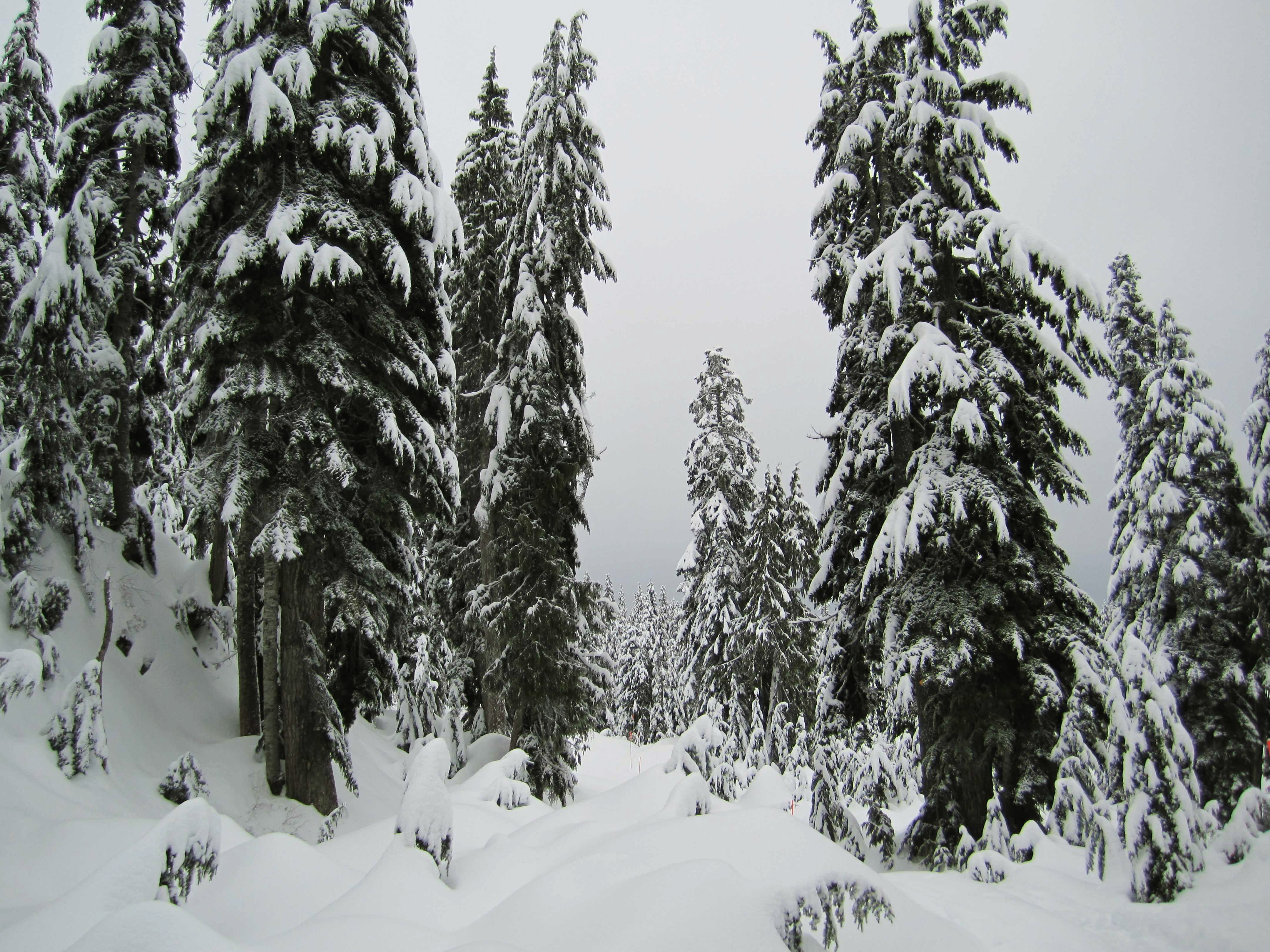
Yesterday our daughter sent the photograph below, taken while snowshoeing on Mt. Seymour (B.C.) the day before, and it seemed, even at a photo’s remove, one of those places for long, arms-open looking. No the sun isn’t shining, but it’s the trees that matter, so lean they are and lovely, bearing all the snow they can bear, dressed up for the Christmas party. Can’t you just see them at night, swaying a little in praise? 

In another fragment of the same poem, Mary Oliver says,

And now I will tell you the truth.
Everything in the world
comes.

At least, closer.

And, cordially.

So if we do our part, open our arms, we’ll be met halfway.

(If you’re interested, here’s a place to read Mary Oliver’s poetry online and here’s her Wiki-bio.)

Photo by C. Dueck. (Thanks!)

Further to the matter of fear

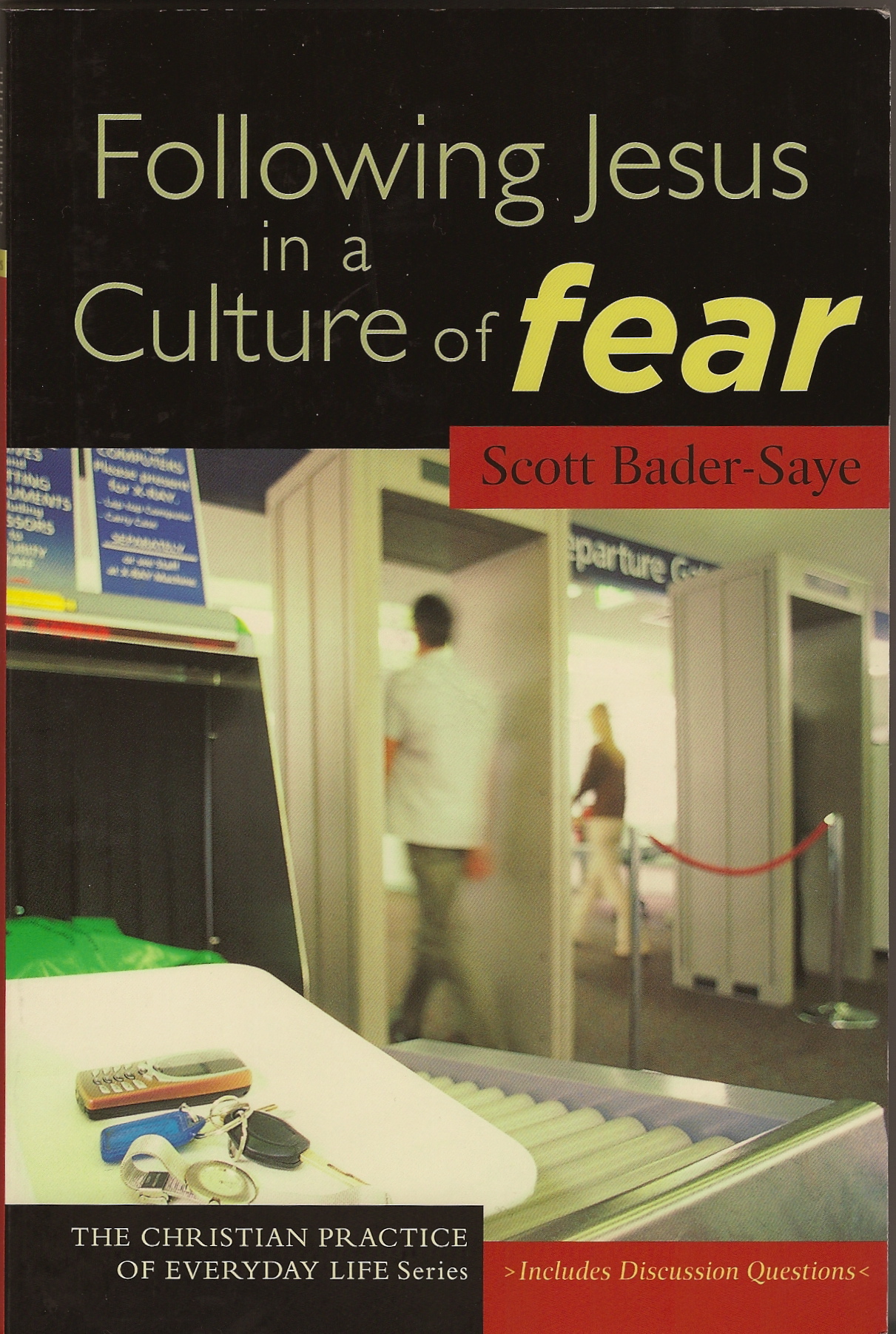
Now back from my lovely interlude with our new grandbaby and her parents in Toronto, I want to pick up my regular posting here, and particularly say a few more things about Scott Bader-Saye’s Following Jesus in a Culture of Fear by way of review.

As mentioned in the previous post, Bader-Saye assesses our culture as a fear-ridden one. I should mention that he assumes an American audience and frame of reference. Since we as Canadians share American culture to a significant degree and since we are also well used to the extra demands and adjustments reading as “outsiders” requires of us, which we fulfill almost intuitively from long practice, this wasn’t too irritating, though I do wish he’d been more deliberate about stating his Ameri-centric context. I might also insert that the practice of reading American material as Canadians might be used to illustrate the effort women had to bring to their reading for so many decades in earlier times, when the language and context assumed men, and still sometimes have to bring to their listening and reading in non-inclusive contexts. You can know you’re included and make the appropriate applications, you can recognize all the overlap, but still, it takes work and the skills honed by habit, and may provoke, depending on the situation, irritation either mild or painful. But this aside to an aside is taking me off way off course… Continue reading

About “The Lost”

This week, I finished a remarkable book: Daniel Mendelsohn’s The Lost: A Search for Six of Six Million. A conversation with a friend who was reading it brought it to my attention; then I remembered the positive reviews it got when it was published in 2006.

Mendelsohn grew up entranced by his grandfather’s stories. He also heard, though usually in whispers, in Yiddish, and without any details, about his grandfather’s brother Shmiel, who stayed in the Ukrainian town of Bolechow instead of getting to Israel or America as others in the family, and who, along with his wife and four daughters, perished in the Holocaust. Eventually Mendelsohn began to seek for those details, and in the process of many years and much research, interviewing, and travel, was able to put together something of a story of who these six were and how they died.

Their tragic fates were the fates of six million Jews and others considered “undesirables” — death; this is a Holocaust book. But it’s much more. It’s Mendelsohn’s quest, complete with twists and turns, and his descriptions of it are multi-layered, and reflective. One tiny example: he notices that one of the elderly people he interviews always uses the word “perished” to described what happened to Shmiel and his family (as I did above, because of the book) and notices the resonances of that word compared to others he might have used such as “died” or “were killed.” The book is rich in observations like this, and on themes such as the unreliability of memory and rumour, on facts versus judgment, on the nature of stories and storytelling.

Sometimes the stories we tell are narratives of what happened; sometimes, they are the image of what we wish had happened, the unconscious justifications of the lives we’ve ended up living.

Mendelsohn also weaves in the Torah’s opening stories, from Creation through Abraham’s offering of his son Isaac, drawing especially on the commentaries of Rabbis ben Itzhak (also known as Rashi) and Friedman. When it comes to parallels with the Cain and Abel story, for example, there’s more sibling failure in his grandfather’s family than his grandfather’s stories revealed, and failure in his own. (In fact, he says, the Cain and Abel story will be “eerily familiar” to anyone who has a family — which is everyone.) When he was a boy he broke his brother’s arm in a fit of jealousy and rage. Now, though, perhaps ironically, this “lost” brother is the one who travels with him and takes the photographs, and becomes, Mendelsohn says, “the greatest treasure” he finds in his search.

The Lost is a big book, sprawling, sometimes sentimental (Mendelsohn admits he’s sentimental), sometimes sad, but beautifully written, one of those books you come to the end of and feel grateful to have read.