A theologian’s memoir

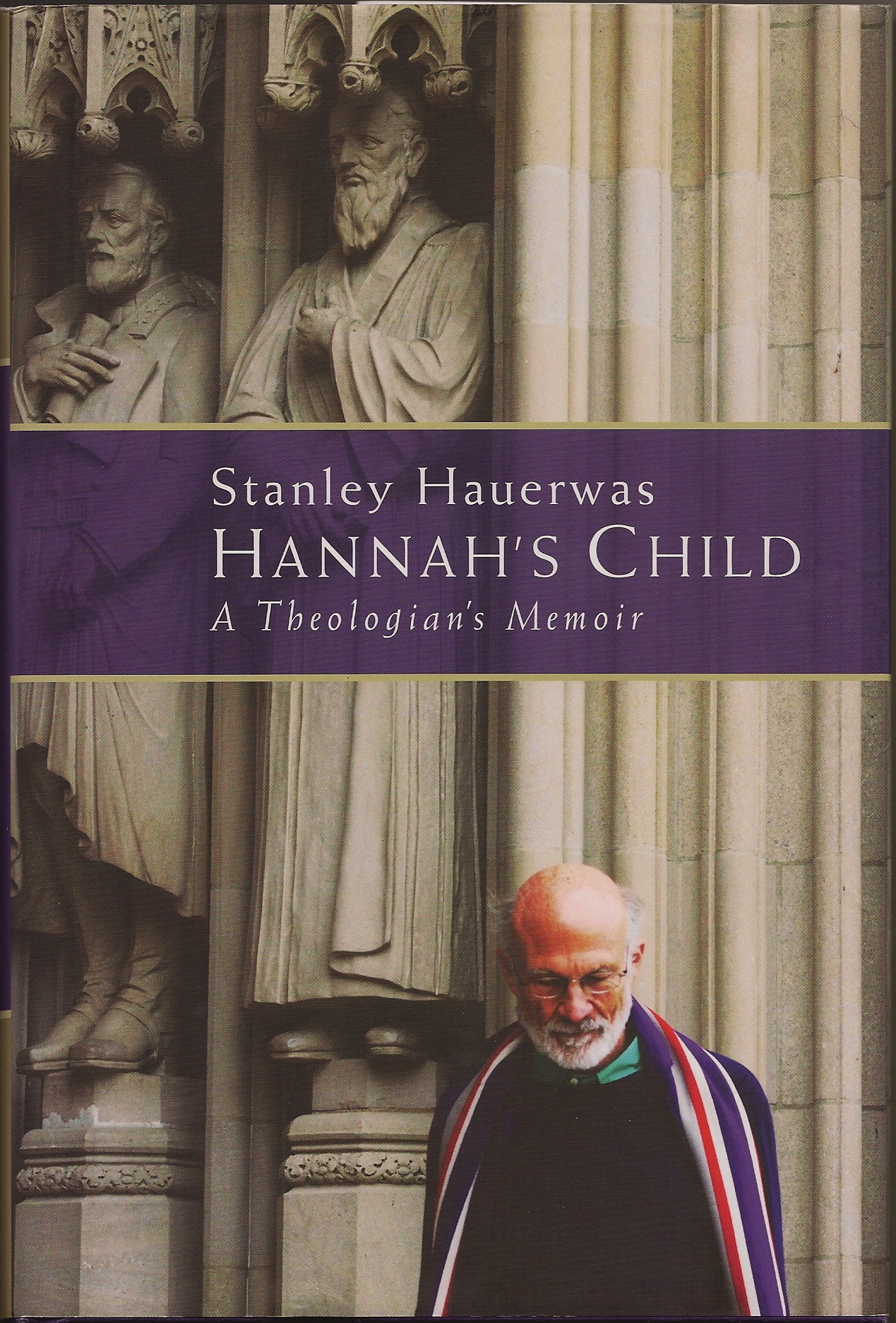
In 2001, TIME magazine named Stanley Hauerwas “the best theologian in America.” Hauerwas found the designation absurd, he said, responding that “‘best’ is not a theological category.” But there it was, he was thus named, and he was famous.

Hauerwas’ memoir, Hannah’s Child, which I recently enjoyed, seems an attempt to come to terms with that particular “Stanley Hauerwas.” He puts “the great man”in his place, as it were, by thoroughly reminding us of his unlikely qualifications as low class Southerner and hardworking bricklayer’s son (where he learned the earthy language he only reluctantly dropped many years into his theological career — “I hated the hyprocrisy that niceness cloaks”), and of his impatience yet slowness at knowing “how to be a Christian.”

“I live most of my life as if God does not exist,” he confesses. (Something most of us probably will have to confess as well.)

“[B]y writing I learn to believe,” Hauerwas also says, early on in the book. One feels that he is doing that with the topic of his life as well, picking his way as truthfully as he can, reaching some understanding as he goes about who he is and who he has been.

About his writing (which is prolific) — Hauerwas says, similarly,

My writing is exploratory because I have no idea what I believe until I force myself to say it. For me, writing turns out to be my way of believing. (136)

And another time,

Writing is hard and difficult work because to write is to think. I do not have an idea and then find a way to express it. The expression is the idea. (235)

This awareness of what he’s up to in writing seems a figure of one of Hauerwas’ key contributions as theologian: the expression is the belief. His work, he says, “was to demonstrate the link between the truth of what we say we believe and the shape of the lives we live.” He doesn’t consider “belief” of much value detached from what we do.

For a while, as I read, I jotted down every time I came across a phrase something like “I had no idea” or “I am not sure” or “it never occurred to me” or “I did not understand.” They are frequent, and one might get the impression from them that Hauerwas bumbled through life, knowing very little of anything. Not true, but they do express his sense of being an outsider, of life’s surprises, and of his debt to others for that which he’s been able to learn and teach. He expresses his gratitude easily — for his friends, his son Adam, his second wife Paula. His first marriage, to a woman who was mentally ill, was difficult, and there have been other conflicts along the way. Some of these wounds still seem raw, at least judging by how he nurses them in these pages.

One looks to life writing, however, not for perfection, but for honesty and grace. And there’s plenty of both evident here. I found myself challenged by Hauerwas’ life, and was fascinated by how he works at describing what it means to be him.

What it meant first off, as his mother with her “white-trash energy” informed him, was to be the answer to her prayers. She had married late and like the biblical Hannah, she was desperate for a child. Mrs. Hauerwas prayed a prayer like Hannah’s and was also given a son. He wasn’t thrilled to be told, as a youngster, that he was “destined to be one of God’s dedicated.” It was fine for her to pray the prayer but did she have to tell him about it?

Along the way, of course, being him meant a lot more than that, but in the end, Hauerwas comes back to his mother’s prayer, and himself as its answer.

However, I am quite sure, strange servant of God though I may be, that whatever it means to be Stanley Hauerwas is the result of that prayer. Moreover, given the way I have learned to think, that is the way it should be.

Weather, links, a new header

Mid-August, the days noticeably shorter, the nights cooler, and we’ve got more tomatoes ripe on the vine than we can possibly make sandwiches of. Yes, it’s the feel of autumn in the air.

Which reminds me — I was chatting with an editor/writer friend yesterday who was telling me about an article she’s working on, how she’s trying to get the “hook” (first sentence, paragraph) right. Which reminded her of how often people who write for publications like the educational newsletter she edits will simply begin with the weather. Late summer and signs of fall, principals and teachers are beginning to think about school, etc. etc., and in spring, well, the weather’s heating up and the kids are restless, ready for their holidays, etc. etc. Weather is just so convenient as a place to begin, whether it’s conversations at the supermarket or in our writing.

For readers, who are often busy and mostly grazing through all those pages of print we writers and publishers impose on them, opening with the weather is generally boring and won’t “hook” anyone. Which is why good editors like my friend simply scroll a few paragraph into the piece and see that there it is, the beginning — the hook! (Yes, this often works, especially with new or inexperienced writers.)

My inner editor being lazy or off-duty this morning, I started with the weather too, but what I actually had in mind to say was just a couple of disparate things, and that’s it for this lovely sit-outside-on-the-deck perfection of a Friday.

1. Back in April, I reflected on an article in the MB Herald concerning the B.C. conference and Mark Baker. Here’s a news update on that subject.

2. Someone over at CMU Press put together a great set of questions about This Hidden Thing, for book club discussion or study. My thanks to them, and this simply as an FYI for anyone interested.

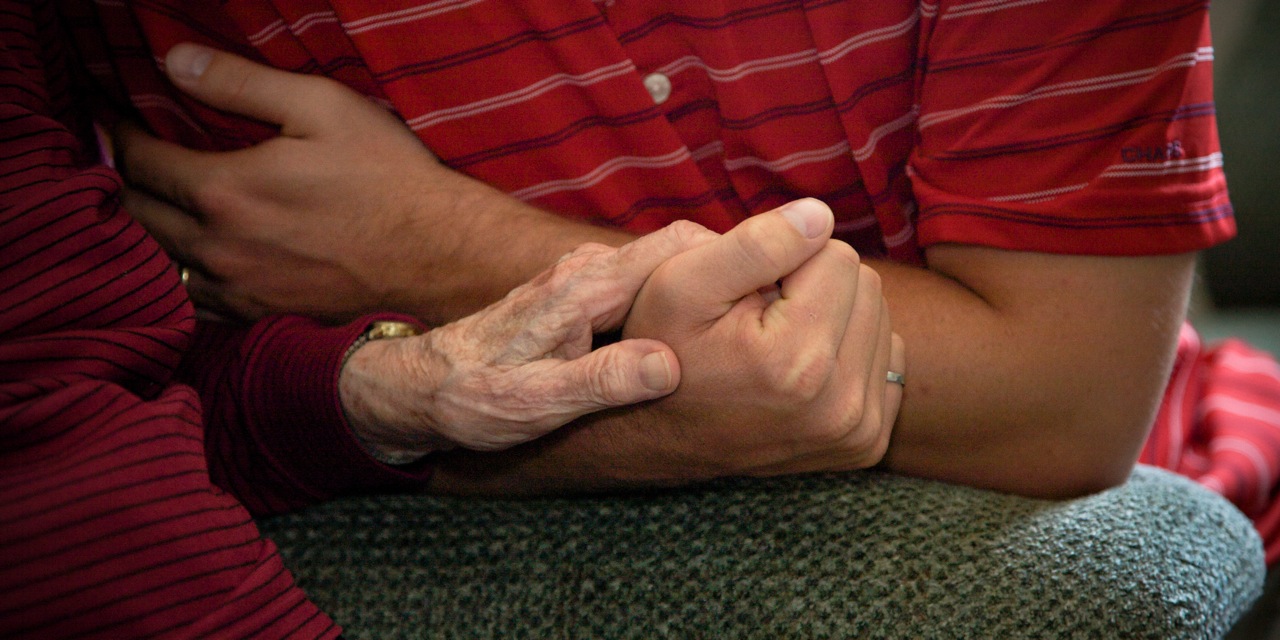
3. I may (or may not) come back to more postcard excerpts from my grandfather’s postcard album in the header of this blog, but for now, a slice of a photo our daughter-in-law took recently. Her husband (our son) was posing beside his grandmother (my mom) when they were here in Winnipeg several weeks ago to attend a wedding. She caught their faces, yes, but also their hands. I think it’s a beautiful photo and very evocative too of my blog title and theme, of that awareness that we build our lives out of what’s given to us in so many ways, including intergenerational bonds. Of the bones of inheritance (for better or worse) and love.

Here’s the larger photo. (You can view more of D.’s work at her blog, listed under my “Family and Friends.”)

Hands, grandson S. and grandmother T. Credit: Dayna Dueck

Lit: almost larger than life

Lit: A Memoir, by Mary Karr, moved on to my “must read” list mainly through the high esteem in which blogging colleague Shirley Showalter over at 100 Memoirs holds both the book and its author. (Here, her review, and warm letter to Karr after they’d met.)

I reserved the book at the library, but when I arrived to pick it up, I realized I’d made a mistake in my order. It was the large print edition. I still manage just fine with regular print, so reading it this way wasn’t that comfortable, physically. I had to hold the book somewhere near my knees to get a decent distance from the big type, and sometimes after an extended period of reading, my eyes felt curiously maladjusted. I found myself rubbing them to get the familiar proportions of my environment back.

None of which is important, except that this seemed a kind of metaphor for the experience of the story as well. Lit is powerfully absorbing. Mesmerizing. The life it describes is about as large — in its intensity and visceral impact — as it gets without beginning to feel unreal. But it’s real enough; Karr is known to be scrupulous about writing fairly and accurately.

This book picks up where two earlier memoirs — The Liars’ Club (about her childhood) and Cherry (about her teen years) — leave off, with Karr’s education, marriage, becoming a drunk, getting sober, writing a bestseller, finding God. Karr has a lot to work through because of the damage her dysfunctional parents inflicted, and the damage she’s inflicting on her husband and beloved son Dev.

The plot may sound maudlin, like one of those too common grovel-to-glory accounts, but there’s something different about how Karr handles her material (and I don’t mean just her rather earthy language). I think it’s that she took the advice her friend Tobias Wolff (of This Boy’s Life) gave her:

Don’t approach your history as something to be shaken for its cautionary fruit…Tell your stories, and your story will be revealed…Don’t be afraid of appearing angry, small-minded, obtuse, mean, immoral, amoral, calculating, or anything else. Take no care for your dignity.

Such writing follows much the same path an alcoholic has to take to sobriety — facing, listing, confessing “my sinfulness in all its ugliness.” It’s a stance Karr maintains throughout. Interestingly, by taking no regard for cautionary fruit, she ends up being instructive — an example — anyway. She’s very good at describing growth, conversion, transformation, call it what you will, those small moments (that eventually add up) in which the soul opens a little, or shifts perhaps. Such as when she kneels in front of a toilet in the hospital, after checking herself in following a near suicide attempt:

If you’re God, I say, you know I feel small and needy and inadequate. And tonight I want a drink.

The silence fails to say anything back. I glare at it. It feels like judgment, the silence. And at that silence I give off rage; I start a ranting prayer in my head that goes something like this: Fuck you for making me an alcoholic. For making my baby sick all the time when he was so tiny…. And my daddy withering into that form. What pleasure do you get from… from smiting people?

I feel something stir in me, a small wisp of something in my chest, frail as smoke. It is–strangely–the sweetness of my love for my daddy and my son. It blesses me an instant like incense.

My eyes sting, and I blurt out, Thanks for them.

I feel the stillness around me widen a notch.

Karr’s writing reminds me of Anne Lamott’s, another writer who seems larger than life, raw and revealing, yet not diminished for all her carelessness of personal dignity. It’s an art perhaps, such honesty, and certainly the poetic language is, but it seems a gift as well. At any rate, I recommend the book. Unless you really need large print, read it in regular, however; Lit is quite strong enough without the additional shout of those great big words.