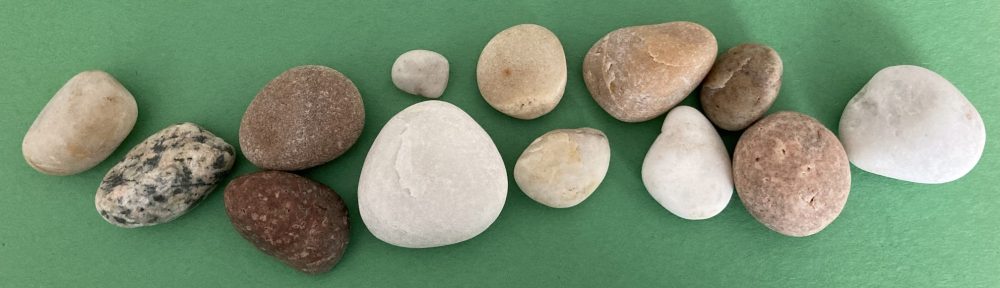
A ritual procession down 56th

A good funeral, poet/undertaker Thomas Lynch says, gets the dead where they need to go and the living where they need to be. When my husband Helmut died four years ago in the middle of the Covid pandemic, the usual mourning rituals had to be significantly modified. Not all of this was disappointing. It was a privilege for me, for example, to wash his body myself and, with the help of a son, dress him after death. The funeral service had us as a family separated into three “bubbles” but was meaningful nevertheless, as music, readings, eulogy, and homily flowed smoothly via the technological help of one of our pastors. We very much missed the physical presence and hugs of other people but, as a livestream production, it was possible for local friends and family as well as those in faraway places like Winnipeg and Paraguay to participate.

Once Helmut knew his diagnosis was probably terminal, he built his ashes box himself, of two favourite woods–maple and walnut. The plan was for cremation and then interment in a columbarium niche. The first part happened, and then four years passed with the box and ashes in the apartment with me. I didn’t mind at all, to be honest. But the time had come, and the opportunity, for the second part. This month, the whole family was together in B.C. for the wedding celebration of our daughter and her wife who were married five years ago, also during Covid, but sans the party. The couple graciously yielded a day of their celebration week for the interment of Helmut’s ashes.

I decided I wanted to walk to the cemetery and all the children and available grandchildren (some were in university classes and couldn’t come) gladly joined me. It’s about two kilometres from my apartment to the cemetery, but everyone’s fit to walk. The nearly-nine-year-old granddaughter wanted to know why we were doing this and I told her about the practice of pallbearers, about the symbolism of carrying our dead where they need to go. It took us about half an hour, down 56th Street, the main street of Tsawwassen, and whoever wished to, had their “turn with the urn.” (It was heavy!). I enjoyed this walk and the various conversations enroute, this carrying of our husband, father, father-in-law, grandfather at the pace of our feet.

A granddaughter takes her turn.

At the cemetery, we gathered under a canopy. I shared a few thoughts and memories, as did others, the granddaughters read some selected scripture texts, we spoke a litany of commital together, and the three children placed the box in the niche. Then the cemeterian came and closed the niche and placed the plaque over it. It felt emotional for many of us, but good.

I’ve startled a few people already with the photo of the niche plaque, because my name is also there. Please don’t be, it’s what my parents did with their cemetery stone, and it feels perfectly comfortable for ours. A niche has room for two “urns” and it’s where my cremains will go as well. Whenever; year only to be added.

After the ceremony, we gathered at the home of the oldest son and family, not far from the cemetery. Since I’d baked cinnamon buns for our lunch together and since I needed to be alone for a bit after the interment, I walked back down 56th Street, just me this time, and that felt necessary and symbolic too, and I picked up the pans of buns and brought them to the house in the car. We had a lovely day together, all of us gradually turning our thoughts to the upcoming marriage celebration. (Which turned out to be a wonderful day too.)
Charlie Pride at midnight

I keep telling myself I don’t want to write about grief, but then I show up to my semi-regular blog writing and it wants out again. Grief expert Alan Wolfert says grief is the interior experience and mourning expresses it outside yourself. And mourning is essential, he says, because one heals through mourning. (My friend Ruth Bergen Braun alerted me to Wolfert’s work; see “The six needs of mourning”.) So here I am, expressing.  

I’ve been reading Emily Carr’s journal, Hundreds and Thousands. I had not known that, besides her wonderful painting, she was such a good writer. Describing her dead sister Lizzie “radiant” in her coffin, all her “frets and worries” gone, she writes “I always want to remember Lizzie’s coffin face. It was so completely satisfied.” Seeing the dead person may be traumatic in many circumstances of death but my experience of Helmut’s body was similar to Carr’s of Lizzie’s, for in spite of the awful sad silence of him no longer breathing I was struck by the beautiful ease of his face. He looked good. I’d always thought him handsome, but what I mean is, his face was settled — utterly settled. There was nothing intentional or effortful there, just rest. This wasn’t entirely new for his face, for he’d won resolve and patience in his suffering, but now it was a step beyond; perfected.

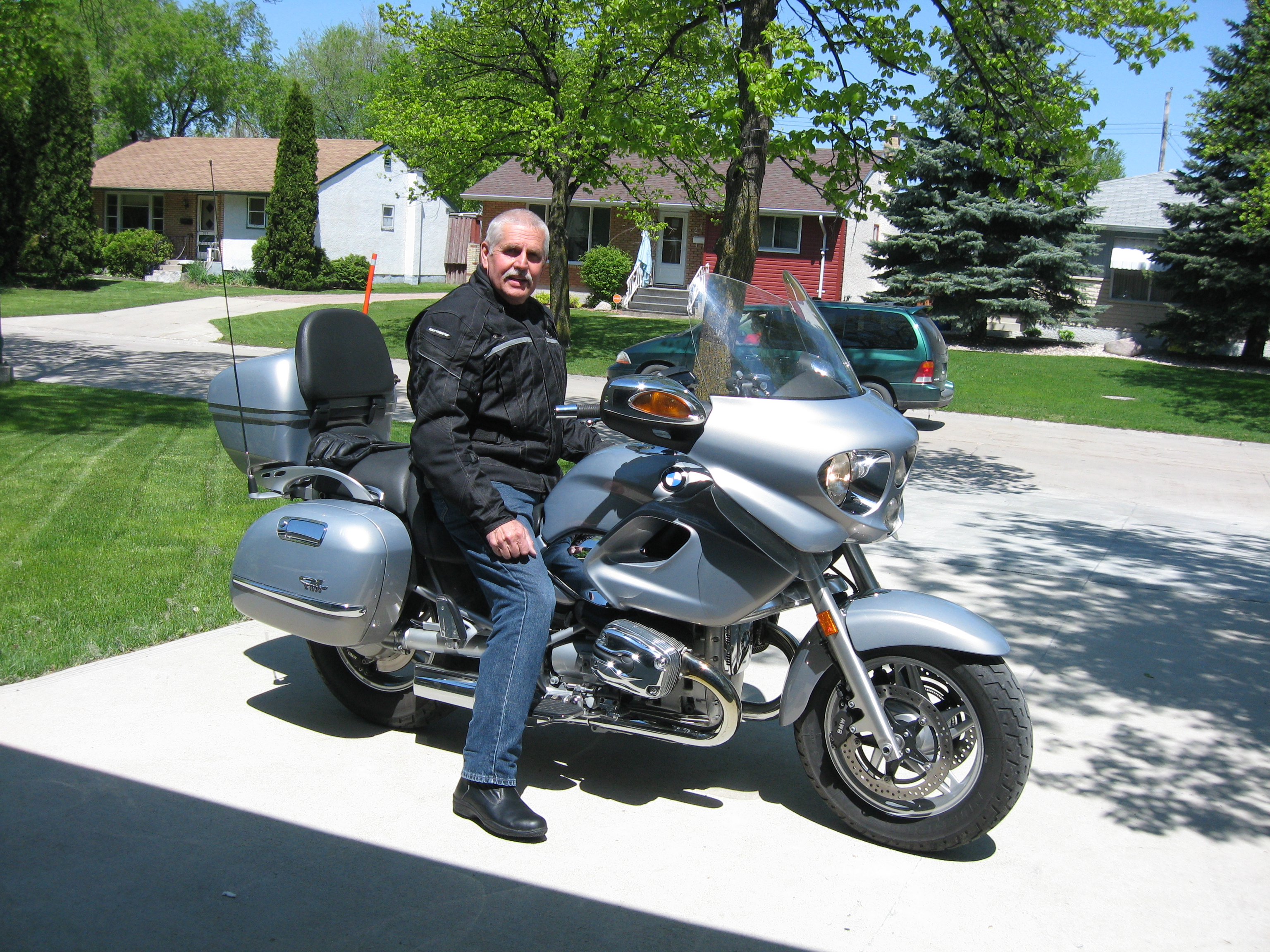
So I was thinking about that, remembering, and later, when I went to bed I couldn’t sleep because I was imagining him slipping away from himself with his last exhale, but I couldn’t see him running or leaping or dancing, the way people often imagine their ill loved one’s release. He was never runner, leaper, dancer. What it would have to be was the sensation of wind, freedom on the open road. What he felt on his motorcycle. A motorcycle ride was like prayer for him: restoration in almost every kind of way. And if his drive took him northwards or through Birds Hill Park and he happened to see a deer, that was a God-sighting as bonus. D4EBDA4D-42F0-4903-A444-A202CBD15A03

Yes, that I could imagine. Or flight. He’d taken a test flight once and would have liked to learn to fly. Air and speed or lift. Not the mechanics of these objects in their metal and leather for his soul, but the particular ecstasy of movement they imply.

Or like hitting the road in his El Camino. Which made me think of our honeymoon, a road trip from Manitoba to Ontario and back again, all those hours in that two-seater brown El Camino when we listened, many times, to his tapes, chiefly Kenny Rogers and Charlie Pride. Music in my family of origin consisted of two kinds of music — classical and church music like hymns, fireside choruses, cantatas, oratorios, and the like — to which I added radio pop, but he liked country, and that’s what we listened to that week, and the sway and croon of it seemed just right for miles and miles to go and for a honeymoon.

So I was thinking all this and wasn’t falling asleep. Suddenly I wanted to hear Charley Pride once again. I knew there was a CD of his hits in the other room, which hadn’t been listened to for ages, and I figured maybe I would listen the next day, for nostalgia’s sake. But no, I needed it now and I argued with myself because I glanced at the bedside clock and saw it was midnight. But who would it bother, I was the only one in the apartment, and besides, I would keep it midnight low, so my wanting won out and I got up and put the CD in my little boom box, next to my pillow, and I listened through all 20 songs. They sounded a bit thin in that little thing, and began, the sleepier I got, to sound more or less the same, but for that hour or whatever it was, I lived in the longing and heartbreak of that music, and in the memory of being on the road a long while ago, together.   

Making it better

I’m finding that making things helps. Last week I made a cake, an entirely unnecessary cake, but one H. would have liked and one I could share, not to mention eat slowly myself. I’ve also been “making” in the form of a visual grief notebook, pasting and painting and noting, the book getting fatter as the pages stiffen and crinkle with watercolour and glue. I’m not sure why it helps, maybe it’s the fiddly effort of it, which makes grief “work” tangible, or maybe it’s the fact of a record (allowing me to trace where I am/was), or maybe it’s just that it holds down, however temporarily, something otherwise internal and unpredictable and uncertain. Also, the doing is enjoyable. (And as I’ve said before, having finally grasped this for myself, it’s not the artistry that matters but the process.) Whatever the psychology involved, it reminds me of lines from a Sandra Birdsell story in Night Travellers:

…crying made everything worse. But she’d discovered that crayons and paper made it better. Drawing was a bird moving against a clean sky the way you wanted it to.  

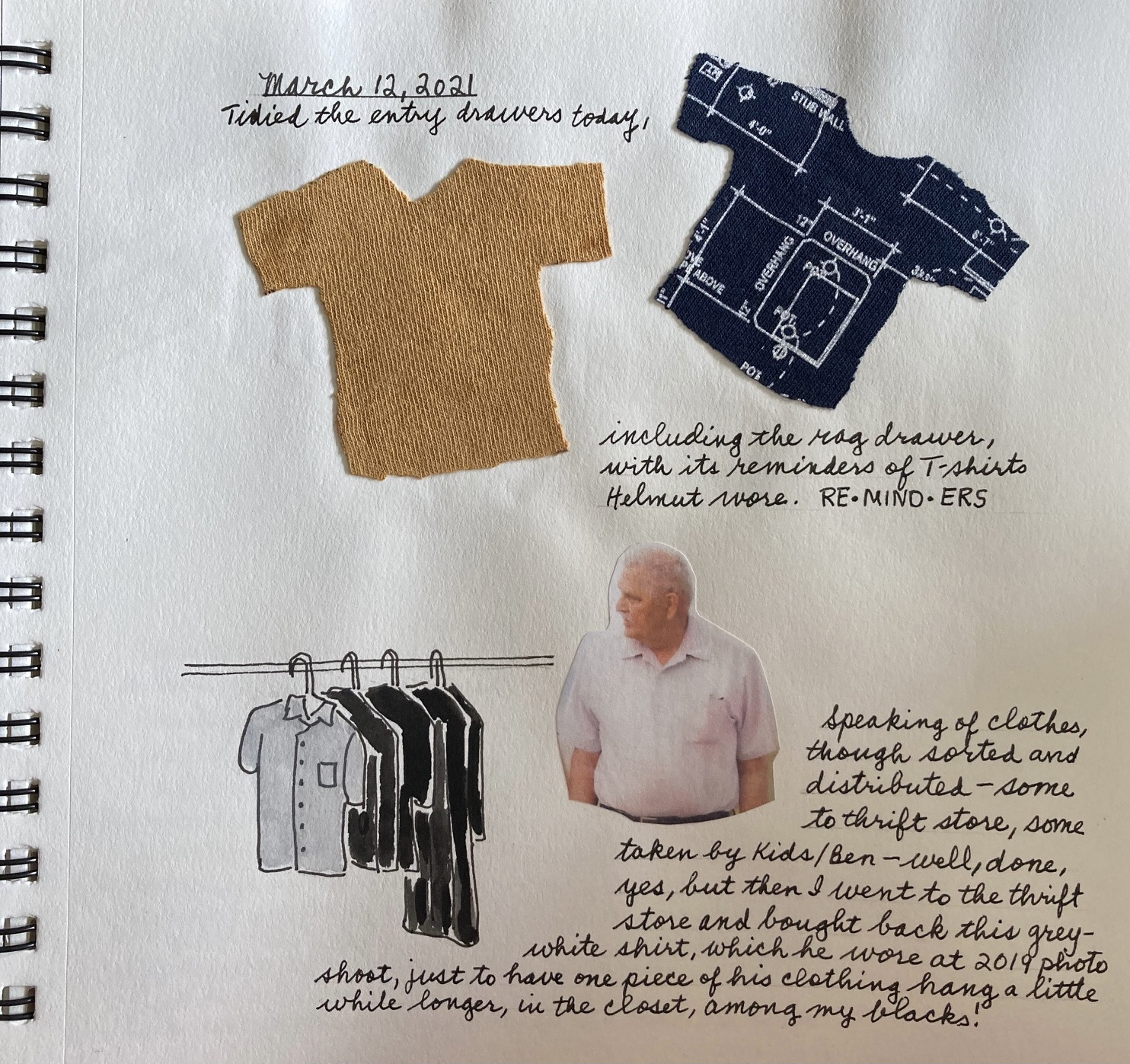
Here are a few pages from the book to show what I mean. One early page contained “ordinary little” reminders of him.C1C6E3BB-8AB2-4361-A791-E7215D30841F_1_201_a

Another told a story about his clothes. (Yes, I’m afraid I actually went to the thrift store and bought back a shirt I’d donated!)379E668D-6CC3-439E-9406-9D450757AD32_1_201_a


There was a small regret to note. During the last years, he wasn’t allowed grapefruit because of a heart medication he was on, so we never had them in the house, though we’d both previously liked grapefruit a lot. Once in hospice, off those meds, why didn’t I bring in some juicy triangles of grapefruit to let him taste again? It never occurred to me! Now that I’m back to eating grapefruit myself, I wish, oh I wish, I had!

99693B69-DD74-40D9-BDDA-9B35223AEACA_1_201_a

The most recent page I made was prompted by something I saw in an illustration of Covid loss, which I recognized immediately as a powerful description of absence — space filled with a life summed in obituary. I worked from happy photos of our 46th anniversary last August when we had our morning maté (yerba tea) at the bay, sitting on our favourite log. I walk there still and sometimes sit on that log beside the unbodied shape that memory makes.

FB7832FC-C6B2-4E01-ADAE-42A350F99C70_1_201_a