
Peter J. Dyck. Photo credit: MCC
Peter J. Dyck (1914 – 2010), well-known in Mennonite circles for his work with refugees in post-World War II Europe and beyond, died in Scottdale, Pa. last week, at 95.
He almost died as a child, in 1921, of typhoid and hunger because of the famine in Russia. Thanks to food assistance provided by the newly formed Mennonite Central Committee (MCC), he survived, however, and with his family was able to immigrate to Canada.
The memory of that food aid would later motivate him to serve with MCC in England during the war. After the war, he and his wife Elfrieda (Klassen), who was equally involved in their dynamic partnership, moved to the Netherlands to direct a huge relief effort. They also organized and led the transport of some 5,500 Mennonites in four ships to new homes in South America.
The couple worked with MCC and the Mennonite church in various capacities throughout their lives, but it’s the events associated with the refugee work that will probably remain most closely associated with their names. Certainly those stories of rescue and resettlement, full of drama and pathos, formed a significant part of my sense of how the world had unfolded during the brutal and turbulent years just before my birth. I’m not sure how they came to me, but it must have been through Mennonite periodicals, speakers, and books. Books like Helen Good Brenneman’s But Not Forsaken, and later Barbara Smucker’s excellent children’s novel, Henry’s Red Sea, about one of the most dramatic of the events, the movement of former Russian Mennonite refugees through Russian-occupied territory by train to reach a ship waiting to take them to a new homeland. Peter Dyck too was a great storyteller and did a great deal of public speaking, and with Elfrieda, co-authored a fascinating account of their postwar experiences, Up from the Rubble.
Yesterday, in the sharing time in church, one of the women in our congregation recalled with gratitude Peter Dyck’s life and service. She was three years old when her family crossed the ocean in one of those groups overseen by the Dycks. She also reminded us – as an encouragement to the younger generation – that Dyck was in his 30s when he was doing the work that made such a difference for her and so many others. I don’t know how aware the Dycks were at the time of the historical significance of their gathering and re-location of refugees. Perhaps they sensed it, but were probably mostly just busy giving their best intelligence, energy, and fortitude to their assignments.
Somehow it all begins to seem very long ago, and with the passing of Peter Dyck even longer. So I too commend Peter (and Elfrieda, who died in 2004) Dyck to our memory and the events of that era to our attention. I think there’s still a great deal to learn from those times, especially from watching ordinary people work out their commitment to compassion and service in complicated environments, and doing this, not only because they’ve been helped themselves, but also because that’s what Christian disciples do in a needy world.
* A report of Dyck’s death and fuller bio can be found at the MCC website, here. The article includes an invitation to share personal memories. Some have already appeared, to further round out and bless the legacy of this man.

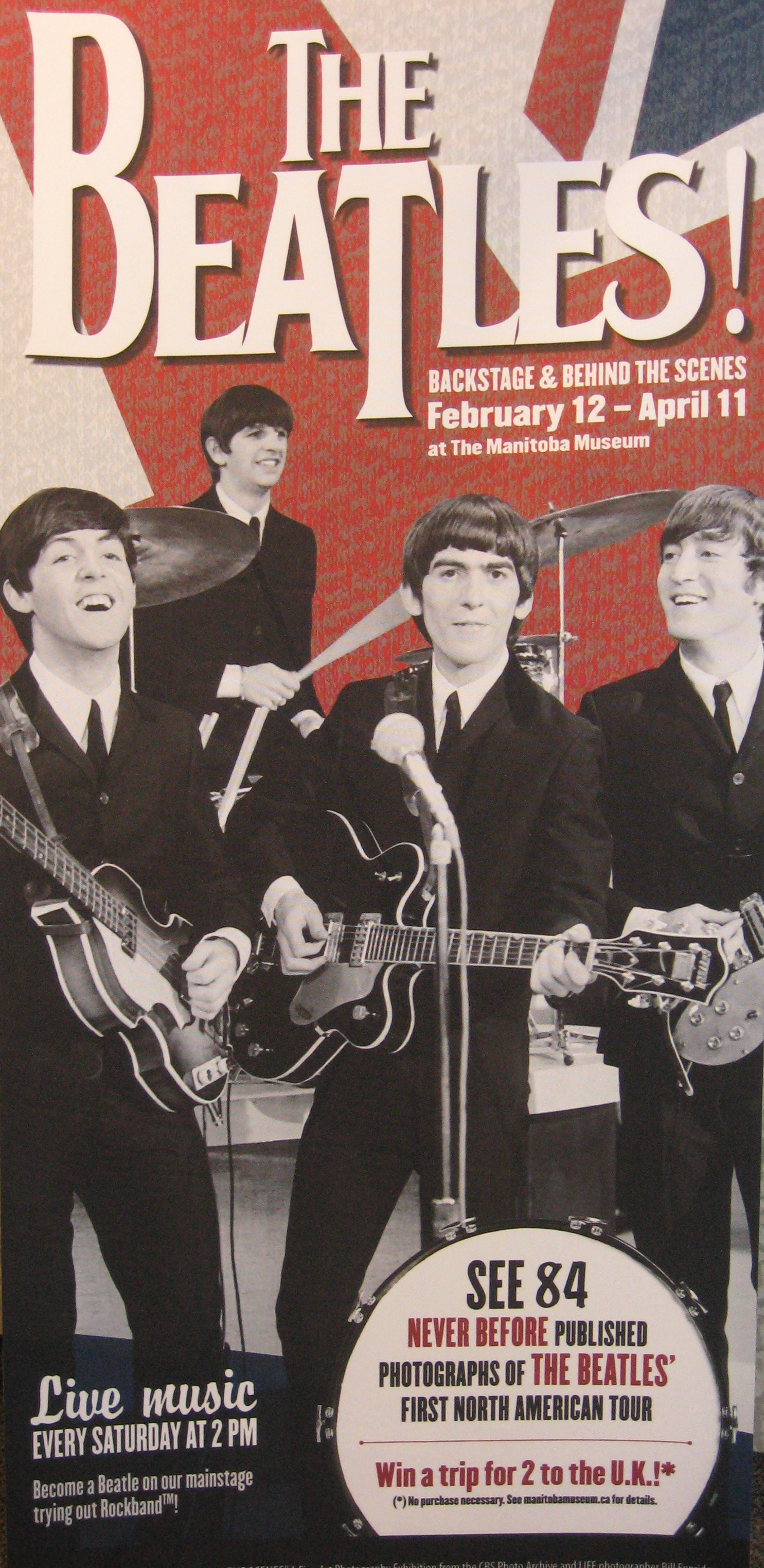 After my valentine and I had finished lunch out on Sunday, we went over to the Manitoba Museum to see an exhibit of 84 never-published photos of the Beatles’ first visit to North America in February 1964.
 Borrowing Bones