The debate around “knowing”

So what do we think of TIME’s decision to name Facebook CEO Mark Zuckerberg their Man of the Year? We, the citizens of Facebook, I mean — citizens of the third largest nation in the world, if 500 million accounts counted as a nation. But also we as in all of us, whether we’re on Facebook or not, who know how profoundly media and technology have shifted, who have adapted our communication and connection habits, whether we wanted to or not. And we as in all of us who know that notions of private and public are being re-shaped, again.

There’s plenty of chatter about the angles of this – from sneers that TIME isn’t exactly the authority it used to be on what’s important (which is why I asked what “we” all think, if the we over at Facebook can just pause from collecting tractors for our farms for a moment, or taking a test to discover what dead celebrity we might have been in another life) to SNL’s comics setting up WikiLeaks founder Julian Assange as bitter over Zuckerberg getting TIME’s honour (and this landing in newspapers and on computer screens everywhere as news!).

Of the list of TIME candidates (Julian Assange, the Tea Party, Afghan president Hami Karzai, and the Chilean miners), my pick would have been Julian Assange.  Not because I find him more likable (it’s not about liking — Hitler was once was Man of the Year, and Stalin was twice), but because I think the WikiLeak events and the impulses behind them will reverberate through global politics and life more significantly than Facebook has or will. Continue reading
Weather, links, a new header

Mid-August, the days noticeably shorter, the nights cooler, and we’ve got more tomatoes ripe on the vine than we can possibly make sandwiches of. Yes, it’s the feel of autumn in the air.

Which reminds me — I was chatting with an editor/writer friend yesterday who was telling me about an article she’s working on, how she’s trying to get the “hook” (first sentence, paragraph) right. Which reminded her of how often people who write for publications like the educational newsletter she edits will simply begin with the weather. Late summer and signs of fall, principals and teachers are beginning to think about school, etc. etc., and in spring, well, the weather’s heating up and the kids are restless, ready for their holidays, etc. etc. Weather is just so convenient as a place to begin, whether it’s conversations at the supermarket or in our writing.

For readers, who are often busy and mostly grazing through all those pages of print we writers and publishers impose on them, opening with the weather is generally boring and won’t “hook” anyone. Which is why good editors like my friend simply scroll a few paragraph into the piece and see that there it is, the beginning — the hook! (Yes, this often works, especially with new or inexperienced writers.)

My inner editor being lazy or off-duty this morning, I started with the weather too, but what I actually had in mind to say was just a couple of disparate things, and that’s it for this lovely sit-outside-on-the-deck perfection of a Friday.

1. Back in April, I reflected on an article in the MB Herald concerning the B.C. conference and Mark Baker. Here’s a news update on that subject.

2. Someone over at CMU Press put together a great set of questions about This Hidden Thing, for book club discussion or study. My thanks to them, and this simply as an FYI for anyone interested.

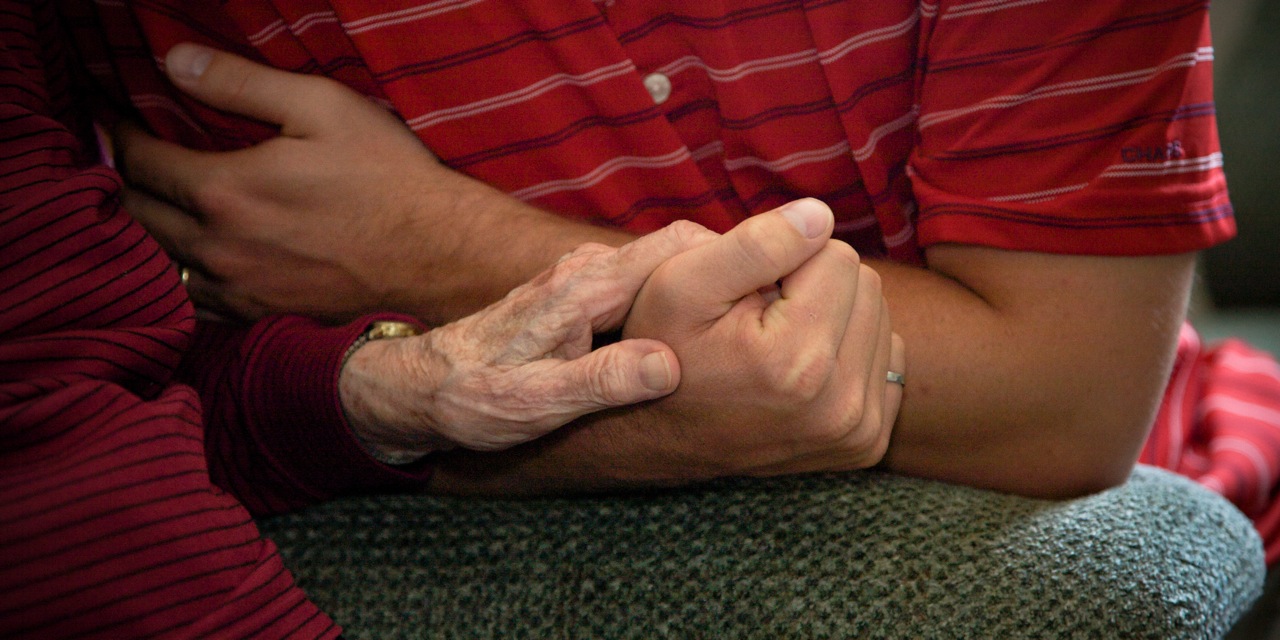
3. I may (or may not) come back to more postcard excerpts from my grandfather’s postcard album in the header of this blog, but for now, a slice of a photo our daughter-in-law took recently. Her husband (our son) was posing beside his grandmother (my mom) when they were here in Winnipeg several weeks ago to attend a wedding. She caught their faces, yes, but also their hands. I think it’s a beautiful photo and very evocative too of my blog title and theme, of that awareness that we build our lives out of what’s given to us in so many ways, including intergenerational bonds. Of the bones of inheritance (for better or worse) and love.

Here’s the larger photo. (You can view more of D.’s work at her blog, listed under my “Family and Friends.”)

Hands, grandson S. and grandmother T. Credit: Dayna Dueck

Thoughts on Anne Rice’s “un-conversion”

As news of Anne Rice’s un-conversion (to Christianity, not Christ) ricochets around the media, I find myself also reflecting on what she has done.  And on the larger questions her action raises to my mind about speaking up, staying in, or getting out of the places we belong but find ourselves in disagreement with.

First thoughts, first reaction to reading  Rice’s words: admiration.  She said:

In the name of Christ, I refuse to be anti-gay. I refuse to be anti-feminist. I refuse to be anti-artificial birth control. I refuse to be anti-Democrat. I refuse to be anti-secular humanism. I refuse to be anti-science. I refuse to be anti-life. In the name of Christ, I quit Christianity and being Christian. Amen.

The next day she added,

I remain committed to Christ as always but not to being ‘Christian’ or to being part of Christianity. It’s simply impossible for me to ‘belong’ to this quarrelsome, hostile, disputatious, and deservedly infamous group. For 10 years, I’ve tried. I’ve failed. I’m an outsider. My conscience will allow nothing else.

And then she explained further,

My conversion from a pessimistic atheist lost in a world I didn’t understand to an optimistic believer in a universe created and sustained by a loving God is crucial to me. But following Christ does not mean following His followers. Christ is infinitely more important than Christianity and always will be, no matter what Christianity is, has been, or might become.

(Source for Rice quotes, The Guardian).

I know little about Anne Rice beyond the facts that she is the author of hugely successful vampire novels, turned Christian, turned author of novels about Jesus and a conversion memoir. I have no idea if I need to be cynical about her words or not. What I hear in her statements is a list of refusals I resonate with completely “in the name of Christ” (except for the Democrat one, as I’m Canadian and have no need of either Republican or Democrat), and I hear the word “conscience” and then, in an NPR radio interview, I hear Rice saying this was no quick or easy decision, no flash in the pan, and that it’s “painful.” So I take her at her word, and find myself thinking, “Thankyou! That took courage!”

Second thoughts: more admiration. Continue reading