A highlight this month has been a tour of Ireland. Each day of the tour I selected four photos out of many and wrote a short paragraph on Facebook, and that seems enough for now in terms of description; amateur travelogues are not actually that compelling. (Remember those long and boring slide shows we used to endure when someone from family or friends had done the requisite pilgrimage to Europe?)
Suffice it to say that Ireland is a beautiful country with a complex and fascinating history, and that my short tour will inform me in various ways going forward. I enjoyed it very much.
However, I do have the self-imposed resolution to post here at least once a month, and in fulfilment of that vow and retrospective of my trip, I’ve been thinking about hotel rooms. A tour takes one into a “new” hotel room on many a night, though there are a few times when the stay is two nights, and the need to not pack up in the morning a definite bonus.
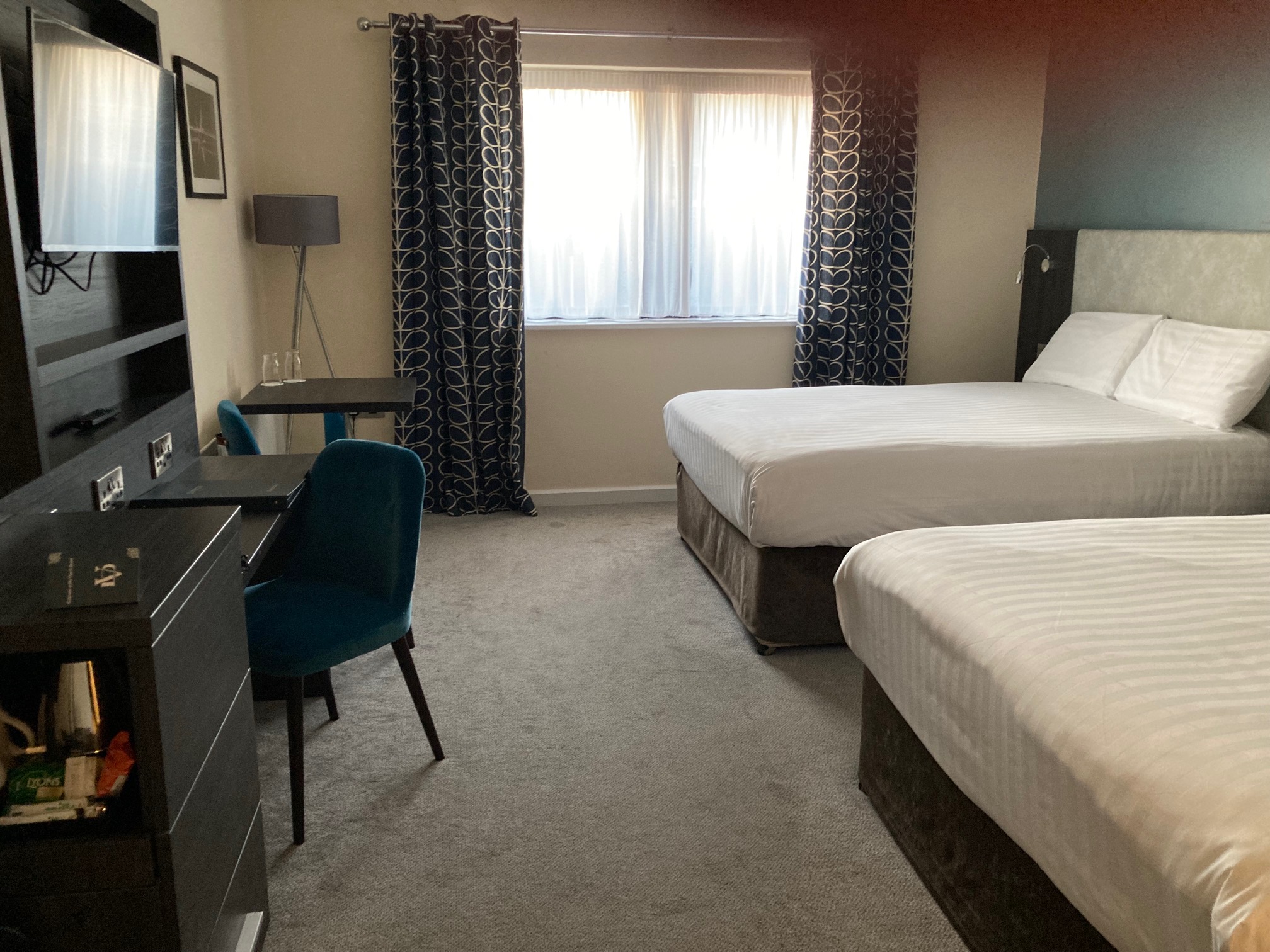
When I enter a hotel room on a tour, I seem to promptly forget the previous room. I decided to take photos of the rooms this time, just to remember them a little. It’s not that hotel rooms in a middle-of-the-road tour differ much; they’re usually rated at a 3 or 4 (I think I’ve only stayed in a 5 star room once), and those we stayed in were more or less the same — you know, bed, bathroom, closet, coffee maker, TV. Perfectly clean, pillows generally thick and abundant, sheets and duvets white and crisp (and far too tightly secured under the mattress). Still, there was always a bit of excitement in me each afternoon or evening when we reached our hotel destination, a curiosity about the room, a glad sensation of letting myself down into its welcoming and undemanding hospitality. Here it was. For me to use. To sleep in, to retreat in, to return, if only briefly and partially, to a sense of domesticity and home-ishness in the midst of the travelling that takes one away from home to unfamiliar places.
I liked the rooms I stayed in. One was memorable for its little window nook with two chairs and windows on three sides. Another turned out to be a family room, with an additional bunk bed; I almost wished to gather some urchins off the street to have a bit of that kind of company! The Titanic Hotel had rivets on the door!
A hotel room may announce itself with its decorative flourishes but it doesn’t speak with any kind of intimate personality such as the rooms of our homes do. It doesn’t talk back, in other words, just invites us in, and without judgment lets us take our shoes off and put up our tired feet.




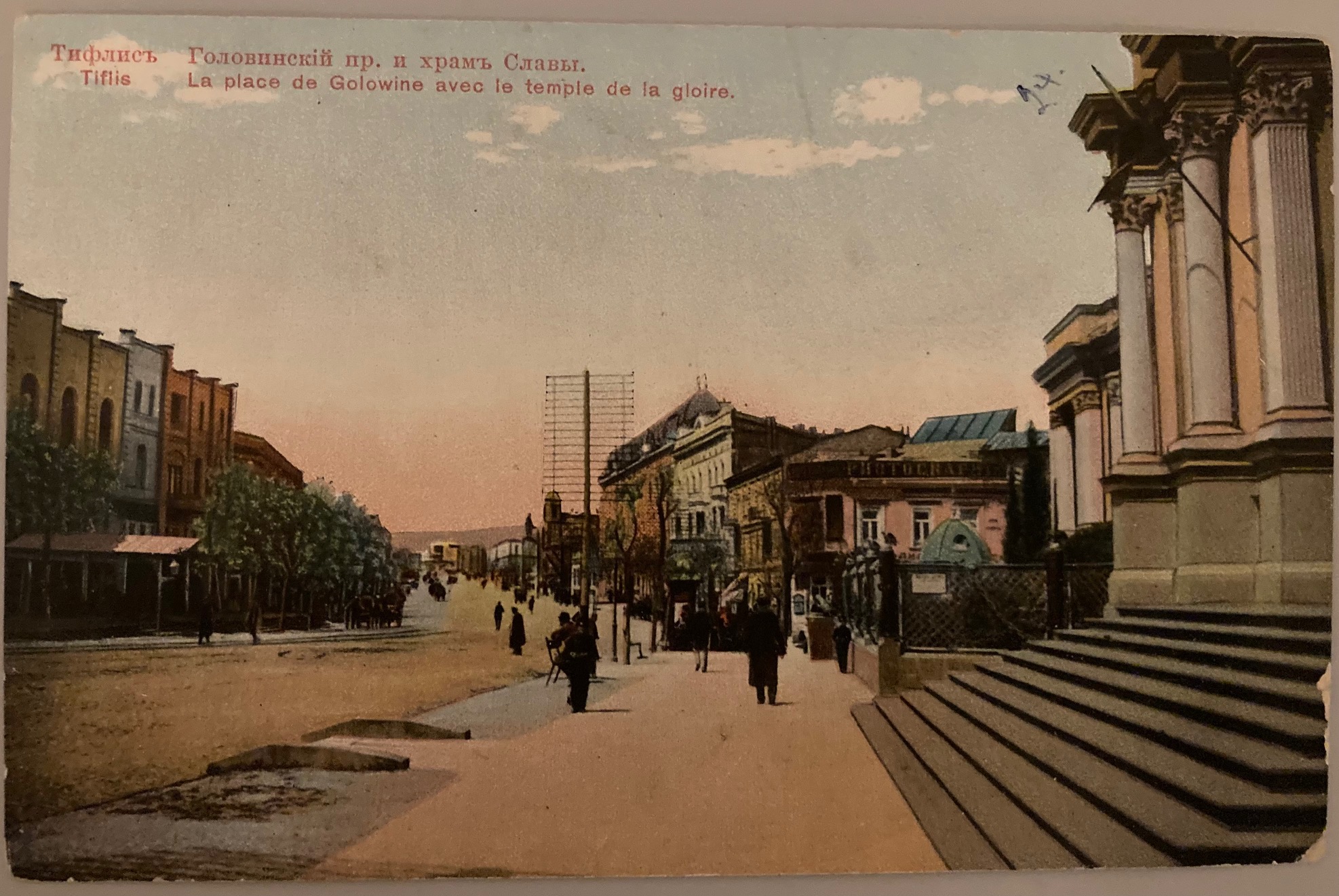 The card is labelled “La place de Golowine avec le temple de la gloire.” I had learned that the street was named Golovin Avenue after Russian commander Yevgeny Golovin in 1841, but re-named Rustaveli Avenue, after the poet Shota Rustaveli, in 1918, when Georgia declared independence from Tsarist Russia. As for the Temple of Glory, whose pillars and steps one sees, that used to be the Russian military history museum but is now the National Gallery. Thanks to M’s infallible sense of direction, we found our way out of the warren of small streets in Old Town where our group had lunched to Rustaveli, Tbilisi’s most prominent avenue, and we got this comparison shot. In the postcard, the avenue’s slight curve is obvious, but it’s there in the photo too, visible between the trees.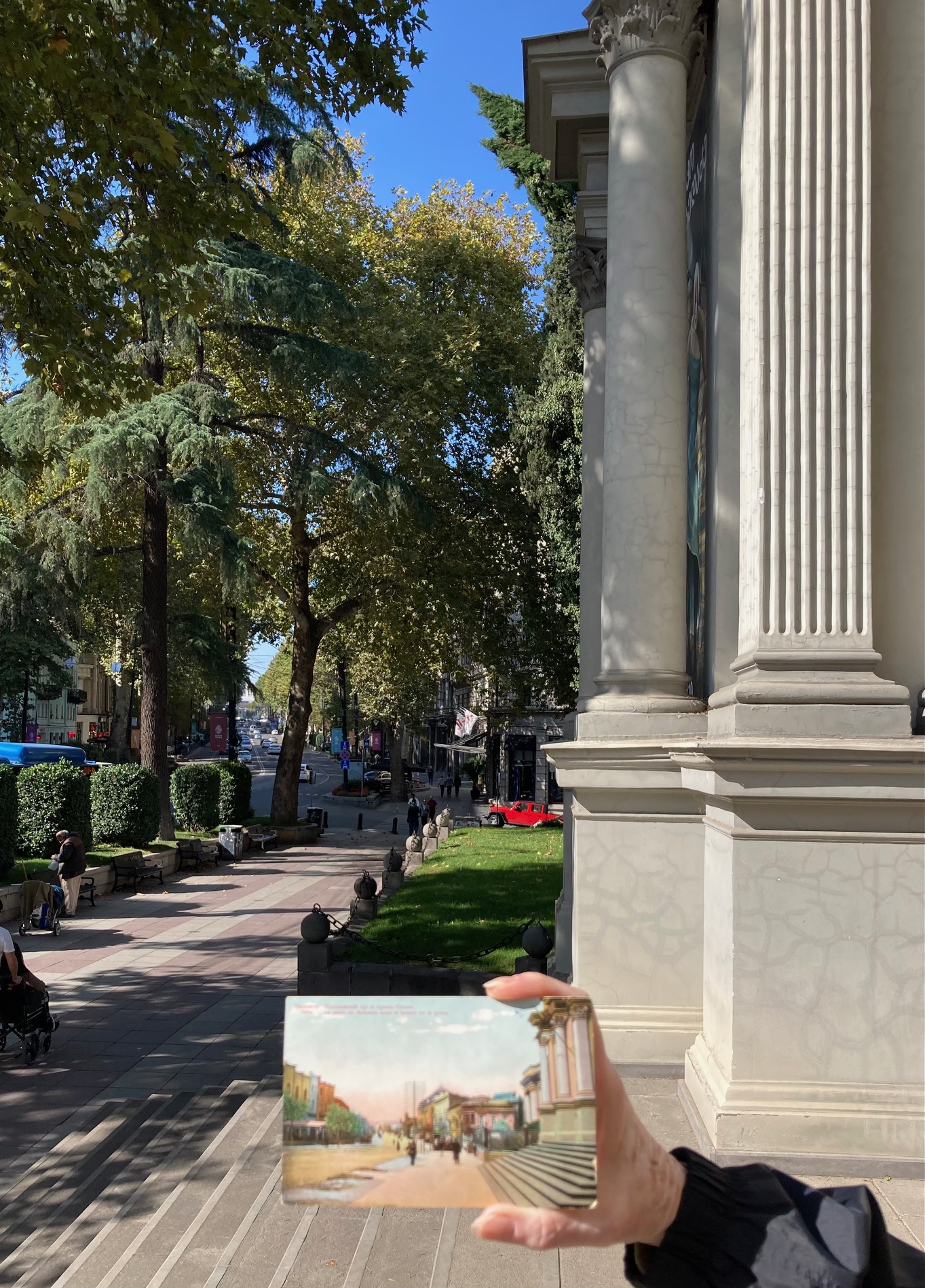

 Borrowing Bones