“I love the oddity of historical incidence, the ethical muddiness,” Emma Donoghue (of Room fame) has said, and it’s oddity and muddiness she digs into in her latest book, Astray, a collection of 14 stories set in places as various as London, the Yukon, and Louisiana, in years ranging from 1639 to 1967.
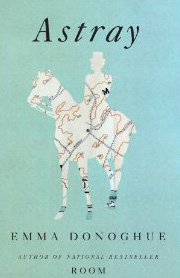 There’s a keeper’s persistent chatter to his elephant Jumbo in “Man and Boy,” and the voice of Nigger Brown as the slave conspires to murder his master and run off with his wife in “Last Supper at Brown’s.” There’s a series of letters to the New York Children’s Aid Society by the birth mother and adoptive father of Lily May with their competing claims upon the child (“an epistolary duet,” Donoghue calls it) in “The Gift.” In “Daddy’s Girl,” a young woman has just discovered, upon his death, that her father was actually female. Continue reading →
 The cover of the latest issue of Write, the magazine of The Writers’ Union of Canada, features a map by Patrick Dias, country unnamed but obviously Land of the Writer. If you’re looking for me, I’m wandering around in Frustrating Canyons, probably on my way to Crumpled Detour. Continue reading
 Borrowing Bones