A talented and determined young writer I know (Angeline Schellenberg) commented on my previous post and in the process raised with some good questions on the relationship between reading and writing. While thinking about this, it occurred to me that I must ask Shirley Hershey Showalter, whose blog 100 Memoirs I read regularly, for her thoughts on the subject. Shirley — “a farmer’s daughter turned college proessor, then college president, later foundation executive” — is writing a memoir about growing up Mennonite in America (1948 to 1966) and she’s going about the learning/reading side of it very deliberately.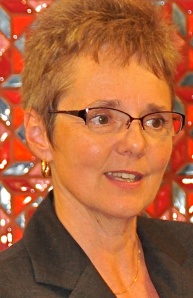
Today, between a visit with a friend and picking her green beans, Shirley graciously sent me her answers to three questions.
1. You set out to read 100 memoirs, with the intention to write one yourself. What are you looking for?
I am following the advice of Heather Sellers in her book Chapter by Chapter. She says that before trying one’s hand in any genre, first read 100 good examples. Most of us have read 100 novels if we are readers, but not too many people have read 100 memoirs. Hence the goal.
What am I looking for? Structure, voice, sensory detail, and tone. The story itself is secondary to me, although I find some lives more interesting than others. How the story is told fascinates me most.
2. How does the experience of reading affect your own project?
I am just now starting on what I call the long arc, or a full childhood memoir of 40,000-60,000 words, having published five short memoir essays of 2,000-5,000 words that received modest praise. ( I am easily encouraged. :-))
I make notes in the margins of the memoirs as I read them. Other people’s memories ignite my own. When I review the book, I usually comment on structure, voice, and tone. One good thing about blogging is that you have a collection of searchable material all located in the same place. I am hoping to finish the long memoir and may occasionally go back to the 272 blog posts to find a quote or remind myself of a particular model.
But I doubt I will do that often. I hope to sit in a dark room in the early morning and throw away all the models. I want to be like Thea Kronborg in Willa Cather’s The Song of the Lark. I want to stand in the stream of history and feel all that is not me fall away so that all that remains is what I was created to be. I want to sing!
3. Do you find, as A.S. noted, that reading other examples of what you’re doing can be reactionary rather than generative, and that it makes it harder to hear one’s own voice? What advice do you have to make the experience generative, to keep your own voice?
It’s okay to copy the masters–like Rembrandt’s students did–and like many, many young artists do when still impressionable. You will learn from the process. Don’t be intimidated by a great writer’s voice. Instead, get inside it and explore. You could find your own voice in the process. Back to Thea Kronborg. She had conventional voice training first, learning what others before her thought was important. Then she stepped into a landscape that was bigger than herself and bigger and older than her training. When she returned from her experiences in the desert Southwest, she sang from a new place and had her own great voice.
Harold Bloom has written about the anxiety of authorship here summarized, and Susan Gilber and Sandra Gubar responded. I personally prefer Willa Cather’s imagistic explanation better than all these post-Freudian theories. A woman writer stands in the stream of literary history, but lets it fall away to reveal the purer self that sings naturally in her own body, in her own voice.
Thank you Shirley! You’ve given us some wonderful wisdom here (and some provocative links), for writers, yes, but for practitioners of anything really, from preaching to parenting, all who must absorb the influence of others while honing their unique approach. I’m very much looking forward to the song you’ll sing in your memoir!
 I never visualized “Borrowing Bones” as being primarily a promotional vehicle for my work, however. I have found it a bit awkward, in fact, to bring my book — reviews, sightings, reader letters, book club discussions, and more — into the conversation, and so I haven’t done so much. I have no hesitation in saying that I would love for “Borrowing Bones” readers to order and read my work, especially the award-winning This Hidden Thing, if they haven’t done so already, and I will also be bold enough to say that I’m quite certain they (you) will like it a lot — because those who stop here (readers I know and readers I imagine) just seem like the kind who would!
 Borrowing Bones