Weather, links, a new header

Mid-August, the days noticeably shorter, the nights cooler, and we’ve got more tomatoes ripe on the vine than we can possibly make sandwiches of. Yes, it’s the feel of autumn in the air.

Which reminds me — I was chatting with an editor/writer friend yesterday who was telling me about an article she’s working on, how she’s trying to get the “hook” (first sentence, paragraph) right. Which reminded her of how often people who write for publications like the educational newsletter she edits will simply begin with the weather. Late summer and signs of fall, principals and teachers are beginning to think about school, etc. etc., and in spring, well, the weather’s heating up and the kids are restless, ready for their holidays, etc. etc. Weather is just so convenient as a place to begin, whether it’s conversations at the supermarket or in our writing.

For readers, who are often busy and mostly grazing through all those pages of print we writers and publishers impose on them, opening with the weather is generally boring and won’t “hook” anyone. Which is why good editors like my friend simply scroll a few paragraph into the piece and see that there it is, the beginning — the hook! (Yes, this often works, especially with new or inexperienced writers.)

My inner editor being lazy or off-duty this morning, I started with the weather too, but what I actually had in mind to say was just a couple of disparate things, and that’s it for this lovely sit-outside-on-the-deck perfection of a Friday.

1. Back in April, I reflected on an article in the MB Herald concerning the B.C. conference and Mark Baker. Here’s a news update on that subject.

2. Someone over at CMU Press put together a great set of questions about This Hidden Thing, for book club discussion or study. My thanks to them, and this simply as an FYI for anyone interested.

3. I may (or may not) come back to more postcard excerpts from my grandfather’s postcard album in the header of this blog, but for now, a slice of a photo our daughter-in-law took recently. Her husband (our son) was posing beside his grandmother (my mom) when they were here in Winnipeg several weeks ago to attend a wedding. She caught their faces, yes, but also their hands. I think it’s a beautiful photo and very evocative too of my blog title and theme, of that awareness that we build our lives out of what’s given to us in so many ways, including intergenerational bonds. Of the bones of inheritance (for better or worse) and love.

Here’s the larger photo. (You can view more of D.’s work at her blog, listed under my “Family and Friends.”)
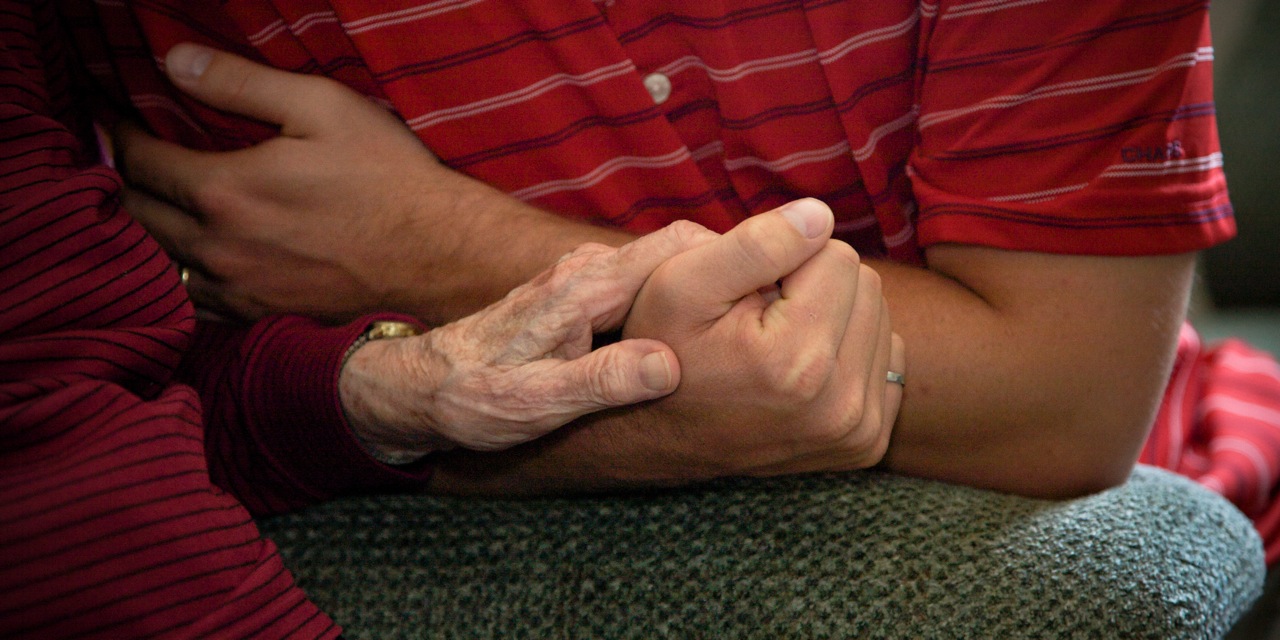
Hands, grandson S. and grandmother T. Credit: Dayna Dueck
Sustained reflection on another’s life

The death of an elder in the family circle pulls us out of our ordinary routines and obligations (including the blogs we write) and forces us into sustained reflection on that person’s life. In this case — my aunt’s death (see previous post) — it was a good experience.

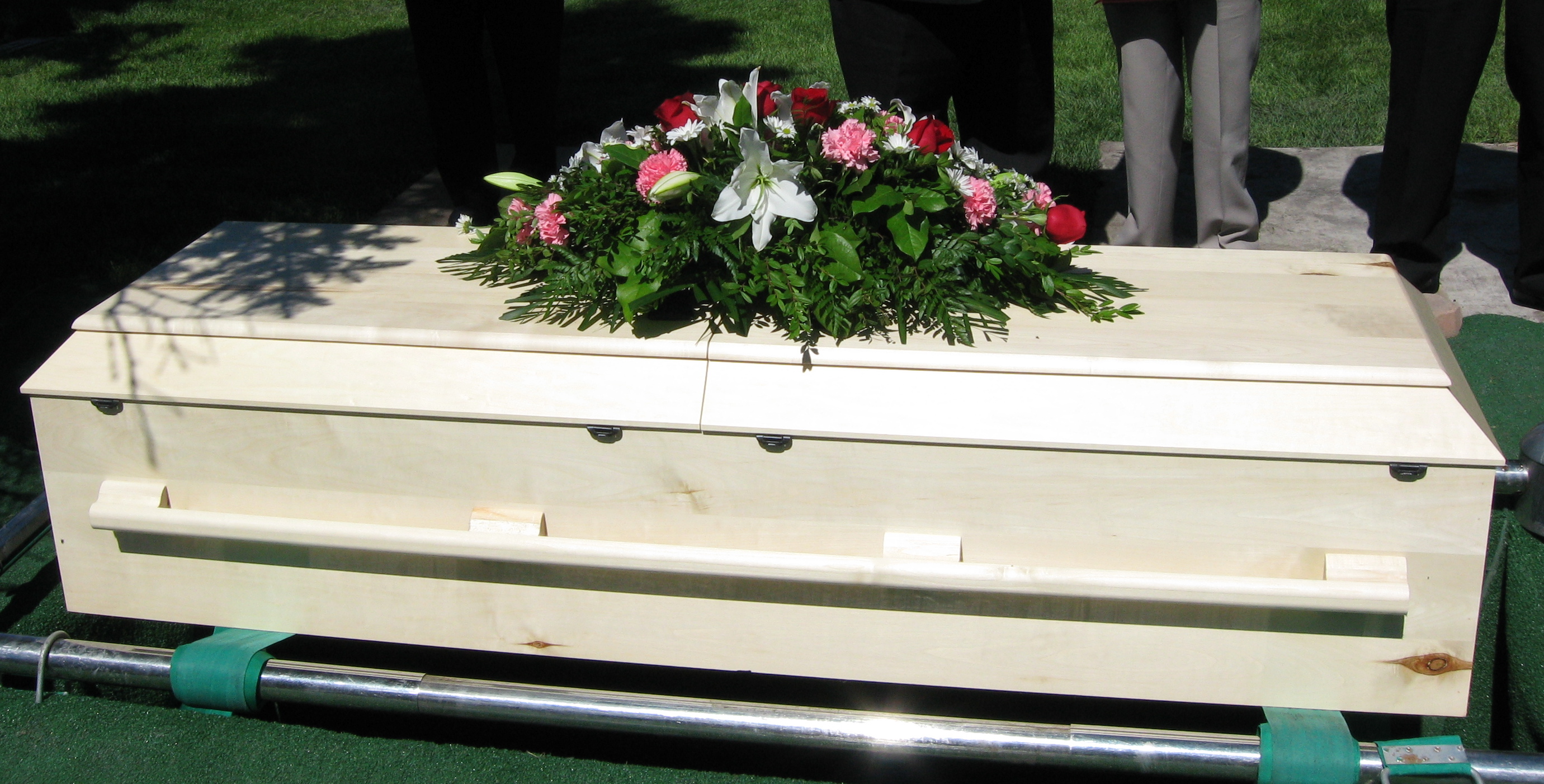
M. Harder burial, Aug. 16, 2010

Not that this reflection was particularly organized as a formal activity, though some parts like the eulogy and service certainly were. Most of it happened in the course of planning, hosting siblings from out of town, and attending the viewing and funeral and burial. The reason we were doing out-of-the-ordinary things such as coming together was (Aunt) Margaret’s end, and so of course we shared round the death stories, and gave voice, for several days in a row, to our memories, questions, even speculations. When a few of us met, ostensibly to work on the eulogy, one cousin did most of the work (you can’t really write by committee) while the rest of us combed our late aunt’s photo albums and swapped stories the pictures provoked. On Sunday, with siblings and my mother gathered at our house, we pressed Mom for opinions about her late sister (and also her living ones), and we paged through some diaries Margaret left behind, reading nuggets aloud to one another. The open mic time at the funeral lunch yielded a further variety of reflection about this one woman’s life.

My brother who emceed that session reminded us that we really don’t know other people very well. It’s true. Even in the case of those we feel we know, the communal sharing and reminiscence that the rituals of death “force” upon us can enlarge and fill in the portrait. It’s an old saw that it’s too bad all this, especially the nice things that are said, happens only after the person dies. Yes, also true, but then again, perhaps because life is multi-faceted and necessarily busy, it’s the only way it really works. Death compresses the exercise of knowing, intensifies the reflection. For one week, it was all about someone else. The stew of things I’ve remembered and heard about my aunt will nourish me now as I pick up my regular routines.

Unexpectedly

Unexpectedly, yesterday, and for the second time in less than a year, I had the privilege of keeping company at the deathbed of an elderly relative.

My aunt Margaret Harder, 84, was admitted to hospital from the personal care home on Saturday; yesterday morning, tests revealed she had a blood clot in her lungs. Her last years have been a continuing story of failing health and memory, an unhappy story of changes and losses of all kinds, and it was determined that the best course — and the one she wanted — would be to respond with palliative care. She died at just before nine in the evening.

My aunt was a teacher. Once, as a young student, her hair got caught in the teacher’s jacket button when he bent to look at her work. Was he cross? At any rate, he frightened her, and Margaret decided then that when she was a teacher, no student would ever be afraid of her. I’m sure no student ever was. She was not without authority, but above all, there was gentleness in her. She also lavished on us, her nieces and nephews, and our children in turn, great kindness and generosity.

For many years, my aunt taught special needs students — those with physical challenges like muscular dystrophy and cerebral palsy. Yesterday afternoon, George, one of her former students with whom she remained in contact, came to the hospital. It was moving to watch him express his gratitude and affection for her and to see her lift her hand to his, the only time in the day that she made a gesture of this kind. He held her hand a long time.

During my aunt’s last hours, I couldn’t help but think of the next-to-final scene in Pilgrim’s Progress, where Christian and Hopeful must cross a cold, rushing river to reach the Celestial City. Margaret was not in pain, nor did she seem uncomfortable, but my, what a great deal of hard work it was to get across that last cold river! Yet she seemed to understand what it was for, and where she was going, and as far as we could tell, she was not afraid. And she got there, finally, resolute and well.

I thank God for the life and death of my aunt Margaret Harder.