
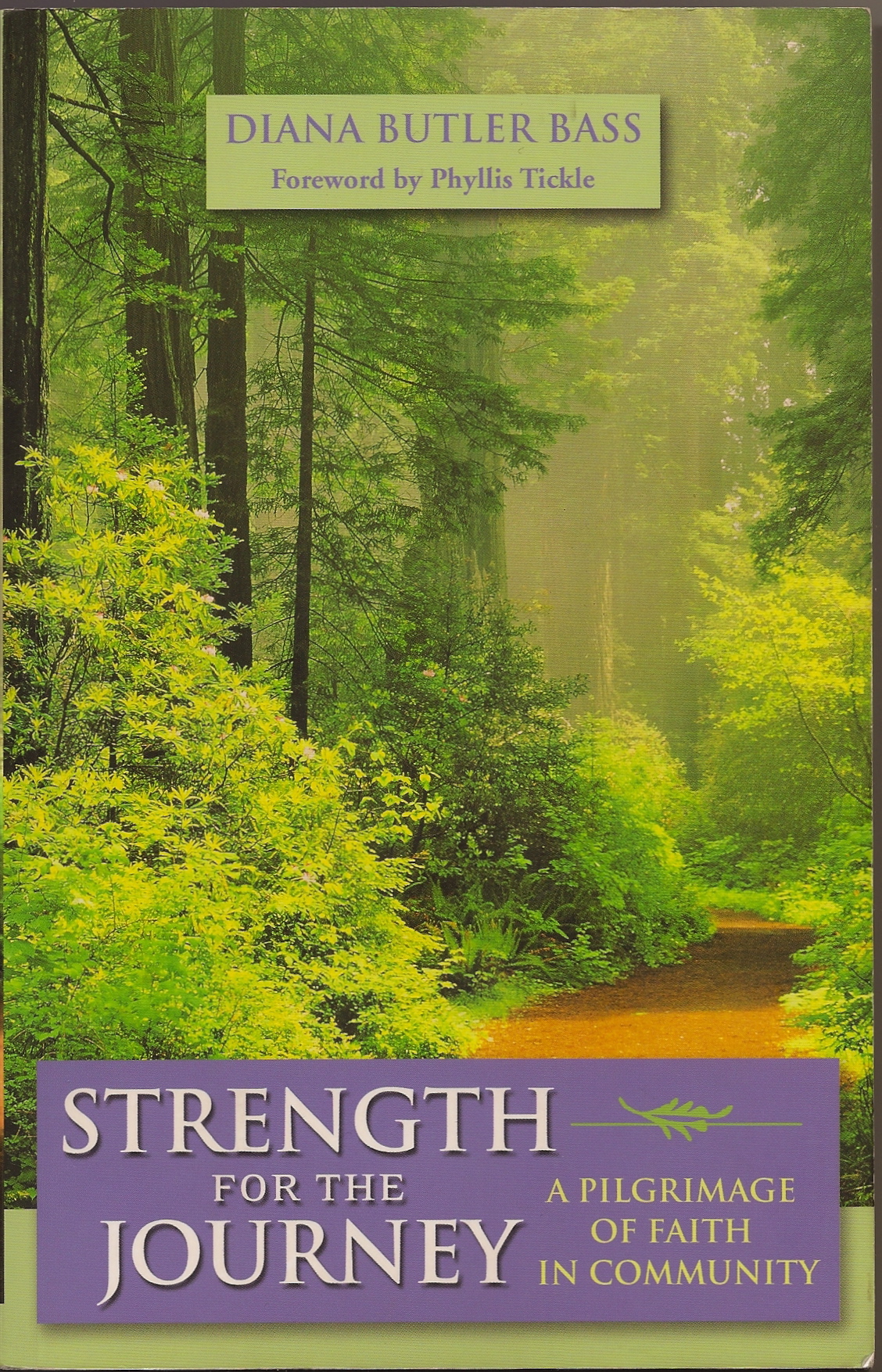
 A friend of mine stuck this book into my church mailbox recently, because she thought I’d enjoy it. I told her I had a stack of books waiting and it might take a while. But you know how it is… Suddenly you have a quiet Sunday afternoon at your disposal and you pick up the book, just for a look, and before you know it, you’re in, and before you know it again, you’re finished.
Strength for the Journey: A Pilgrimage of Faith in Community (Jossey-Bass, 2002) is an unusual memoir in some ways, for it’s the story of Diana Butler Bass’ personal spiritual journey but told via the stories of nine Episcopalian (Anglican) churches she’s been part of over the years, in various parts of the U.S.A. Alongside this, Butler Bass provides journalistic analysis of the “old mainline” church story in America, from severe losses since the 1960s or so, through new identity as “culturally marginalized” (whereas formerly the locale of people with prestige in their communities), and about the renewal that’s happening — and possible — at that place of powerlessness.
Butler Bass’ journey takes her from an adolescent faith within evangelicalism that was “filled with fear” into a greater comprehension of, and living into, “the reality of a God who is completely Love.” She changes slowly and sometimes resistantly, often defaulting to a “knee-jerk fundamentalism” that likes to divide the world into camps, orthodox and liberal, for God and against. What is it that leads her to “a new theological place”? Liturgical worship.
I enjoyed this book. The author’s story differs in almost every detail from mine, not to mention that Butler Bass is nearly ten years younger, and yet as I read I felt our paths curiously similar. I think it’s interesting how in the last years I’ve been bumping into “mainline” in all kinds of ways, through people I’ve come to know, through services we’ve attended, through Christian Century, through this book, and in all of these, the assumptions and stereotypes I held or encountered decades earlier simply don’t stand. Well, of course it was inevitable, went the general line of those assumptions, all those losses, because___ (fill in the blank, but probably include the scary word “liberal”!). I don’t mind at all being tugged away from too little knowledge into a more nuanced historical analysis, and most importantly, into a wider awareness of and love for the church.

