Last week, which seems a long while ago already, was Thin Air week in Winnipeg. Thin Air is the city’s annual writers festival. I was honored to have a small part in the event, with a campus reading of This Hidden Thing, but mostly the week was about listening to and engaging with a great variety of other writers from across the country. As the event’s subtitle says, “it’s for readers.”
I took in four of the evening events, and two of the afternoon book chats. Here’s a few highlights.
From the festival opener, a line by Ismaila Alfa, traffic reporter for CBC Radio and poet/musician:
Long live the figures of speech before and after me.
Long live indeed, figures of speech!

Since I'm not much of a coffee drinker, my sleek Thin Air mug has top spot as pens and pencils holder.
The festival featured many wonderful writers and their books, and I hate to single some out, but… I enjoyed hearing Richard B. Wright (perhaps best known for his Clara Callan), whose new book is Mr. Shakespeare’s Bastard. Wright had some interesting things to say about how he works, including the comment that reading poetry unblocks him when he’s stuck, reinvigorates him. And, finding myself once again involved in the terror and joy of a new novel project, I certainly resonated with what Wright said about that:
You’re sitting in a room talking to yourself — it’s almost a form of madness… You hope what you’re indulging in will be liked and indulged by others… [But] I seem to need another life. A writer needs this other imaginary world.
And the books I’d like to read because of the festival? Wright’s, yes, and also David Bergen’s latest, The Matter with Morris, which landed on the Giller prize long list as the week opened. Opening reviews have praised it and the passage Bergen read from it intrigued me. (Another festival author and Winnipegger who made the long list is Joan Thomas, but I’ve already read her Curiosity, so I’m up at least one!) I’m also looking forward to Sandra Birdsell’s new book, Waiting for Joe.
Every time I attend readings I realize again what a pleasure it is to listen to ideas and words crafted with care. Poetry, especially, shines when read aloud; the genre almost requires an oral presentation. Novels are trickier to judge from their performance, I think, because they turn and deepen on extended development. But the fragments we hear are an invitation, and we honor authors when we take them up on it.
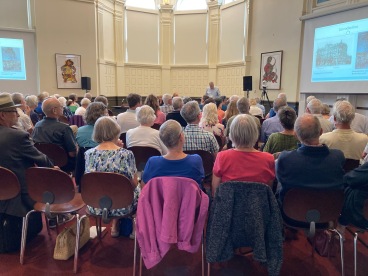 with two writers of literary books about the Russian Mennonite experience that bookended the day: Sarah Klassen with her recent The Russian Daughter and Sandra Birdsell with The Russlaender. I think it brilliant to feature literature together with history. (David Bergen will be up tomorrow with his new book set in that experience.)




 Borrowing Bones