
Coupland on McLuhan

In my previous post, I talked about hearing Douglas Coupland last Friday evening at a University of Winnipeg conference on Marshall McLuhan. I gave most of my attention to his physical presence and manner, because that’s what we so often want to know about celebrities we might try to see in person, but also because it seems the kind of investigation of “medium” that fascinated McLuhan, and in his wake, Coupland.

McLuhan (1911-1980) was a communications theorist who became something of a media guru in the 1960s — during my teens — drawing attention to media in a way we hadn’t encountered before, both dazzling and mystifying us with his critique. He came up with “the global village,”  “the medium is the message,” and notions of “hot” and “cool” media. He was provocative and controversial then, and remains so.

Several years ago I read Philip Marchand’s biography of Marshall McLuhan and enjoyed it. I haven’t read Coupland’s treatment of the man (one of the biographies in the Extraordinary Canadians series) but there’s lots of Google discussion and reviews of the book. (Since Coupland claimed to get a lot of his material for the biography from Google, why not access his book the same way?)

Here, for the record, a few scraps from his talk, things that interested me, more or less as he said them:

— We’re back in the 50s again…. [Then] everyone was going through this collective convulsion….  [Now] we’re back in this point. Time is beginning to feel funny…. We want it now… [Can’t do without] emails 48 hours without having a meltdown.

— Marshall thought the inner voice [we all have] came with reading.

— He was kind of kooky.

— He was a God-seeker. [It had to do with] the limbic system at the back of his brain.

— He’s good at helping you trigger your own ideas… He never preached…. He was a leaf-blower but he didn’t preach.
From Mennonite “madness” to Marshall McLuhan

The past days have been unusually stimulating for me. The main reason is the annual conference of the Chair in Mennonite Studies at the University of Winnipeg, this year on “Mennonites, Melancholy and Mental Health.” I attended much of it, from Thursday evening to this afternoon, hearing papers on a whole variety of topics connected to mental health – from the history of attitudes, to the history of institutions (like Bethania in Russia, Bethesda in Ontario, Mennonite Youth Farm in Saskatchewan), to personal and family histories, and a lot in between. Continue reading

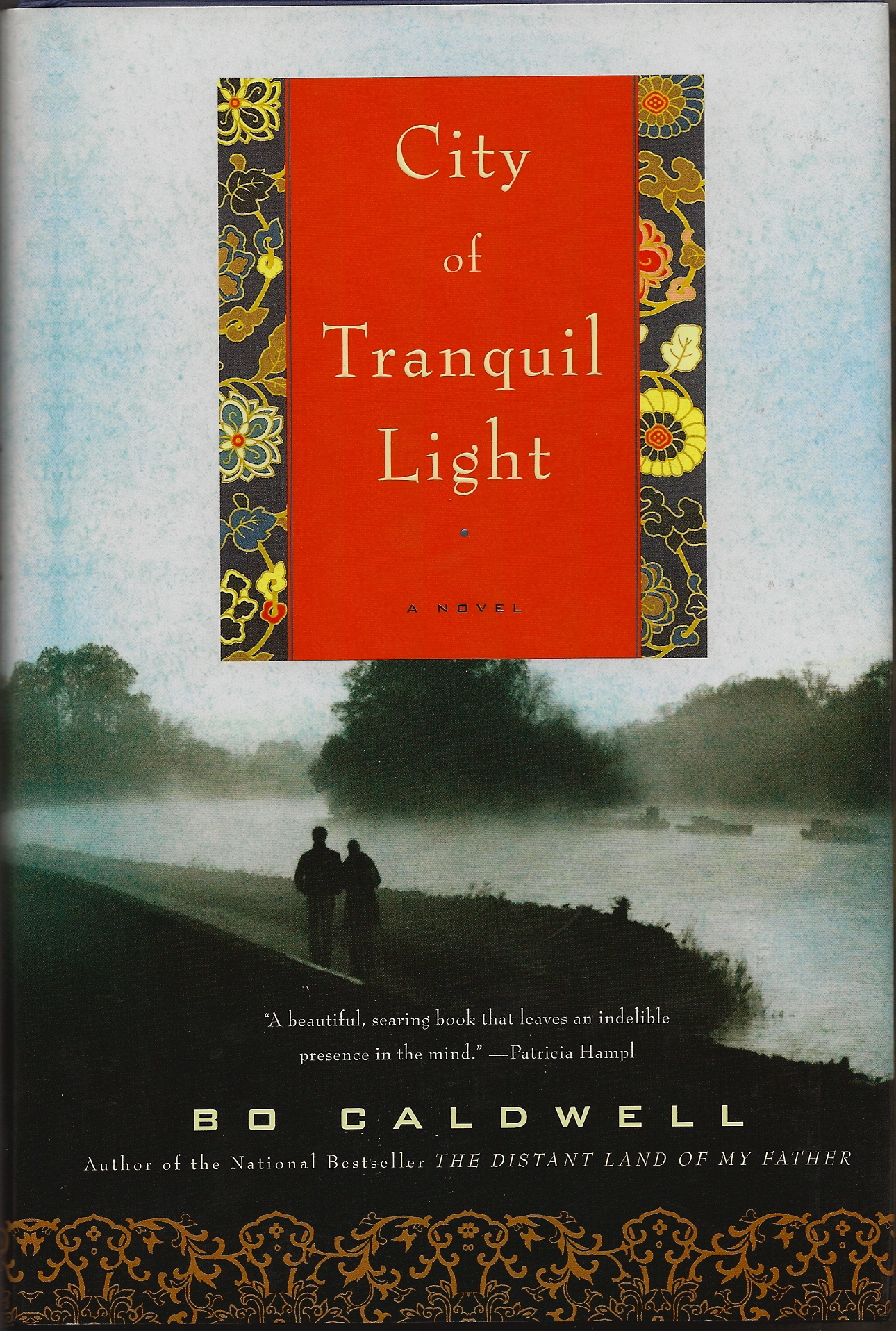
City of Tranquil Light

I recently read City of Tranquil Light by Bo Caldwell (Henry Holt and Co.). In this novel, the elderly widower Will Kiehn is looking back over his life. As a young man, he felt called to go to China as a missionary. There, he met and married fellow recruit Katherine Friesen. Will preached, Katherine did medical work, and together they experienced the formation of a sizeable Christian church in Kuang P’ing Ch’eng (meaning, City of Tranquil Light) and its outlying regions. They also experienced personal struggles and the trials of their adopted country: famine in 1918-22, civil war in 1925-28, the disintegration of an ancient civilization under imperial rule and China’s massive shift to communism.

Interspersed with Will’s backward look is Katherine’s voice, via her diary entries. The use of alternating voices – one with its perspective in the moment, the other through the gaze of memory – makes the story a kind of conversation as well as a telling. It’s a format that adds momentum to a story that feels — in spite of dramatic elements — quiet, gentle, and measured. (As one might expect from an older person’s recollections). It also deepens the thematic resonance of the book.

I liked City of Tranquil Light a lot. And what I like about talking about it here at my blog is that, unlike a more formal review, say for a newspaper or magazine, I can meander – or jump around – as I will. That at least, is how I understand the conventions of blogging. They allow a more personal, if partial, response – one that may, in effect, privilege the experience of reading over the book itself. (This doesn’t mean professionalism, fairness, and reviewing courtesies don’t apply.)

With that said, let me step back a little into my own context. City of Tranquil Light is a missionary story, and I grew up with missionary stories – in books and Sunday school papers and magazines, from the pulpit, in conversations all around me. They were stories of sacrifice, difficulty, and gut-wrenching inspiration. Missionaries were the heroes of an evangelical Protestant childhood; they were the Supermen and Superwomen of our world, and their ocean-crossing the equivalent of the costume change in the telephone booth. I don’t mean this cynically; it’s how things appeared to us. Continue reading