Stories and songs

I forgot my phone at Bonnie’s house yesterday so have no photos to prove I attended the second day of the Russlaender conference! But I was definitely there, at my alma mater, the University of Winnipeg, for a day as rich as the first. It felt less compressed, because there were only three presentations per slot instead of four as had been the case during parts of in the day before. Once again, there was much of interest.

It struck me that though an academic conference, many participants and certainly many in the audience had their own stories and lineage to set into what they were hearing about the period under consideration: the emigration of some 20,000 Mennonites from Russia in the 1920s. For one example, Josephine Braun, a great-grand-daughter of Isaac J Braun of the somewhat notorious Friesen-Braun trial in Saskatchewan, presented her attempts to dig deeper into the life of a man whose story had been suppressed within her own family, as Braun was jailed for some five years and then deported back to Russia, with his wife and sons left behind to somehow manage in Canada. A fascinating story with much remaining mystery.

The question at the time of that decade in Russia was: leave or stay? In another paper I particularly enjoyed, on Friday, Colin Neufeldt presented a long list of reasons people had NOT to emigrate. Some 20,000 did, yes, and it was that decision and the reasons for it as well as subsequent immigrant adjustments to a new environment that these days are commemorating, but the large majority did not leave. Some wanted to but couldn’t for various reasons and others could have but didn’t, also for various reasons. Many, perhaps more than we realize, he suggested, wanted to participate in the creation of the world’s first socialist state. For those less privileged within the Mennonite community, there was the possibility of upward mobility in the new circumstances. Also, the New Economic Policy seemed for many an optimistic reconstructive step after the chaos of the civil war. And of course there were always family reasons: one member of a couple might wish to go but not the other, or there were elderly parents to consider and so on.

Last week, before coming, I happened to be looking at some pages of my grandmother Helene Derksen Harder’s diary, where she recounts in broad strokes the last years and months before their decision to leave and then the auction and flurry with papers/permissions and other preparations for the journey. She tells of instances of great fear as “guests”–her euphemism for bandits and soldiers–invaded the household, wanting food, horses, money, and so on. She tells of hunger, loss, tension, deprivation. She mentions the bravery of her old mother who helped them pack, realizing she might never see her daughter again. Now I want to search those pages more thoroughly for my grandparents’ particular motivation to leave–along with their three small children—their beloved homeland and parents for new and unknown future.

As mentioned already, it was the decision to leave, whatever the motivation, that the conference (as well as a train tour from Quebec City to Abbotsford these weeks) was commemorating and for me the most wonderful way to do it was yesterday evening’s Saengerfest. Choirs–adult, youth, children–singing songs old and new, and we in the “sold out” Centennial Concert Hall sometimes got to sing along too. It’s songs of lament and faith and hope that reach back to connect both the stayers and the leavers, that sustained those who suffered through the challenges of their decisions; it’s the songs that now mostly strongly connect me into that story and my heritage and into my own childhood and youth, that brought me to tears last evening.

IMG_2432

I’ll end with mentioning just one small part of the festival of song. In Bach’s “Befiehl du deine Wege” (Entrust Thy Ways), conductor Henry Engbrecht had the choir begin each line together and then sing it individually, however slowly or quickly, and then at his signal end in harmony on the final note. It was the strangest and most astonishing cacophony of sound and then resolution, a perfect demonstration of the hundreds of individual stories we each set against the backdrop of historical events but drawing together as community then, as we hear one another, in harmony.

Learning boreality

I grew up in west-central Alberta, in rolling plains that were relatively treeless, though there were “the woods” where we sometimes played, perhaps half an acre or so in size, exciting and mysterious, and then in my teens I moved to small-town Manitoba and later to Winnipeg, which continued to press into me as “heart’s home” in the prairie provinces the sense of, well, prairie. In recent years I’ve come to understand, however, that as arbitrary as lines on a map may initially be (the provincial boundaries, for example), they form containers by which we know ourselves, and in the case of central Canada where I’ve lived most of my life, there’s a lot more in my container than prairie. Continue reading

Songs for the Chaco

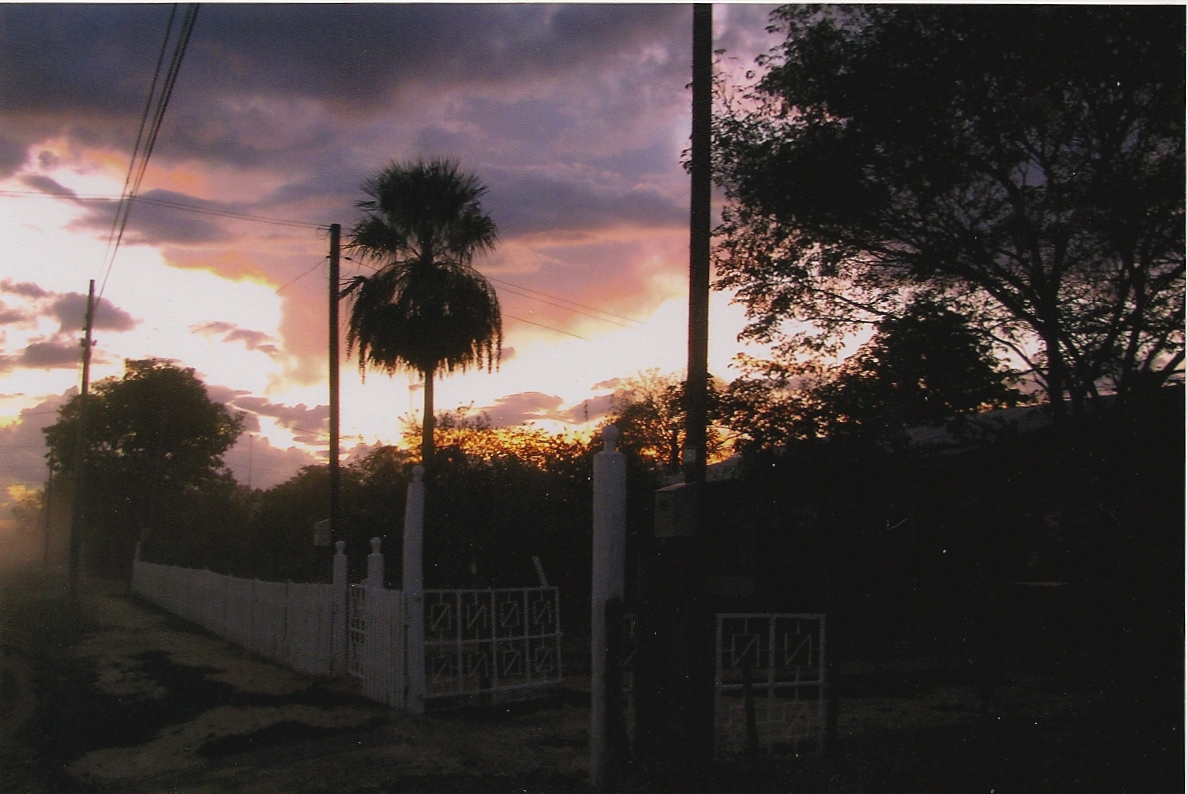
The Chaco of Paraguay is one of those places that cries out to be captured — described — appropriated somehow. Its climate and landscape are often inhospitable, yet there’s a compelling beauty about it too. Blood and sorrow run over it — from the awful Chaco War (between Paraguay and Bolivia) through the suffering and difficulties of Mennonites from both Canada and Russia trying to settle and survive it. A complex and fascinating mix of people have gathered to live in it, side by side, from various indigenous groups to German-speaking Mennonites to Latinos. 

There have been any number of fine attempts to reveal the soul of this place and its people through non-fiction, one of the most recent in English being Garden in the Wilderness by Edgar Stoesz and Muriel T. Stackley, and a classic in German being Immer Kreisen die Geier by Peter Klassen.

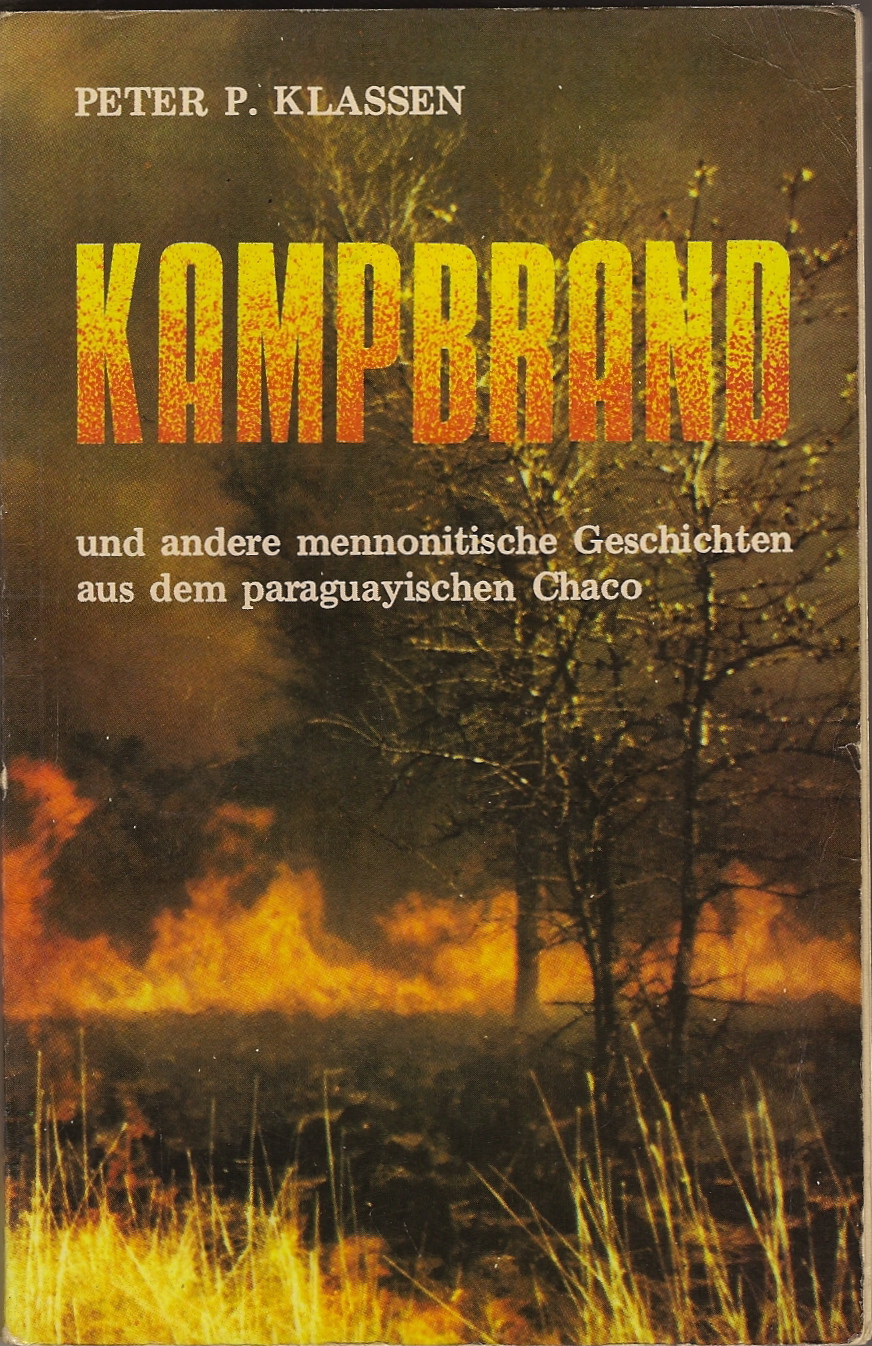
But the Chaco more than anything else, it seems to me, needs fiction and poetry and paintings and film and music — the kind of creative endeavours that tell its truth, but tell it “slant,” as Emily Dickinson put it. Here too, there have been various artists at work, including the afore-mentioned Peter Klassen, a resident of the Chaco, beginning with his stories in Kampbrand. For English audiences, there’s Rudy Wiebe’s stories in The Blue Mountains of China. I gave it a go with one woman’s story in Under the Still Standing Sun. Dave Dueck and Otto Klassen have done storytelling in film.

Locally, literature and the arts are beginning to flourish — something that is often possible once the heaviest problems of pioneering have finally been solved. So the above is no comprehensive list by any means, but it does bring me to “Paraguay Primeval,” a collection of 11 musical compositions by Carol Ann Weaver, soundscapes, photos, and readings, which premiered at Conrad Grebel College last Wednesday, March 4. 

My husband and I arranged a visit to our son and daughter-in-law in Toronto around the date of this premiere. H. grew up in the Chaco, lived there until 19, and I came to know it through him and his family who are still there.

I’m afraid I don’t have the musical vocabulary to describe what Carol Ann Weaver (below) does with her impressions of the Chaco, gleaned through her visit there after the Mennonite World Conference in Asuncion last summer, and with the texts she discovered through her reading afterwards, except to say that we both found ourselves deeply moved by the work of this talented and energetic composer.

Weaver tells stories, yes, but because melody and rhythm, and the sound of voice and instruments, carry the words. Thus one perceives the narrative and emotion directly and quite intensely. You feel “magnificent the Chaco sky” and 

strange beauty in this Chaco land
strange beauty in this promised land 

The songs tell of coming from Russia by ship, by riverboat up to Puerto Casado, by train past swamps and into the dense bush and open campos of the Chaco. Of well water “hardly drinkable” because of the heat. Of the death of an entire family from typhoid fever. Of the village settled by women who lost their husbands in Russia. Of the contrast between the indigenous Lengua women who walk like “stallions in spring” and the Mennonite women who cast their eyes to the ground. Of the beauty of springtime and nighttime.

There’s even a tango, called, fairly enough,  “Tango — If They’d Have Tangoed.”

One of my favourites was “Chaco Christmas” which sings of the heat and dust of December in the Chaco, and then breaks into “Leise Reiselt der Schnee” (Softly Falls the Snow), to the accompaniment of the harp. This was a Christmas song the Russian Mennonites brought with them. For those who’d known snow, homesickness wound through the words, no doubt; for their children who had never seen snow except on pictures, there was mystery.

“Paraguay Primeval” was performed to a more-than-full-house at the Conrad Grebel College chapel. Composer Weaver was at the piano, Rebecca Campbell did the majority of the vocals, and Paul Dueck, Chris Snow, Kyle Skillman, and Ben Bolt-Martin accompanied with harp, percussion, and cello. (Here’s a KW Record report of the event.)

I don’t think that anything quite like this has been done to bring the story of the Chaco to English audiences, and I can only hope that it will land on a CD so that many others besides the March 4 audience can hear it.