Road trip diary (# 1)

Sunday, Sept. 29. Merritt, B.C.

I want to keep a bit of a diary of the road trip, destination Winnipeg, for the launch of All That Belongs, and after that, on the homeward journey, me and the book at several stops. My blog readers, if interested, are welcome to follow, but if not — no problem either, for I’ll never know!

My copies of the book arrived Friday. Strange, it was, holding the novel as object. I was surprised by its plumpness; in my mind, the story is a relatively slender thing. Today it got its public initiation, at the fiction stage of the Word Vancouver Festival, where I read in a slot called “Complexities and Complications,” together with screenwriter Ken Hegan, currently the Vancouver library writer-in-residence, and Alex Leslie, author of We All Need to Eat, a poetic collection of linked stories. Our moderator was the vivacious writer Maureen Medved.

The reading went well, I think, the audience small but fine. Our discussion after we each presented concerned the complexities of the writing endeavour. Asked for advice for writers, Ken spoke of persistence and Alex spoke of focusing on one’s own necessary work, not drawn off by what others are doing. Since we’d run out of time, I agreed with both!

That done, satisfied with the event, and grateful, I took the sky train and bus back to Tsawwassen, By 5 p.m. H. and I were on the road, rounding Vancouver to the # 1 and on through the Fraser Valley with its rich banquet-table spread of farms, looking prosperous under clear skies. Passing Chilliwack, I thought, as I always do when I pass Chilliwack, that I might have grown up there, for Dad’s family moved there after he’d gone off to college, and when he married, he and Mom lived there a while too, until he was asked to return to Gem, Alberta, where he’d grown up, to teach in a winter Bible school. Next came the invitation to pastor a church in Linden, another small Alberta community. So we never got back to Chilliwack. But one or two twists otherwise, and I could have grown up there instead of where I did. If so, would I be a different person than I am now? (One can play this game endlessly with history, personal or otherwise, of course.)

Through Hope, the mountains looming too near for my taste. Casting us in shadow. Residents may find them a comfort and shelter, I suppose, but prairie born and raised, they seem vaguely oppressive to me. But then we rounded a curve and the view opened to a panorama of peaks on which the setting sun was glowing pink, the most glorious sight of the day. A gift.

An hour on the Coquihalla, up to Merritt, in the dark by now but the road clear, and here we are, tired and ready for bed in a room at the Ramada. We tuned into the weather channel and it looks like we’ll be driving into lots of snow. But we’ve made a small dent in the journey and tomorrow will be its own day, no point worrying about conditions now.
My writing life, 2019

The use of “birthing” for producing a book has never felt quite accurate for me. My three actual pregnancies progressed relatively smoothly, except for some nausea at the beginning, and the actual births, while grim descents into tumult and pain, were relatively brief for all that, and quickly gave way to joy.

If a parenting metaphor is required, I would say writing a book is closer to raising an adolescent. Who are you, story child? What is it you’re striving to be? I love you, but why are you so much work? What do I need to do to get you through, formed well enough and on your own?

Most of that work for All That Belongs — first draft, second draft, third draft — and a variety of revisions playing with voice and re-arranging and dropping about 20,000 words eventually got done over the course of years, sometimes in fits and starts. I won’t dwell further on the creative highs and lows of all that. For, one day, there arrived the excitement of a phone call from Turnstone Press, which published my previous book (What You Get at Home), saying they wanted to publish this one as well.

Such news is like college acceptance for the close-to-graduating teen, I suppose, just to drag on the comparison a bit, with about a year left of “raising” before said teen is out the door and on their own. And that’s been 2019 so far. For those who wonder about or are interested in such matters, here follow the details!

The team at Turnstone, starting with my editor, has been excellent. The best editors ask questions, push for small additions or deletions in the service of clarity. The best editors come with deep respect for the story that exists and an appraising eye to making it better. One section was too dense, my editor said; it needed “air”. I saw what she meant. (The writer does the fixing work.)

During that process, it occurred to me that the material, which shifts between “pasts”, could be more effectively divided into smaller chapters instead of three large sections as before. It was a good move, I think. (Writers reading this post may know exactly what I mean when I say one does wish that the best ideas would all show up at the beginning, en masse, but in fact, especially for slow writers like myself, they reveal themselves to the last.)

The next step — responding to the copy edits, done by another member of the Turnstone team — was an intense one. Now we were down to commas and single words and fact checks, in a series of file exchanges by email, using Word track changes. Sometimes I objected, but mainly I was grateful for the “catches” and the forced attention to the tinier points of expression.

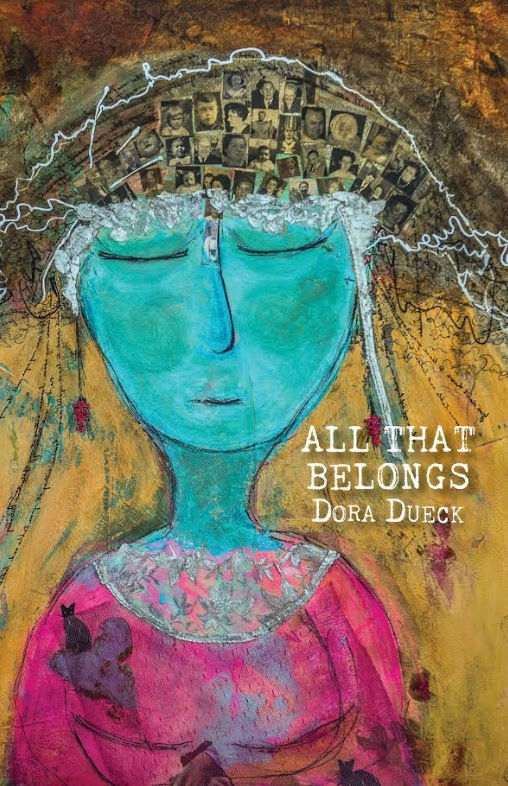
An email with “cover” in the subject line arrived. Breath held (what if I hate it?) as I opened it. Oh my! Wonderful! (The cover art, titled “Gertrude” is by Agatha Fast).

Whew on the cover then. It runs the emotional gamut, this year of bringing out a book. (Almost as if I were the adolescent!) And later, seeing who’d blurbed the book and my happiness about that. (Writers I admire: Sue Sorensen, Betty Jane Hegerat, K.D. Miller.)

Next, proofreading the set novel. They proofread, I proofread. I read each word aloud so my eye wouldn’t simply supply what it knew should be there. Since text looks different when set for publication, I noticed a few small changes I still wished to make. These were allowed. Emphasis on small. No re-writing now.

Even with all the proofreading, there may be things that slipped through; who knows? I just finished a book, one of the Giller long-listed books, in fact, and caught two typos. Yes, it happens. One hopes for perfect but lives with good enough.

I signed off, Turnstone signed off, the book has gone to the printers.

The final acts await. I’ll be launching the novel, first in Winnipeg (October 5). My husband and I plan to take a road trip to Manitoba for that event, with a number of possible other stops. Then I’ll do some launch events here in B.C. This stage feels fraught and vulnerable — will anyone show? How will the book be received? I do enjoy reading events and am always grateful for supportive friends and readers. And perhaps there will be some book club invitations. (I heard recently of an author attending one via Skype!) Which reminds me that I’m supposed to write some questions for book clubs.

So, still lots ahead until All That Belongs is truly on its own and I can put a copy on my bookshelf and let it be. And kind of forget about it. Yes, one does that too.

Before that, though, I’ll let you know about the road trip and launches and some of my other off-you-go experiences with All That Belongs!  


(P.S. For a description and information about the book itself, please see the page devoted to it.)

Body and Soul: Stories for Skeptics and Seekers

High time for me to say something about the anthology Body and Soul, edited by Susan Scott and published by Caitlin Press. I have a personal essay in it — “Mother and Child,” about my experience of our daughter’s came outing out — but that’s only one reason to mention the book. There are twenty-eight more, including contributions by writers such as Alison Pick (foreword), Sharon Bala, Carleigh Baker, K.D. Miller, Ayelet Tsabari, and Betsy Warland. And twenty-two others.

9781987915938Body and Soul takes on the daunting and often rather private concept of “spiritual.” As the back cover states, it breaks “that age-old code of silence to talk about the messiness of faith, practice, religion and ceremony…” Its writers emerge from contexts that may be Muslim, Jewish, Christian, Buddhist, Indigenous, or nothing. There’s leaving and joining, leaning away from and leaning towards.
I confess that writing my piece seemed risky to me. Fear of judgment, I suppose it was. Fear it wouldn’t be enough of whatever for whoever. But putting it to paper was a powerful experience for me too, as writing can be when the very act of it traces through facts of the past to reveal a landscape seen as if in fog the first time round and now glittering with a kind of clarity. And editor Susan Scott was a marvellous (and soothing) guide and champion.

The seed for the anthology got planted when a panel on spiritual memoir at the Wild Words Festival in 2015 provoked surprisingly enthusiastic response. In an interview with Isabella Wang for Growing Room, Susan said:

“Let’s face it. There’s a lot of eyeball rolling when it comes spirituality, religion, faith—pick your word, they’re all words that make people uneasy. Real knowledge, understanding or empathy are often thin, and it’s no wonder. Canadians tend to keep such matters private, which is fine on the one hand; on the other hand, it means we lack a nuanced public discourse, a lexicon to reach for.”

Susan Scott

Susan Scott

I participated in two of the launch events for Body and Soul in Vancouver last month. As I listened to Susan introduce the project the evening we read at the Vancouver Public Library, as I heard her passion for what it represents and how unique it is, I felt myself pulled out of and beyond the personal experience of my own essay. I felt myself placed into a solid companionship — with the other women who happened to be reading that evening, as well as the others in the book, all of us beside the other in a fine alphabetized row. Companionship, yes, with the commitment to listen hard and well to each of them. I believed I could rest in the expectation that they would listen hard and well to me as well. 

“I liken the process of building an anthology to the practice of hospitality—another old word that’s misunderstood. The roots of hospitality are linked to care. In the writing community, a hospitable publishing process begins and ends with care. Care, as in deep listening and holding the space for writers. Care, as in I care deeply about what you have to say and I believe in my bones that others will care. Care, as in judicious editing that builds on trust.” (Susan Scott, interview with Isabella Wang).

You can look for Body and Soul at your local bookstore or library (if not, please request they order), or through Caitlin Press or Amazon.