What she left

“What will I leave of myself?” asked nurse and poet Christine Wiebe (1954-2000) in her journal. The question found its way into a limited edition book, “How to Stay Alive,” produced for family and friends, and now into excerpts carried in the latest issue of the online CMW Journal. I hear it, honest and poignant, as it weaves through the 79 online pages of the piece, and through her poems, and as I read her mother Katie Funk Wiebe’s short biography of her daughter, then a short analysis of Christine’s work by Ellen Kroeker (and the poem, “Her Spirit, a Small Bird with Color”), and the reflections of her sister Joanna and Jeff Gundy Christine, and… well the whole issue, in fact.

Christine faced many health challenges, including lupus and heart attacks and eventually the complete collapse of her body and death. She was interested in healing — of others, of herself. She was both Catholic and Mennonite. And most of all she wanted to be a writer. And she struggled — in the way one’s thoughts turn round and round in journal writing — with those dreams (and others) and what might not be accomplished.

On the evidence of these articles, she left more than she knew perhaps, for her mother, sisters, friends, colleagues, clients, especially in terms of personal interaction. But in addition, and here I speak as one of those now reading these gathered words by and about her, these frank and lovely, almost heartbreaking words, I want to answer her, you left us all this: a gift of what you saw and strove for and accepted.

I close with one whimsical foretaste of Christine’s art and poetry from her journal (used with permission):

Everyone has an angel.
Angels have friends.
Imagine all the angels around
your bed
before you sleep.

The launch

The weather in Winnipeg has been wonderfully fine and everything feels green and alive again, and in the midst of it all, yesterday evening, the occasion of launching “This Hidden Thing.” My longest-time friend Eunice came from Edmonton for the event (and some good conversation, as always) and many other local friends and family came too. I think we all — CMU Press and McNally Robinsons Bookstore and those of us who participated in one way or another — thought it had gone exceedingly well. I feel so grateful and blessed for the support and interest of others.

I can’t say I wasn’t a bit nervous, but once I got into reading the texts I’d selected for my small sampling, I felt completely at home again, and inside those words (using launch as a nautical image, rather than explosion as in sending off a rocket!) the book slipped off into its journey as a book. Felt at home, I say, but it’s curious, and I’m sure other writers know what I mean, there’s a kind of detachment too. The book sails away, and I’m on shore.  It’s where I want to be.

Signing books. (Both photos: Eunice Sloan)


What’s true about fiction

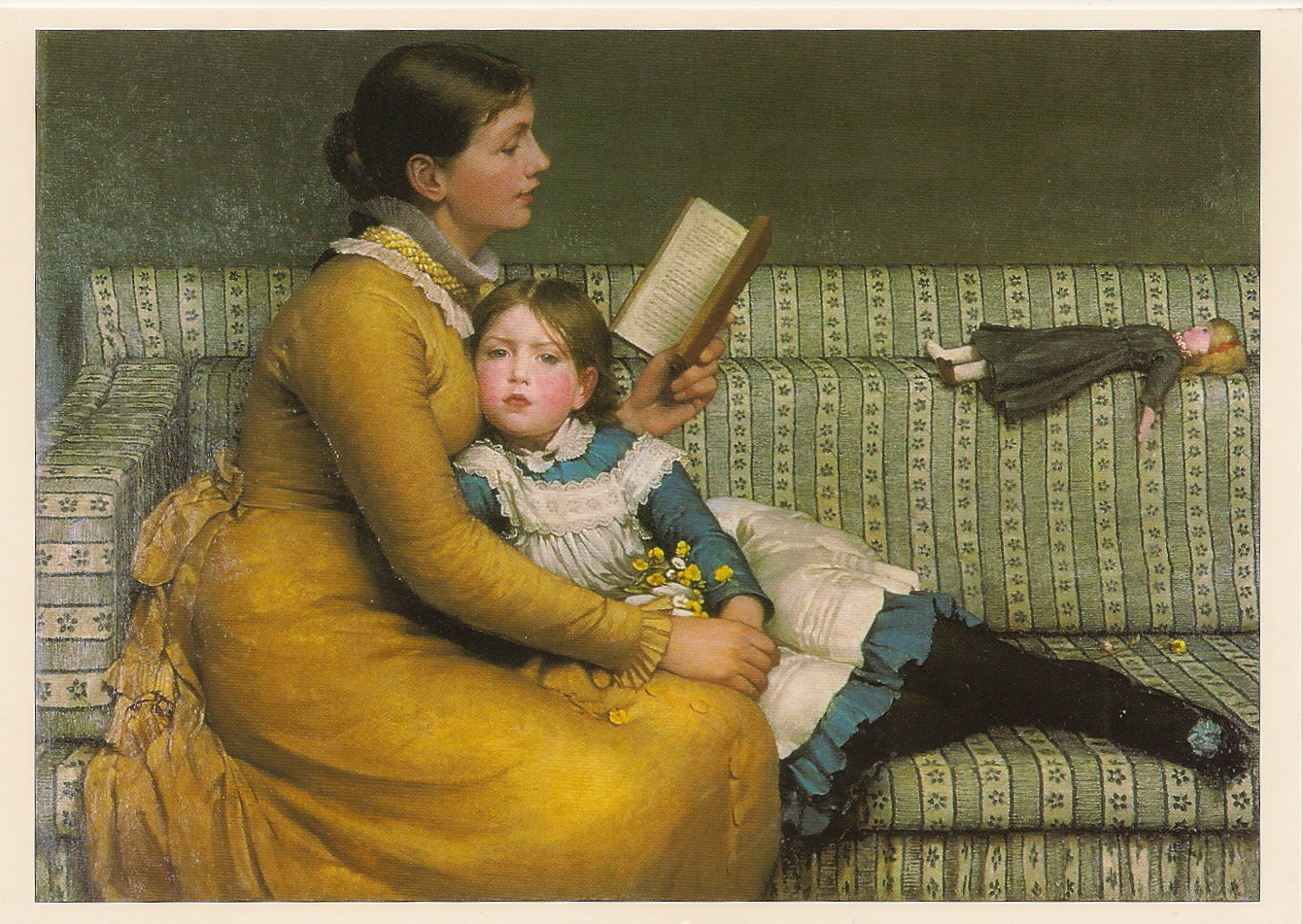
Among my earliest memories are the storybooks my mother read me. Both parents, in fact, modelled that books were important and worth spending time on. My mother, who with eight children never kept up with her housework, would leave tasks unfinished in the evenings, and sit and read.

While we children might be reading stories, however, she read “Christian” books, that is, of a devotional or theological nature, or if story-based, tales of missionaries or other spiritual stalwarts. Somewhere, perhaps from her example, and from admonitions I must have heard in the wider church community, I gathered that one advanced from “made up” stories to the “real” and more solid meat of books such as those as one progressed into maturity. It had to do with the adult requirement of being useful, I suppose.

Art card: "Alice in Wonderland" by George Dunlop Leslie


Not that long ago, in reference to the reading habits of some of her peers in the seniors’ home, whose fare was mostly fiction,  my mother muttered impatiently, “I like to read what’s true!”

Another time she sighed, “I can’t help it that I like to read what’s real.”

She forgets, in those moments, that I, her daughter, have not only persisted in reading fiction, I’m involved in writing it. I don’t take it personally, however, for she is among the most affirming of mothers when it comes to the endeavours of her children. Her resistance to fiction, and the subtext her remarks contain about ranking kinds of reading, and even her definitions of “real” or “true,” are what she absorbed in her upbringing and church environment. It fits the earnestness that life in this environment seems to require. Continue reading