Eleanor Catton on character

Eleanor Catton, the youngest person ever to win the Man Booker prize (at 28)–this for the longest book ever to win it, the 800+ page The Luminaries–was in Winnipeg recently to kick off the Winnipeg International Writers Festival (aka Thin Air). I enjoyed hearing her read and be interviewed.

IMG_4429

Eleanor Catton at Thin Air 2014

An hour allows only impressions, of course, but in reading about her elsewhere I find my impressions corroborated: Catton is a hugely intelligent and articulate young woman with a friendly, open demeanor. Her life has been irretrievably altered by the fame and money the Booker confers (one feels almost anxious for her sake), but she seems quite solidly grounded. Perhaps her years of immersion in a novel about the 1860s gold rush in New Zealand, with a host of characters who  feel they’ll be changed if only they strike gold, will stand her in good stead. “Money,” she told us, “is incapable of transforming us; only love can.” Continue reading
Seven in one blow: Mierau, Toews, and other recommends

We’ve  just spent several days at Hecla Island, probably our last camping trip of the year. The routines and menus of these outings are virtually identical–one leaves the routines of home only to fall with pleasure into the routines of away–but there’s always something interesting that differentiates each from the other. This time it was the garter snake, and next the skunk ambling toward me on the path (diverging to another path before it reached me, which as Robert Frost would say, made all the difference), and then the full body plant in the lake when I stumbled on a slippery rock at the shoreline. And a particular book.

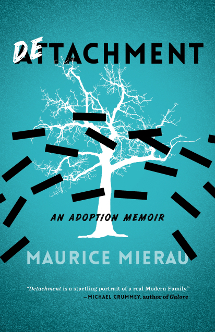
image.phpI’d attended, on Friday evening, the launch of Maurice Mierau’s Detachment, subtitled An Adoption Memoir (Freehand Books), which tells the story of Mierau and his wife Betsy adopting two young brothers from Ukraine. It seemed a good book to read aloud, as we sometimes do when on the road or away, and so we did, beginning on the drive to Hecla and continuing at various interludes–by the fire, over our morning maté or in the evening after H. had dealt with the flies drawn out of the cool autumn evening into the warmth of the trailer (though he never managed seven in one blow like the valiant little tailor of Grimm’s fairy tales fame). We finished the book on the return drive. Continue reading

My Life in Middlemarch: a review

DownloadedFileI’ve not read much in the genre of writers writing about their reading, so I may have had some misconceptions about what Rebecca Mead’s My Life in Middlemarch was going to offer me. At any rate, the expectations I had were almost entirely disappointed.

My reading of Middlemarch, I hasten to say, was no disappointment; I was quite taken with that sprawl of a novel, its plot(s), its portrait of 1830s English life, its pathos and humor, the authorial voice. I supposed that, in then turning to Mead, my reading would be enhanced–deepened–the way a very incisive review or the ideal book club can enhance the experience of reading by way of insight into themes and situations, and solid arguments on this matter or that. And all this with a memoirist twist, as promised in the cover copy–the voice of someone who’s breathed in the air of the text for a long time and is in plump literary health on account of it. Continue reading