This Saturday, June 20, it will be 50 years since my husband Helmut (also known as H. in my blogs) immigrated to Canada. Since the pandemic prevents us from having a full-scale celebration of this significant anniversary, I asked him if I could commemorate in part by sharing some of his “immigrant stories” here. He agreed.
H. did not flee his Paraguay homeland at 19 on account of war or catastrophe. He was motivated by adventure, greater economic opportunity, and the pull of others like his brother John and family who had already migrated north to Winnipeg, Manitoba. (There was considerable movement between the Mennonite communities of Paraguay and the Mennonite communities of Canada in those years.) He and friend Herb Giesbrecht, whose sister Elsie was John’s wife, came together. For the first months, the two fellows lived in John and Elsie’s basement.
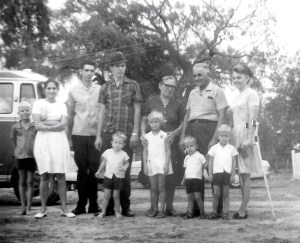
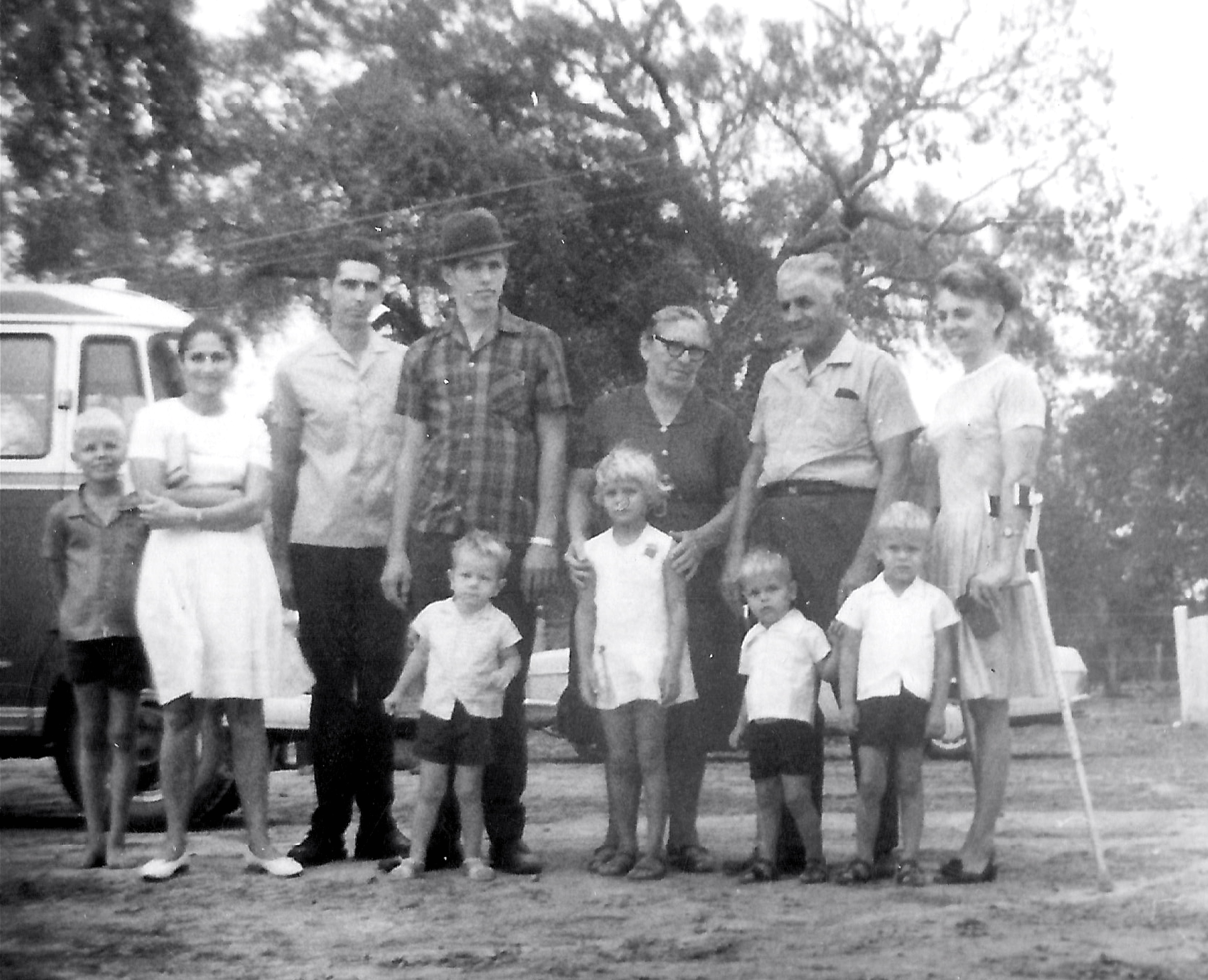
At the local airport, jaunty in hat! The youngest child saying good-bye to parents and some siblings, nieces, nephews.
He remembers well his first evening in Canada. Why wasn’t it getting dark? He was so tired and yet the day blazed on. In Paraguay, the sun would be setting around supper time and, being closer to the equator, never had Canada’s seasonal extremes in daylight.
And what was that buzzing around his arms and feet? “Do you have mosquitos here?” he asked his brother, swatting and recognizing the vicious little beasts he knew from Paraguay.
“Yup!” — Ah, not quite the hoped-for land of Canaan then.
His father had given him one piece of advice. “Learn the language,” he said, “and the rest will follow.” Which H. proceeded to do, taking evening classes and enrolling in the local Mennonite high school for Grade 12. (He had finished school in Paraguay as far as it went there then, but it wasn’t quite Canadian Grade 12 equivalent.) He began Grade 12 in January and the only subject he passed that first semester was German, his mother tongue. The next year, he completed the rest.
He didn’t “look like” an immigrant, so he experienced instances of awkwardness and lack of sympathy from others. At Zellers, for example, he’d learned that one took the merchandise to the checkout at the door. At Eaton’s, he wandered around the store with unpaid merchandise looking for the same, only to be reprimanded by a store employee. “You need a bill!” she snapped.

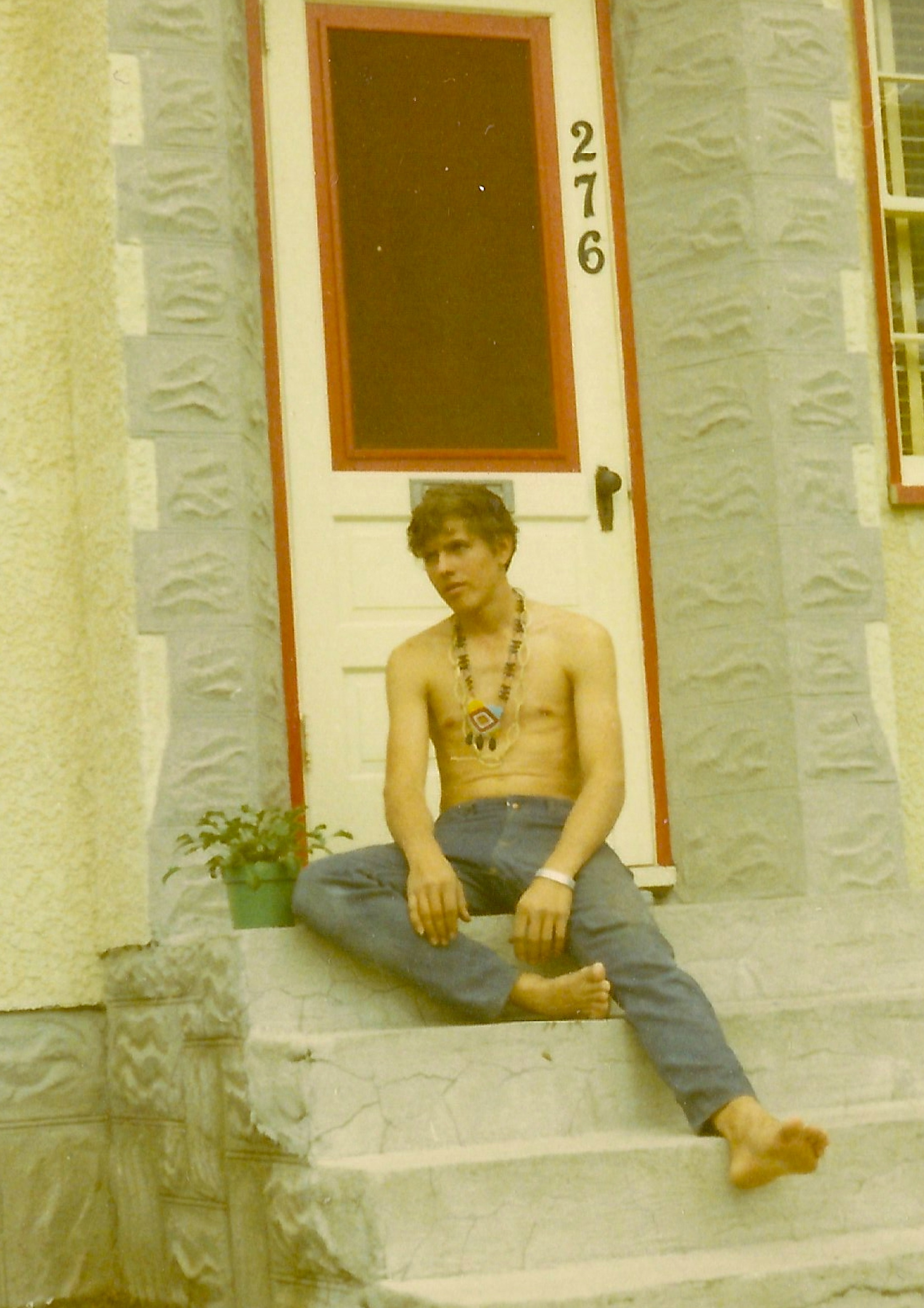
First summer in Canada
Bill? He had a friend Bill, but Bill wasn’t shopping with him.
When people heard him speak, the question was inevitable: “Where are you from?” He got tired of it.
At that time, it was possible to come into Canada on a tourist visa and then do the paperwork for landed immigrant status from within the country. A relative was helping him with this, but he and Herb had begun to work, picking up garbage at his uncle’s construction sites for $1.50 an hour. “We were working for cash, we didn’t have the proper papers,” he recalls. “Whenever I heard sirens, a shiver ran down my spine–now the police are coming for me!”
They would also collect drink cans and bits of copper wire, anything to make a little money. And they made friends, and the summer was warm and wonderful. The excitement of newness wore off, however. “I would see planes flying overheard,” he says, “and wish I was on board, flying home. If I’d had the money to return that first year, I would have.”
When he did return to Paraguay for a visit after some time, it was a wonderful reunion but now he found he also looked forward to returning home — in Canada!

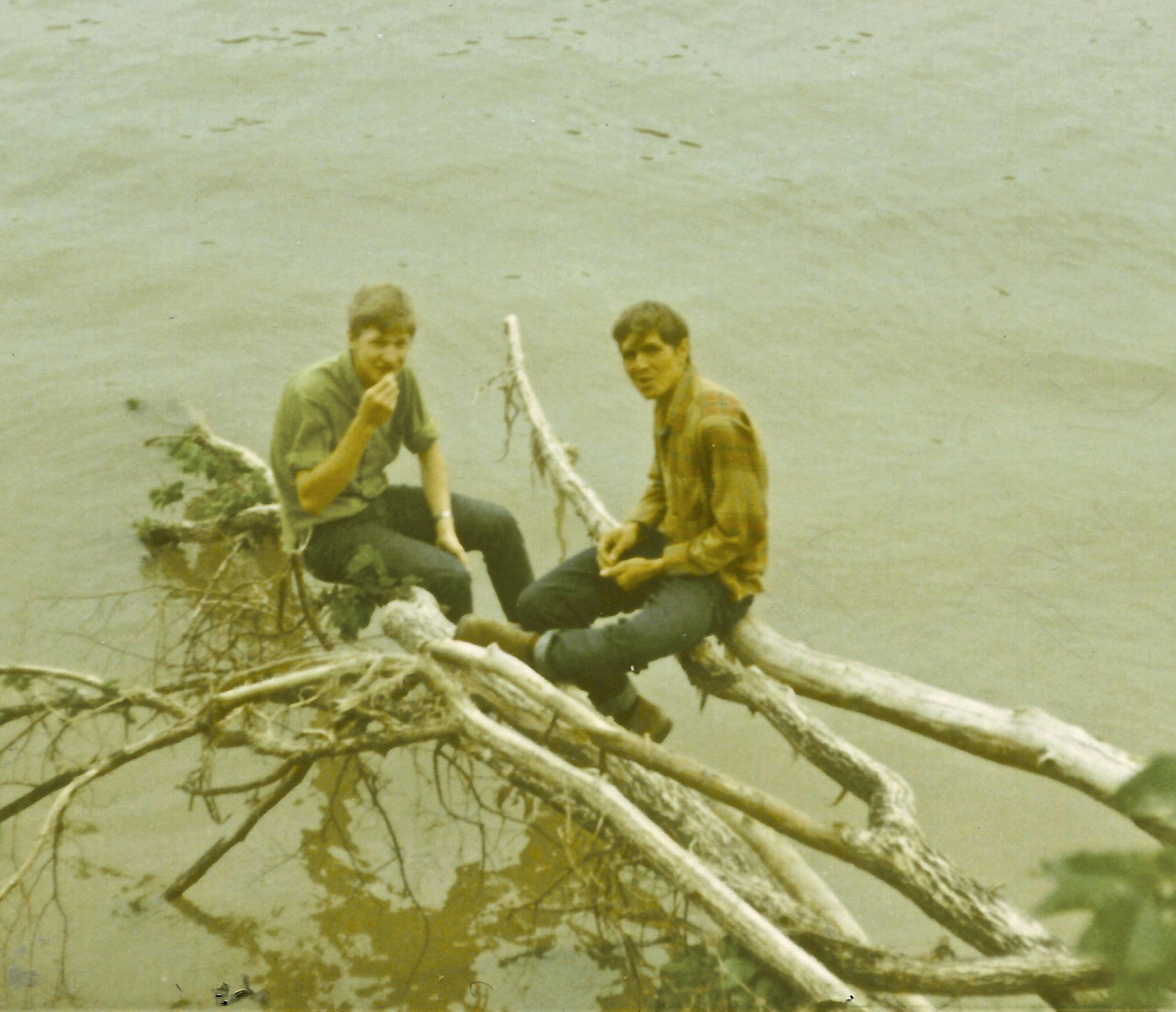
Helmut Dueck (right) and Herb Giesbrecht (1949-2018), one year in Canada. “We liked water!”
One of the downsides of immigration is that unless everyone comes, families are divided. John and Elsie eventually returned to Paraguay, so for decades now he has been the only one of his siblings here. He also had to miss the funerals of both parents and two sisters.
Eventually, Helmut bought a motorcycle. He then sold the motorcycle to buy a car. He wanted to buy a Buick but couldn’t say the name–that “byoo” sound at the beginning. He practiced and practiced but couldn’t perfect it in time so bought a Chevy BelAir instead.
Winter was a shock and “snow wasn’t a bit like the Christmas cards I’d seen — fluffy and smooth.” It was cold and wet and difficult. He bought himself some gloves but not knowing what he needed they were too thin and he froze several finger tips.
“I’m glad we didn’t come in winter,” he says, “because although it was cold we knew what summer was like and we knew winter would end.”
Gradually, he got to know his new country and its ways and then he met and married me, Canadian-born and raised, which strengthened his commitment to staying. (We did live in Paraguay for two-and-a-half years in the early 1980s, though, first for a long visit with his family, and then on a development assignment.)
In 1979, H. got formal citizenship. “I was glad it had come to that stage,” he says. “There were people from all sorts of countries in the ceremony. The judge explained that now we were fully citizens with all rights and privileges, so afterwards I handed him my business card.” He’d started his own drywall company by then.
He recalls a worker on his job site once talking about the “f—king immigrants.” “What do you have against them?” he asked. “They come and take our jobs,” the other man complained. “No,” H. said, “they might also give you work. You’re working for a f—king immigrant.” The other man sputtered “Oh, I didn’t know!” and apologized.
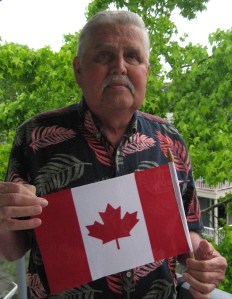 “I think being an immigrant has given me sympathy and understanding for immigrants in Canada,” Helmut says. “Just the other day I got excited to read about Syrian refugees working with a farmer in Nova Scotia.”
Does he ever regret coming? No.
I’m glad he came too.
 I was pleased that “Burial Grounds” found a home in the latest Prairie Fire. This piece grew out of concerns, when we first moved from Manitoba to British Columbia, about where I would be buried someday. All those years in Winnipeg, I’d had my eye on the beautiful Elmwood Cemetery and now we’d left it behind. (I know, I know, I worry about odd things.) I was delighted that The New Quarterly took “On the Memory Set,” a reflection launched by once trying to write a play.
 And, most recently, a review of Cameron Dueck’s fine book, Menno Moto, at Mennonite Historian (pg.11.)

 Borrowing Bones