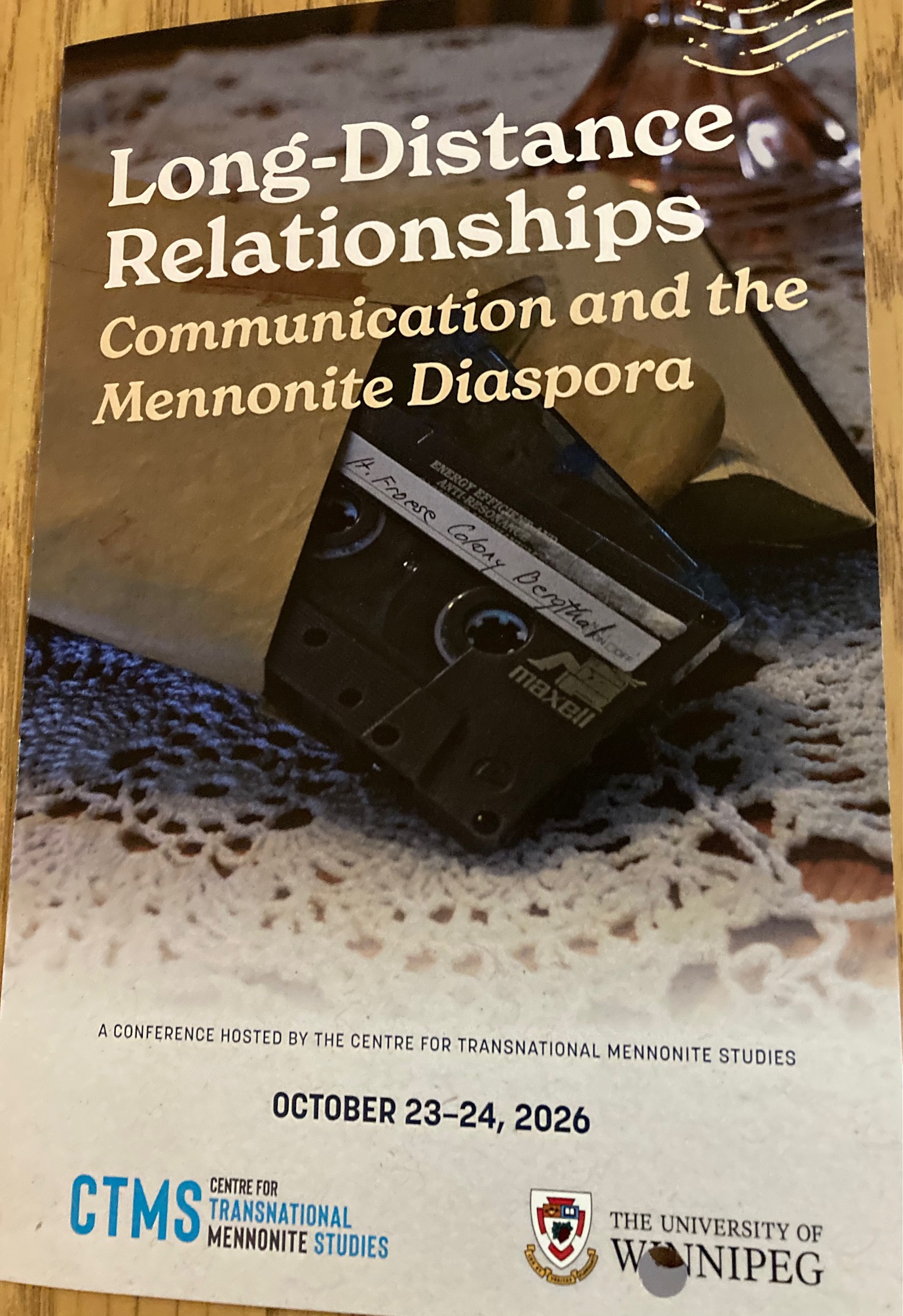
How I ended up at “Long-Distance Relationships: Communication and the Mennonite Diaspora,” a conference hosted by the Centre for Transnational Mennonite Studies in Winnipeg, Oct. 23-24, 2026: Way, way back — in June 2000 to be exact — I heard history professor Gerald Friesen share some interesting ideas concerning time and space and communication transitions as a model for looking at Canadian history. Any history, in fact. This excited me, especially ways communications media and the dynamic of immigration might intersect. I ended up doing my MA thesis on the discourse of, and communication in, the Zionsbote, an early Mennonite periodical, between 1884 and 1906.
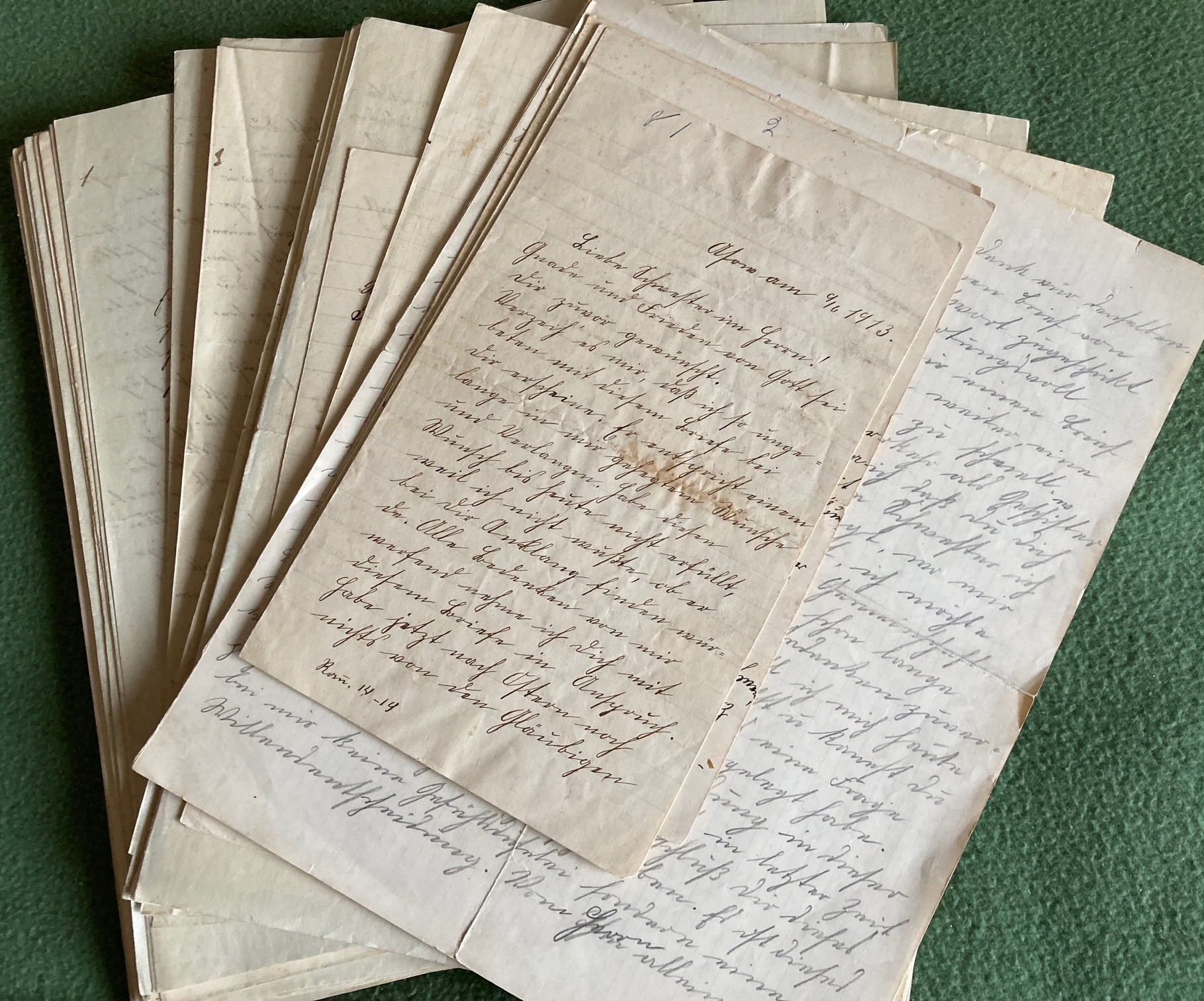
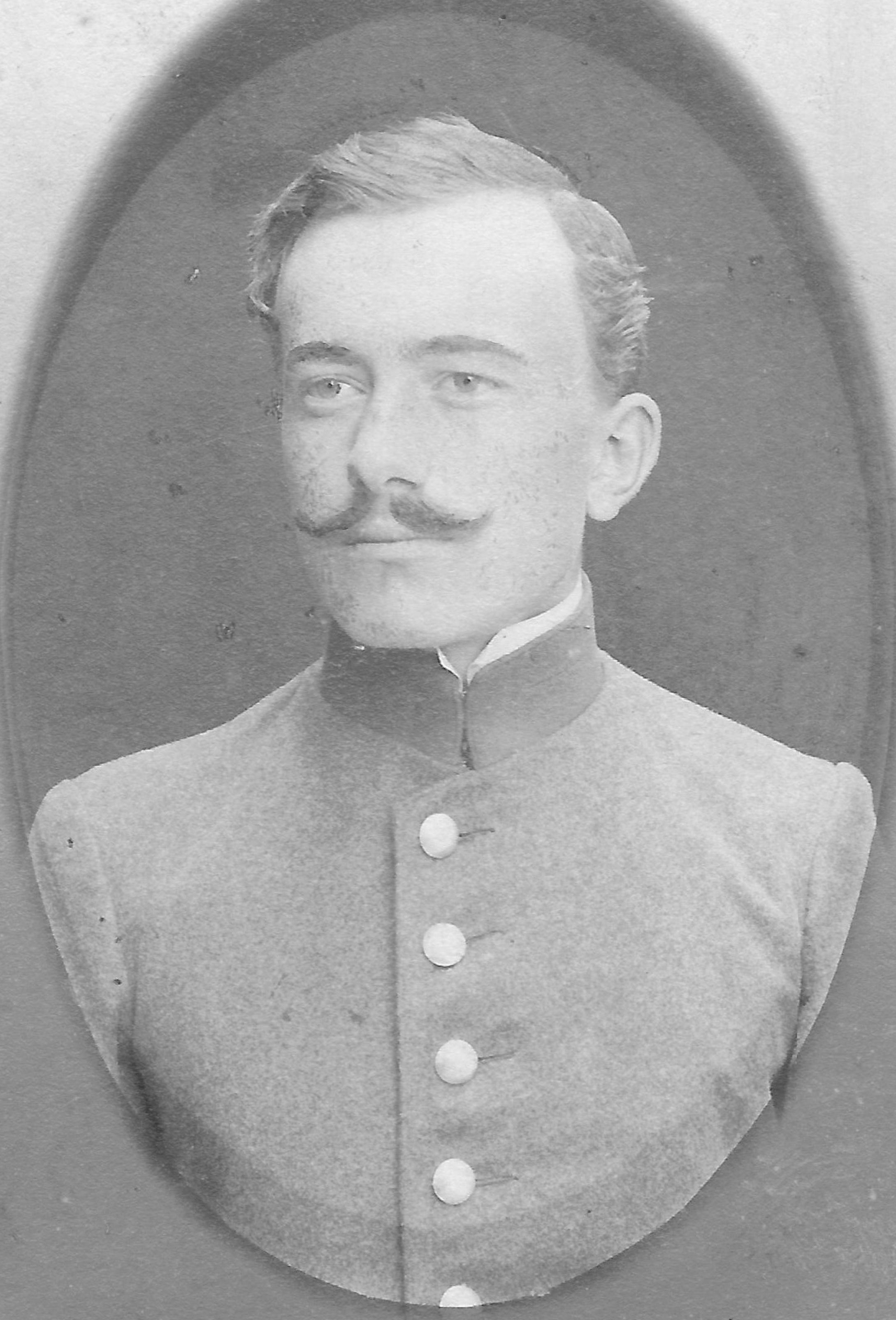
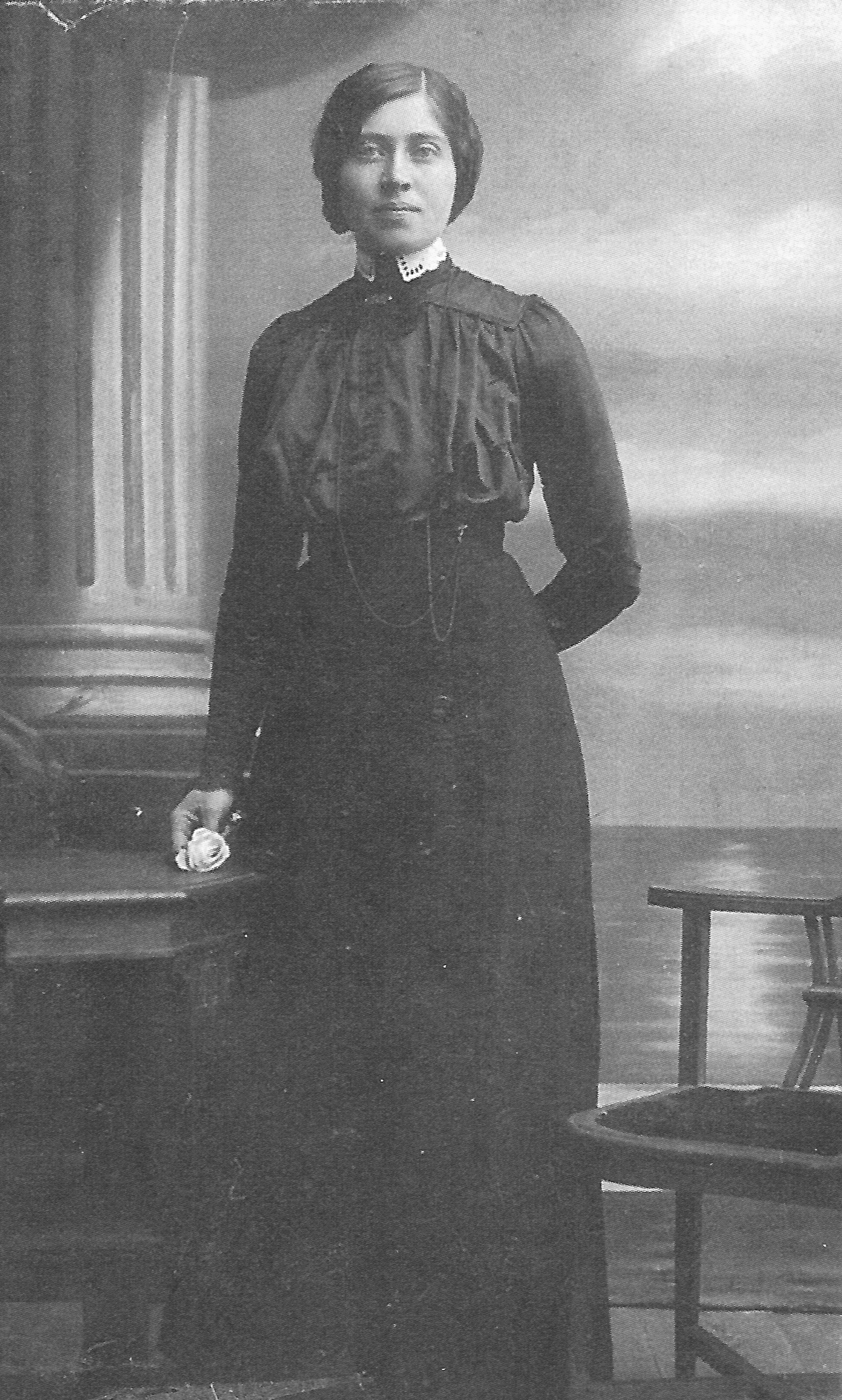
I’m long out of the academic world, but when I noticed that communication was the theme of this year’s conference, I got excited again, thinking it might be my last kick at the can for this sort of thing, so why not submit a proposal? I cast about for something. Ah, my grandparents’ letters! More than 140 of them, between 1913 and 1918. Love letters. Grandfather Heinrich Harder was in the forestry service in Russia, and then, without a break, sent to the Caucasus front during the First World War, and grandmother Helena Derksen was at home with her parents in Fischau, Molotschna Colony, Russia (today’s Ukraine). He proposed by letter, she eventually said Yes by letter. I analyzed the correspondence in the context of the war, in the context of courtship customs of the time, and in terms of words-on-paper versus face-to-face.
An opening keynote address and 27 presentations (15 minutes each): Steven Nolt of Elizabethtown College gave the keynote. The title of his address was “‘A Phone Is as Righteous as Its Owner’: Old Order and ‘Plain” Mennonites Navigate Digital Communication and the Internet.” As the title suggests, Nolt went through various Old Order groups to show their allowings around media, and their resistances. I was struck by one of the principles he found in his research: “Human limitation is not a problem to be conquered.”
Interestingly, just this morning I heard writer Zadie Smith, in an interview by Matt Galloway on CBC, say, in response to his question what it means to be human, “To be human is an acknowledgement of limits.” Life has limits, she went on to say, and the techbros, the AI world, have no conception of that, don’t think there should be limits.
There were quite a few papers on letters: Benjamin Eby’s letters to other ministers, women’s “epistolary labour” in Fürstenland, letters across the Iron Curtain, the courtship letters mentioned above, and the challenge of navigating KGB interference in letter writing. There were also papers on radio, newsletters, cassette tapes (audio letters), and travelogue accounts in the Rundschau.
Re cassettes: since my husband and I used to exchange cassette conversations with his family in Paraguay, especially with one of the sisters, I felt briefly rueful during the presentation and discussion about cassette communication, for I recently got rid of the remaining tapes in my possession. Were they of historical interest? I don’t think so. Would my children listen to them? I didn’t think so. If I was wrong about that, it’s too late now.
Newspapers/periodicals: Saturday contained two sessions of four papers each on Mennonite newspapers/periodicals and how they’ve linked Mennonites, how they’ve created what Benedict Anderson called “imagined community.” I really enjoyed these, as I agreed so thoroughly on their role in creating belonging for their reading community, having myself worked at a Mennonite periodical for some years.
Rosemary Vogt, in “Early Formation of Networked Belonging” asked “Why would a people committed to standing apart build such sophisticated systems for staying connected?” She spoke further of the claim that belonging is produced, not just expressed.
The thing is, we don’t just want to stay connected, but historical circumstances like migration and exile and missionary work have scattered Mennonites all over the world.
I was super proud of our niece Caroline Dueck de Klassen, archivist at Colony Fernheim, Paraguay, and her presentation on the first five years of the Mennoblatt. Mennonites had barely settled in the Chaco before beginning, under the leadership of Nikolai Siemens, a newspaper which connected people within Fernheim but also represented the fledgling settlement to the larger world.
In 1933-34, in what was called the Neufeld debate, colonists discussed that representation in the Mennoblatt. It was not about the fact that Fernheim struggled, she said, for that was definitely a fact, but how, and how much of, that struggle should be communicated.
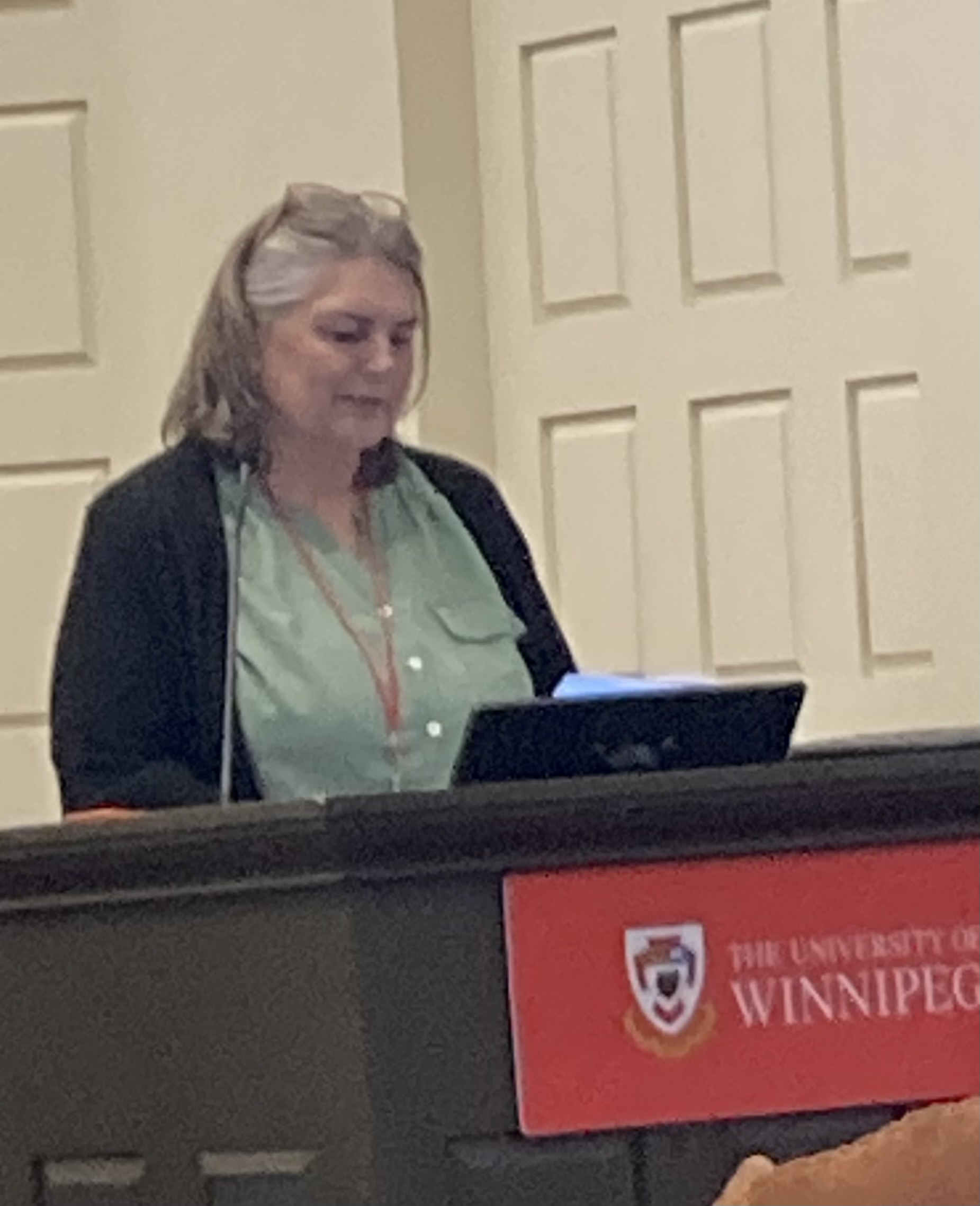
Another amazing paper: Die Mennonitische Post, in its 50 years, has been a vital connector for the scattered colonies (across the Americas) of so-called Low German Mennonites. Until recently, former editor Kennert Giesbrecht said, it was “maybe the only growing printed newspaper.” It has always carefully structured and adapted itself to the particular needs of its reading community.
Speaking of Low German, historian and author Andrei Fast of Kazachkstan, who doesn’t speak English, presented his entire paper, “A Century of Separation, Silence, and Reunion: The Story of the Fast Famiy between Canada and the Soviet Union” in the Low German language. Is this a first, I wonder? Fortunately, for those who don’t understand Low German, or understand it poorly as I do, slides with his content translated into English were projected on to the wall.
It was a genuinely interesting conference, with a variety of communication angles, many more than I can elaborate here. Like the connection between Mennonites and Tolstoy, for example, and a policeman’s story of “Communication, Policing, and the Arrival of Dietsche Migrants in Southern Alberta”. And topics of women’s suffering or sex/gender or the environment in Mennonite newspapers/periodicals; the Mennonite Centre in Molochansk; Canadian Jewish Archives; Canadian Mennonites and the Screen Arts. And so on, and more.
Communication continues to change. Several times in the past, I attended conferences like this and reported on them for Mennonite magazines. When those magazine reports came out, it was hoped that people who couldn’t attend would get at least a glimpse into what had transpired. Now such pressure to report, in any kind of comprehensive way, is lifted. I can be personal and random. 🙂 People were able to attend by livestream, and anyone curious about any of the papers can watch both days of presentations on YouTube. I think that’s a good thing.