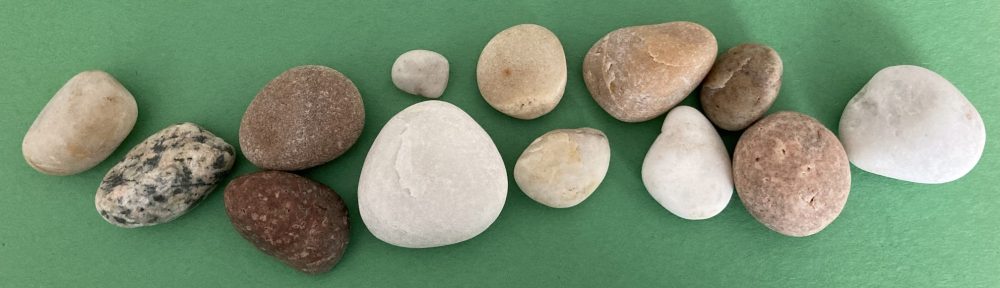
In blog-as-confessional mode today: it’s always gratifying to signal what’s been accomplished, but less gratifying to consider what was begun in high spirits and never completed.
In terms of the done, I refer to items along the right aisle of this site, where I’ve just updated “Recent essays and stories.”  I was pleased that “Burial Grounds” found a home in the latest Prairie Fire. This piece grew out of concerns, when we first moved from Manitoba to British Columbia, about where I would be buried someday. All those years in Winnipeg, I’d had my eye on the beautiful Elmwood Cemetery and now we’d left it behind. (I know, I know, I worry about odd things.) I was delighted that The New Quarterly took “On the Memory Set,” a reflection launched by once trying to write a play.
 And, most recently, a review of Cameron Dueck’s fine book, Menno Moto, at Mennonite Historian (pg.11.)
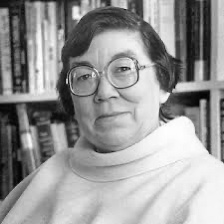
Margaret Laurence
But the unfinished, the abandoned! Some time ago I made a list of these and it wasn’t short. This morning, needing a binder, I emptied accumulated notes for my Year of Reading Margaret Laurence project (2019), which I referenced back in December. Of four formidable women writers who shaped my sense of Canadian writing — Margaret Laurence, Mavis Gallant, Margaret Atwood, Carol Shields — it’s Margaret Laurence to whom I’m most drawn. I suppose I dreamed of one of those “annualist” manuscripts, even though I find them somewhat pretentious.
I glanced through the notes, remembered how much I enjoyed reading Laurence’s African stories for the first time and two collections of her correspondence (with publisher Jack McClelland, with friend Adele Wiseman), as well as re-reading some of her novels. I also read James King’s slightly irritating biography of Laurence. I noticed in the notes that I wondered whether she would have liked me. (Another odd worry, I know.) She didn’t suffer fools gladly, as her letters attest. It was the question of my own identity as writer, I think; a hope for resonance. But it’s the stories, not the personality, that remains. Their passion, their language. (Just one image from a story in The Tomorrow Tamer, by way of illustration: “the children darted, velvety with dust.” Which makes me ache with pleasure.)
While my admiration for Margaret Laurence’s work was affirmed, I lost interest in continuing the project. But if there’s not enough wool for a blanket, I offer a narrow scarf, namely encouragement to read, or re-read, Margaret Laurence. She’s worth it. Still, and again.
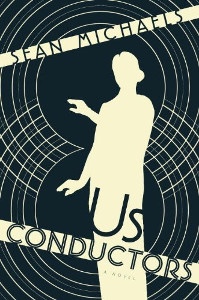 The book is based on the life of Russian scientist Lev Termen, who invented the theremin, a musical instrument played without physical contact by the performer, except for contact with the invisible electric waves or whatever. (Watch the inventor play it
  There’s the very competitive quest for readers, which begins with somebody saying Yes, we want to publish this. A quest that can never — statistically speaking — be assumed, unless one is famous. Another scary spot, at least for me and probably many writers, is that space just after the book appears and there’s nothing more to be done and it is what it is and then one wonders if it will live on for a while or languish in warehouse boxes? And then putting oneself out there in public events and on social media, inviting and announcing and hoping not to annoy by overdoing it and hoping people will come and hoping people will buy and hoping people will read. Hoping the first, perhaps only major review, will be okay. (It was.) It’s a vulnerable time. (And if I/we sound insecure, yes, that too.)
 Borrowing Bones